YouTube's algorithm is smarter than ever, but tags remain a crucial signal for content discovery and ranking. Many creators treat the tag field as an afterthought, filling it with a few generic, single-word terms and hoping for the best. This common mistake is precisely why so many videos fail to reach their full potential, getting lost among millions of uploads. Effective tagging isn't just about describing your video; it's a strategic process of telling the algorithm exactly who your content is for, what it's about, and how it relates to other videos on the platform.
This guide moves beyond the obvious. We will provide a comprehensive breakdown of the best tags for YouTube by exploring nine distinct, actionable strategies that blend data analysis, audience psychology, and creative thinking. You will learn how to:
- Combine broad category tags with specific niche modifiers.
- Leverage competitor traffic ethically through smart tag association.
- Align your video with user search intent using question-based tags.
At its core, optimizing YouTube tags is a specialized form of Search Engine Optimization (SEO), essential for video discoverability. This article is designed for publishers, social media managers, and video teams looking to transform their tagging process from a simple chore into a powerful growth engine. We'll provide specific, copy-paste tag examples and strategic templates tailored for multiple niches, allowing you to implement these advanced methods immediately and start claiming the views your content deserves. Forget generic advice; it's time to build a tag strategy that actually works.
1. Broad Category + Niche Modifier Tags
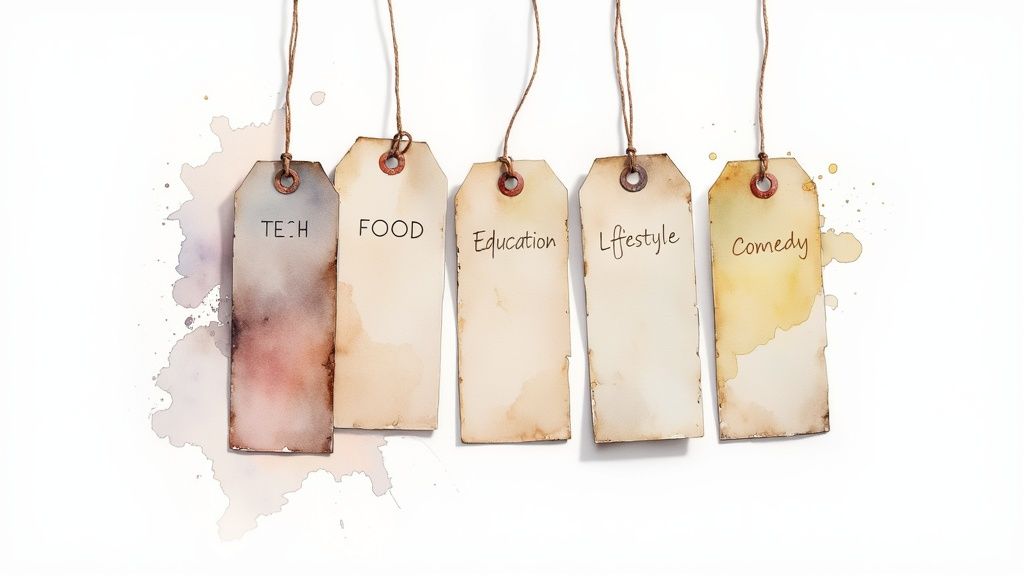
One of the most effective strategies for maximizing video reach involves a two-tiered tagging approach: combining broad, high-volume category tags with specific, niche-focused modifier tags. This method allows your content to compete in wide search pools while also ranking for highly specific, long-tail queries. It’s a foundational technique for anyone serious about finding the best tags for YouTube, as it perfectly balances discoverability with relevance.
This strategy works by first establishing the general topic (the broad category) and then adding layers of specificity (the niche modifiers). A broad tag like challenge videos might have millions of competing videos, making it difficult to rank. However, by adding a modifier like extreme challenges, you target a more dedicated audience actively searching for that specific type of content, dramatically increasing your chances of being seen by the right viewers.
Actionable Implementation and Examples
This approach is highly adaptable across various content verticals. Consider how top creators use it to define their content and attract their ideal audience:
- Broad:
science-> Niche Modifier:quantum physics(Used by channels like Vsauce) - Broad:
celebrity interviews-> Niche Modifier:celebrity hot takes(Common for outlets like WIRED) - Broad:
DIY projects-> Niche Modifier:smart home automation DIY(For tech-focused maker channels)
By pairing these tags, you tell the YouTube algorithm exactly who your content is for, improving its placement in both search results and suggested video feeds. For a deeper dive into how this fits within a larger framework, you can elevate your video content SEO strategy.
Strategic Tips for Application
To get the most out of this tagging method, follow these best practices:
- Prioritize Placement: Place your most important broad category tags first in your tag list, as YouTube's algorithm often gives more weight to the initial tags.
- Leverage Trends: Use tools like Google Trends to spot emerging niches within your broader category. This helps you stay ahead of the curve and capture new search interest.
- Analyze Competitors: Examine the tags used by successful channels in your niche. Tools like TubeBuddy or VidIQ can reveal their tag strategies, offering valuable insights into what works.
2. Long-Tail Keyword Tags
While broad tags cast a wide net, long-tail keyword tags are the precision tools of YouTube SEO. This strategy focuses on highly specific, multi-word phrases (typically three or more words) that reflect direct user intent. These tags have lower search volume but significantly higher conversion potential because they match exactly what a motivated viewer is looking for. This makes them one of the best tags for YouTube for driving qualified traffic and building a dedicated audience.
The principle is simple: instead of competing for a generic term like fitness, you target a precise query like home workout for beginners no equipment. Viewers searching with such detail know exactly what they want, and if your video provides it, you are far more likely to earn their click, watch time, and subscription. This approach helps smaller channels gain traction by avoiding overcrowded search results and connecting directly with their ideal viewer.
Actionable Implementation and Examples
Top creators across every niche leverage long-tail keywords to capture highly engaged viewers. The key is to think like your audience and use the exact language they would use to find your content:
- Broad:
cookies-> Long-Tail:easy chocolate chip cookie recipe(Used by food channels like Tasty) - Broad:
psychology-> Long-Tail:why do we procrastinate(A common approach for educational channels like TED-Ed) - Broad:
fitness-> Long-Tail:home workout for beginners no equipment(Ideal for fitness creators targeting at-home audiences)
Using these specific tags tells the YouTube algorithm that your video is a strong answer to a particular query, increasing its visibility for those valuable searches. To master this, you need a solid process; our guide on how to conduct keyword research for SEO provides a comprehensive framework.
Strategic Tips for Application
To effectively implement long-tail keyword tags, integrate these practices into your workflow:
- Mine YouTube Auto-Suggest: Start typing a broad topic into the YouTube search bar and see what phrases it suggests. These are real, popular long-tail searches from other users.
- Use Research Tools: Leverage platforms like TubeBuddy or VidIQ to discover long-tail keyword opportunities, analyze their search volume, and check the competition level.
- Focus and Test: Dedicate 5-8 of your tags to specific long-tail variations. This allows you to test which phrases perform best without diluting your tag block.
- Analyze and Refine: Regularly review your YouTube Analytics to see which long-tail tags are driving the most traffic. Double down on what works and replace underperforming tags in future uploads.
3. Branded + Unbranded Tag Mix
A powerful yet often overlooked strategy is to blend your own unique branded tags with broad, unbranded industry terms. This dual approach builds brand recognition and loyalty while simultaneously ensuring your content remains discoverable to new audiences searching for general topics. It’s a core component for creators looking to establish a memorable identity, making it a crucial element in any list of the best tags for YouTube.
This technique works by creating a unique tag specific to your channel, which helps group your content together and makes it easier for fans to find your entire catalog. When paired with generic, high-traffic tags, you create a powerful synergy: the unbranded tags draw in new viewers, and the branded tag encourages them to explore more of your work, effectively converting casual viewers into loyal subscribers.
Actionable Implementation and Examples
This strategy is scalable for creators of all sizes, from emerging channels to established media giants. The key is consistency in both the branded and unbranded tag selection.
- Branded:
MKBHD-> Unbranded:tech reviews(Used by Marques Brownlee to own his brand acronym while ranking for a huge search term) - Branded:
SET India-> Unbranded:Indian entertainment(Used by Sony Entertainment Television to capture a massive regional audience) - Branded:
DailyVines-> Unbranded:funny videos(A classic example of combining a specific series name with a universally searched category)
By consistently applying this mix, you train the YouTube algorithm to associate your unique brand with a broader topic, which can lead to your videos being suggested alongside top-ranking content in that niche.
Strategic Tips for Application
To effectively implement a branded and unbranded tag mix, consider these best practices:
- Create a Unique Branded Tag: Choose a short, memorable, and easy-to-spell tag for your channel. This could be your channel name, an acronym, or a series title.
- Use Branded Tags Consistently: Apply your primary branded tag to every single video you upload. This creates a cohesive content ecosystem and helps YouTube recommend your own videos to your viewers.
- Promote Your Tag: Mention your branded hashtag in your video descriptions, on-screen graphics, and community posts to encourage your audience to use it.
- Track Brand Growth: Monitor your branded tag's performance in YouTube Analytics to measure how your brand recognition is growing over time. For a deeper dive into crafting a balanced strategy, understanding the difference between branded and non-branded keywords is essential.
4. Trending + Evergreen Topic Tags
A powerful strategy for sustainable channel growth is to blend time-sensitive trending tags with permanently relevant evergreen topic tags. This balanced approach captures immediate search interest from viral topics while simultaneously building a long-term foundation of discoverability for content that remains valuable over time. It’s a crucial technique for finding the best tags for YouTube, as it ensures your videos attract both short-term spikes in traffic and consistent, long-tail viewership.
This method works by capitalizing on current events, challenges, or pop culture moments (trending tags) to give your video an initial boost in visibility. At the same time, evergreen tags (how to, basics, tutorial) target foundational queries that audiences will search for months or even years later. This dual strategy maximizes a video's lifespan, preventing it from becoming irrelevant after a trend fades.
Actionable Implementation and Examples
This approach is highly effective for channels that cover timely news, reviews, or cultural commentary while also providing educational value. Top creators skillfully use this blend to stay relevant and build a lasting content library:
- Trending:
stock market news-> Evergreen:investing basics(Used by finance channels like CNBC) - Trending:
current events-> Evergreen:explainers(A common strategy for news outlets like Vox) - Trending:
sports trends-> Evergreen:trick shots(Perfect for entertainment channels like Dude Perfect)
By combining these tag types, you signal to the YouTube algorithm that your content is both timely and timeless. This improves its chances of being recommended during a trend's peak and resurfacing in search results long after the initial hype has passed.
Strategic Tips for Application
To effectively implement this hybrid tagging method, consider these best practices:
- Follow the 70/30 Rule: Aim for a tag split where approximately 70% of your tags are evergreen and 30% are focused on current trends. This prioritizes long-term visibility while still leveraging short-term interest.
- Use Trend-Spotting Tools: Regularly monitor Google Trends, the YouTube Trending page, and relevant social media platforms to identify emerging topics you can connect to your evergreen content.
- Update Tags Seasonally: Refresh your tags for seasonal events like holidays, back-to-school periods, or summer. This can give older, relevant content a fresh visibility boost.
- Avoid Irrelevant Tagging: Never force a trending tag onto a video where it doesn't fit. This can harm your video's performance by creating a poor viewer experience and signaling low relevance to the algorithm.
5. Question-Based + Answer Tags
A powerful strategy for capturing viewers with high search intent is to use tags that mirror the very questions they type into the search bar. This approach involves pairing question-based tags (using "how," "what," "why," etc.) with concise, answer-focused tags. This dual method directly targets users in the research and learning phase, making it one of the best tags for YouTube strategies for educational, tutorial, and problem-solving content.
This technique works by anticipating a user's exact query. When someone searches "how to solve a rubik's cube," having that exact phrase as a tag significantly boosts your video's relevance. By also including an "answer" tag like rubik's cube solved, you signal to the algorithm that your video not only poses the question but also provides the solution, increasing its authority and potential to be featured in search results.
Actionable Implementation and Examples
This question-and-answer format is a staple for channels that aim to educate and inform, effectively turning user curiosity into views. Here’s how leading creators apply it:
- Question:
how to solve quadratic equations-> Answer:quadratic equations explained(Used by channels like Khan Academy) - Question:
what is photosynthesis-> Answer:photosynthesis for kids(Common for channels like Crash Course) - Question:
how to become a software engineer-> Answer:software engineering career path(For tech and career-focused channels like TechLead)
By combining these two tag types, you create a direct line between the user's problem and your video's solution, which the YouTube algorithm is designed to reward.
Strategic Tips for Application
To effectively implement this strategy, focus on understanding your audience's most common pain points and questions:
- Discover Questions: Use free tools like AnswerThePublic to find a vast array of questions people are asking related to your topic. This provides a goldmine of tag ideas.
- Leverage YouTube Auto-Suggest: Start typing a question into the YouTube search bar and see what auto-suggestions appear. These are real, popular queries that make for excellent tags.
- Pair Questions with Answers: For every question tag like
what is SEO, create a corresponding answer tag likeSEO basicsorsearch engine optimization tutorial. This comprehensive approach covers multiple search angles.
6. Competitor + Comparison Tags
Using tags that reference competitors, alternative products, or direct comparisons is a powerful strategy for capturing highly engaged viewers. This approach targets an audience already in the research and decision-making phase, allowing your video to appear as a relevant solution or alternative. When used ethically, this is one of the best tags for YouTube strategies for intercepting traffic from established names and topics in your industry.
The core principle is to position your content in direct conversation with other popular entities in your space. A viewer searching for "Substack vs LinkedIn publishing" is actively seeking information to make a choice. By using tags like substack vs linkedin, your video can directly answer their query, positioning you as an authoritative resource and attracting a high-intent audience that is more likely to watch, engage, and subscribe.
Actionable Implementation and Examples
This method is particularly effective in niches where audiences weigh their options, whether it's choosing a product, a service, or even which creator to follow for specific information.
- Tech Reviews:
RTX 4090 vs 4080,M3 Macbook Pro vs M2 Macbook Pro(Used by channels like Linus Tech Tips to capture comparison shoppers) - SaaS/Software:
substack vs ghost,notion vs obsidian(Common for productivity and business channels helping users choose platforms) - Finance:
Roth IRA vs 401k,index funds vs ETFs(Used by financial educators to address common investment questions)
By including these comparison tags, you signal to the YouTube algorithm that your content provides a direct answer to a specific user dilemma, increasing your visibility in search results for these valuable, long-tail keywords.
Strategic Tips for Application
To deploy this strategy effectively and ethically, follow these key guidelines:
- Ensure Relevance: Only use a competitor's name or a comparison tag if your video genuinely and substantially discusses or compares them. Misleading tags can harm your channel's reputation and watch time.
- Maintain Objectivity: Frame your comparisons fairly and provide balanced, objective insights. This builds trust with your audience and establishes your credibility.
- Limit "Vs" Tags: Use comparison tags like "vs" sparingly. One or two highly relevant comparison tags are far more effective than a long list of weakly related ones.
- Research Common Comparisons: Use YouTube's search autocomplete and tools like AnswerThePublic to discover what products, services, or creators your audience is already comparing.
7. Format + Genre Specification Tags
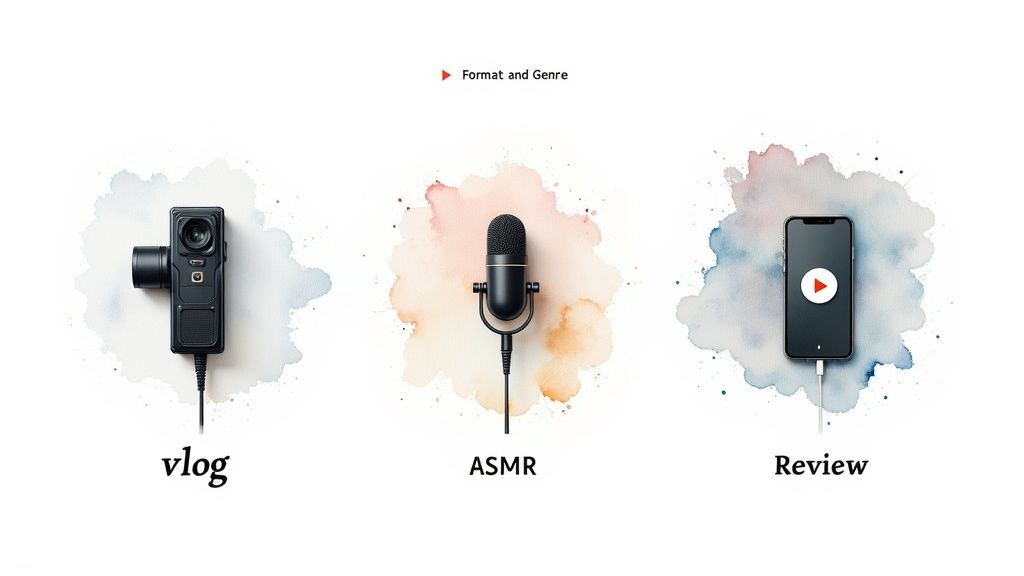
Pairing content format tags with genre or style tags is a powerful way to manage viewer expectations and give the YouTube algorithm precise signals about your video. This strategy involves explicitly stating what your video is (e.g., a vlog, review, or livestream) and how it feels (e.g., comedy, horror, or ASMR). This clarity helps YouTube match your content with audiences who are not just interested in your topic, but also in the specific way you present it, making it a crucial component in any list of the best tags for YouTube.
This approach works by creating a highly specific content identity. A tag like review is good, but tech review combined with comedy tells the algorithm to find users who enjoy humorous takes on new gadgets. This prevents your video from being shown to viewers expecting a dry, technical analysis, which can lead to poor watch time and negative signals. Properly combining these tags ensures your video lands in front of the most receptive audience possible.
Actionable Implementation and Examples
This tagging model is used by top creators to carve out their unique space and attract loyal subscribers. Notice how the format and genre work together to define the viewing experience:
- Format:
vlog+ Genre:entertainment(Used by creators like Logan Paul for daily-life content) - Format:
ASMR+ Genre:relaxation(The core strategy for channels like ASMR Darling) - Format:
product review+ Genre:tech gadgets(A staple for channels like Unbox Therapy) - Format:
shorts+ Genre:comedy(A powerful combination for quick, viral humor)
This method is especially effective for short-form content. For a detailed guide on optimizing this format, explore this essential guide to creating viral YouTube Shorts that convert.
Strategic Tips for Application
To effectively implement this strategy, focus on clarity and consistency:
- Prioritize Format: Begin your tag list with the format tag (e.g.,
livestream,tutorial,shorts) followed by the genre tag. This tells the algorithm the video’s structure first. - Use Established Terms: Stick to widely recognized format and genre terms like
unboxing,let's play, ordocumentary. Avoid creating unique or obscure tags that have no search volume. - Combine for Hybrid Content: If your video blends styles, don't be afraid to use multiple tags. A video could be a
tutorial, aDIY project, and acomedyall at once. - Analyze Performance: Track which format and genre combinations yield the best audience retention and engagement in your YouTube Analytics to refine your future content strategy.
8. Audience Demographic + Interest Tags
Beyond tagging what your video is about, a powerful strategy is to tag who your video is for. Using audience demographic and interest tags helps the YouTube algorithm precisely identify and match your content with its ideal viewers. This technique is crucial for finding the best tags for YouTube because it targets people based on their identity and passions, leading to higher engagement, watch time, and subscriber loyalty.
This method works by signaling to YouTube the specific audience segments that will find your content most relevant. While a tag like budgeting tips is good, adding millennials or Gen Z finance tells the algorithm to serve your video to viewers within those demographic cohorts who have shown an interest in financial topics. This targeted approach can give you a significant advantage in crowded niches by connecting with a well-defined community.
Actionable Implementation and Examples
This strategy is highly effective for channels built around a specific community or lifestyle. It ensures your content reaches the people who will not just watch, but also relate to and engage with it on a deeper level.
- For Comedy: A channel like Dad Bod Comedy might use
men over 30,dad jokes, ordad lifeto connect with its core audience. - For Finance: A creator focused on Millennial Money would use tags like
millennial money,personal finance for 20s, orinvesting for Gen Z. - For Health: A channel like Mama Doctor Jones successfully targets
new mothers,pregnancy journey, andpostpartum careto reach a highly specific and engaged demographic. - For Culture: A channel like Ask Indian can use geographic and cultural tags such as
Indian culture,life in India, orIndian diasporato connect with a global audience.
Strategic Tips for Application
To effectively implement demographic and interest tags, follow these best practices:
- Dig into Analytics: Use YouTube Analytics and Google Analytics to understand your current audience's age, gender, location, and interests. Align your tags with the data you see.
- Combine and Conquer: Pair demographic tags (
millennials) with interest tags (passive income) for hyper-targeted precision. This combination is more powerful than using either alone. - Use Community Language: Research niche communities on Reddit, Facebook, or other forums. Use the self-identified terms and slang they use to describe themselves.
- Maintain Balance: Dedicate a small but significant portion of your tag block (e.g., 2-4 tags) to demographics. Don't let them overpower your primary topic-based tags.
9. Seasonal + Holiday Event Tags
Capitalizing on seasonal trends and holiday events is a powerful way to tap into predictable surges in search traffic. By using seasonal and holiday event tags, you align your content with specific times of the year when viewer interest is at its peak. This strategy positions your videos to be discovered by a massive, highly engaged audience actively searching for event-related material, making it a crucial component in any list of the best tags for YouTube.
This method works by anticipating user search behavior around major holidays, seasons, or annual events like Black Friday. Creating and tagging content for Christmas recipes or New Year resolution workouts ensures your videos surface precisely when those topics are top of mind. This proactive approach allows you to ride waves of organic interest, driving views and subscriber growth with content that feels timely and relevant.
Actionable Implementation and Examples
This strategy is highly effective across numerous niches, as nearly every industry has a seasonal or holiday angle. Top creators and brands consistently use this method to connect with their audience during key moments of the year:
- Food:
Christmas recipes(Used by channels like Tasty in November/December) - E-commerce/Tech:
Black Friday deals(A staple for tech reviewers and brands in November) - Fitness:
New Year resolution workouts(Common for fitness channels in January) - Fashion:
Valentine's Day outfits(Used by fashion brands like Fashion Nova in February)
By timing your content and tags with these events, you insert your videos directly into high-traffic conversations, capturing viewers when their intent to watch and engage is at its highest.
Strategic Tips for Application
To effectively leverage seasonal and holiday tags, planning and timing are essential. Follow these best practices for maximum impact:
- Plan Ahead: Begin your content planning 4-6 weeks before a major holiday to allow ample time for production and optimization. Upload the finished video 2-3 weeks before the event to give the algorithm time to index it.
- Be Specific with Dates: Use tags that include the year, such as
Christmas 2024, alongside broader tags likeChristmas. This helps you rank for current event searches while building long-term evergreen value. - Niche-Specific Research: Identify which holidays and seasons resonate most with your specific audience. A gaming channel might focus on a
summer game sale, while a DIY channel could targetHalloween decorations DIY. - Archive and Repromote: Don't let good seasonal content go to waste. Archive high-performing videos and repromote them the following year by updating the title, description, and tags with the current year.
Top 9 YouTube Tag Types Comparison
Automating Your Tagging Strategy for Scalable Growth
Mastering the nine distinct tagging strategies we've explored provides a comprehensive toolkit for unlocking discoverability on YouTube. From the foundational Broad Category + Niche Modifier tags to the highly specific Long-Tail Keyword and Question-Based tags, you now have the blueprints to build a robust and multi-faceted approach. We've seen how a strategic mix of Branded, Competitor, and Audience Demographic tags can carve out your unique space in a crowded niche, while leveraging Trending, Seasonal, and Format-Specific tags ensures your content remains relevant and easily categorized by the YouTube algorithm.
The core lesson is this: effective tagging is not a one-time, set-it-and-forget-it task. It is a dynamic, iterative process of research, application, and refinement. Finding the best tags for YouTube isn't about discovering a single "magic" keyword; it's about consistently deploying a portfolio of well-researched tags tailored to each specific video's content, audience, and goals.
From Manual Effort to an Automated Engine
For busy content creation, e-commerce, and digital marketing teams, the challenge isn't just knowing what to do, but finding the time to do it consistently and at scale. The manual process of researching, validating, and applying a nuanced tag mix for dozens or even hundreds of videos can quickly become a significant bottleneck, draining valuable creative and strategic resources. This is where a strategic shift from manual execution to automated systems becomes a competitive advantage.
The key to sustainable growth lies in systematizing your workflow. By creating templates, standardizing your research process, and leveraging the right tools, you can transform tagging from a time-consuming chore into an efficient, data-driven growth machine. The goal is to free up your team's cognitive energy to focus on high-impact activities like performance analysis, trend spotting, and creative strategy, rather than repetitive operational tasks.
Key Takeaway: The most successful YouTube channels don't just use great tags; they build a scalable system for consistently implementing great tagging strategies across their entire content library.
Actionable Next Steps: Building Your Scalable Tagging Workflow
To put these principles into practice, here are your immediate next steps:
-
Develop Your Tagging Templates: Based on the nine categories discussed, create several "tag pack" templates for your most common video formats. For example, have a "Product Tutorial" template, an "Industry News" template, and a "Brand Story" template, each with a pre-defined structure for mixing different tag types.
-
Standardize Your Research Process: Create a simple checklist for your team to follow when researching tags for a new video. This should include steps like analyzing 3-5 competitor videos, using a keyword research tool to validate search volume, and checking YouTube's autocomplete suggestions. This ensures consistency and quality, no matter who is publishing the video.
-
Integrate Production and Optimization: The most significant efficiency gains come from integrating your content creation and optimization workflows. When video production is streamlined, your team has more bandwidth to focus on the strategic elements that drive discoverability, such as perfecting your list of the best tags for YouTube videos in your pipeline.
Ultimately, mastering your tagging strategy is about more than just appeasing an algorithm. It’s about building a direct line of communication with your target audience, ensuring the valuable content you create is found by the people who need it most. By systematizing this process, you are not just optimizing videos; you are building a predictable and scalable engine for audience growth and brand influence.
Ready to reclaim hours of production time and focus your team on high-impact strategy? Aeon automates the entire video creation process, enabling you to produce studio-quality videos from text in minutes and freeing your team to focus on the strategic optimization that drives real growth. Turn your content workflow into a powerful, scalable engine by visiting Aeon to learn more.