
Social commerce isn't just a feature anymore; it’s a complete toolkit that transforms social media apps into fully functional storefronts. This allows people to find, look at, and buy products without ever leaving their favorite app, turning that mindless scrolling into active shopping. It creates a seamless journey from the moment of inspiration to the final purchase.
The Rise of Social Commerce and Why It Matters Now
The line between social media and online shopping has all but vanished. Today, social commerce is a fundamental shift in how people connect with brands. Instead of being pushed to an external website, customers can now complete the entire buying process—from seeing a product in a TikTok video to checking out—all within the same app. For any modern brand, capturing a sale at that peak moment of interest is everything.
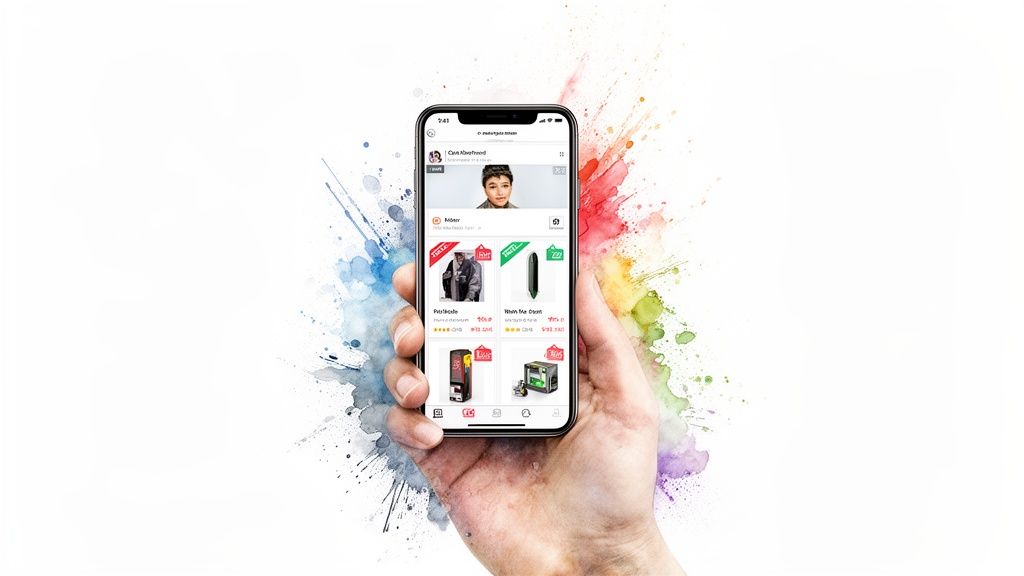
This integrated experience holds massive advantages over the old-school e-commerce funnel. By embedding the store directly where people are already spending their time, social commerce drastically shortens the path to purchase. This immediacy delivers real business results, boosting both engagement and conversions.
For marketing and e-commerce teams, the core benefits are clear:
- Frictionless Purchasing: By cutting out the redirect to another website, you reduce the chances of cart abandonment and make checkout a breeze.
- Authentic Discovery: Products are often featured by creators and influencers who audiences already trust, adding a layer of social proof that's hard to replicate.
- Higher Conversion Rates: When a customer can buy the second they feel inspired, capturing those impulse purchases becomes so much easier.
The financial impact of this shift is simply staggering. The global social commerce market is already a powerhouse valued at around $1.63 trillion today and is on track to grow by more than 30% annually over the next decade. Think about it: 53% of global users are already buying products directly through platforms like Facebook and Instagram. You can dig into more social commerce statistics and trends from inbeat.agency to see just how much this market is reshaping retail.
By collapsing the sales funnel, social commerce platforms meet customers exactly where they are. The ability to move from a captivating Reel to a completed purchase in seconds is no longer a novelty—it's a core expectation for a new generation of shoppers.
This instant, content-first shopping experience has made social commerce platforms an indispensable sales channel. They give you a direct line to revenue and offer incredible insights into customer behavior, helping you build stronger, more authentic relationships. For any team focused on growth, getting a handle on these platforms isn't just an option anymore; it’s the key to staying competitive.
Core Features That Power Social Commerce
Social commerce platforms work by turning passive scrolling into active shopping, embedding powerful retail tools right into the user experience. These features shorten the path from seeing a product to buying it, creating a seamless journey that keeps customers inside a single app. If you want to build an effective strategy, you have to understand these core capabilities first.

At the heart of it all are Shoppable Posts and Stories. This is the bread and butter—allowing brands to tag products directly in their visual content. Someone sees a jacket they love in an Instagram Reel, taps a little shopping bag icon, and boom—they're on a product detail page without ever leaving the app.
This simple function is a game-changer. It closes the gap between inspiration and action, capturing a customer's interest right when it peaks. Without shoppable tags, that fleeting moment is lost as the user clicks away to search for the product on another site.
Integrated Catalogs and Storefronts
To make any of this happen, platforms need In-App Catalogs and Native Storefronts. Brands can upload their entire product line, essentially creating a fully functional shop right on their social media profile. This digital storefront becomes the go-to spot for discovery and browsing.
Think of it as a mini-website built directly into your profile page. Users can flick through collections, check out product details, and see pricing, all with the familiar feel of an e-commerce site but with the added punch of social engagement. This native setup is what makes the whole process feel so smooth.
Live Shopping and Creator Tools
Live Shopping takes things up a notch by mixing the energy of a live broadcast with the instant gratification of e-commerce. During a live stream, hosts can show off products, answer questions on the fly, and drop exclusive deals to create a sense of urgency and community. Viewers can buy featured items with a few taps, directly from the video player.
This format thrives on authenticity and real-time interaction, making it a perfect match for influencer-led campaigns. To support this, platforms also offer Creator Collaboration Tools that make partnerships much easier.
- Co-authored Posts: Brands and creators can share a single post that shows up on both of their profiles, instantly multiplying its reach.
- Affiliate Tagging: Creators can tag products with their own unique affiliate links to earn a commission on any sales they generate.
- Gifting and Seeding Management: These are tools designed to manage the logistics of sending products out to influencers for reviews and promotions.
These features don't just drive sales; they build communities and foster trust. A huge part of their power comes from leveraging social proof in marketing, effectively turning audience trust and recommendations into revenue.
Seamless Checkout and Payments
Finally, the whole journey comes together with a Frictionless In-App Checkout. The best social commerce platforms let customers complete their purchase using saved payment and shipping info without ever bouncing them to an external website. This is the last, crucial step that slashes cart abandonment and drives conversions home.
Each of these features—from shoppable video to native checkout—is designed to tear down barriers. You can learn more about how video, in particular, drives sales in our detailed guide on the rise of shoppable video platforms. By understanding how these tools work together, your team can design an experience that guides customers effortlessly from inspiration to checkout.
Comparing the Top Social Commerce Platforms
Choosing the right social commerce platform isn't about finding a single "best" option. It's about finding the best fit for your brand's audience, products, and unique content style.
While many platforms offer similar features on the surface, their core algorithms, user behaviors, and content ecosystems are worlds apart. A deeper look into these nuances is where you'll discover where your brand is most likely to connect and convert. We'll focus on the three heavyweights in the visual commerce space: Instagram Shops, TikTok Shop, and Pinterest Shopping.
Instagram Shops: The Polished Lifestyle Marketplace
Instagram has gracefully evolved from a simple photo-sharing app into a full-blown lifestyle marketplace. Its power comes from its highly visual, aspirational environment where aesthetics rule. For brands in fashion, beauty, and home decor, Instagram Shops offers a seamless way to turn beautiful content into direct sales.
The platform’s content-to-commerce workflow is incredibly smooth. A user can spot a dress in a Reel, tap a product tag, see the details, and check out right in the app—all within seconds. According to Meta, 29% of people have already bought something directly on Instagram, which shows just how comfortable users are with this behavior.
This screenshot of an Instagram Shop shows the clean, integrated storefront that sits directly on a brand's profile.
The layout feels natural and familiar, almost like a traditional e-commerce site, but it keeps the user locked within the social environment they already know and trust.
Plus, its integrations with e-commerce giants like Shopify make backend management a breeze for DTC brands. Features like Product Drops are perfect for building hype around new launches, and creator affiliate tools let brands leverage trusted voices for more authentic promotions. This mix makes Instagram a perfect home for brands with a strong visual identity and a creator-led marketing strategy.
Key Differentiator: Instagram is brilliant at converting high-intent followers who are already bought into a brand's aesthetic. The journey is less about random discovery and more about curating a shoppable lifestyle that followers want to be a part of.
TikTok Shop: The Entertainment-Driven Sales Engine
TikTok Shop plays by a completely different set of rules: entertainment first, commerce second. Forget Instagram's polished feeds; TikTok’s algorithm is all about virality and raw engagement, turning trending sounds and user-generated challenges into massive, unexpected sales opportunities.
A product on TikTok Shop often goes viral not because of a slick brand campaign, but because a creator authentically weaves it into an entertaining video. This creates a potent form of social proof where the product becomes part of a cultural moment. The entire workflow is built for speed, with prominent shopping cart icons on videos and an effortless in-app checkout.
The creator monetization model here is also far more direct. TikTok's affiliate program makes it incredibly easy for creators to link products and earn commissions, which fuels the massive "TikTok Made Me Buy It" ecosystem.
- Best for: Products with a serious "wow" factor, quirky gadgets, affordable beauty items, or anything that can be shown off in a short, punchy video.
- Audience: Mainly Gen Z and younger millennials who are more interested in trends and authenticity than brand loyalty.
- Challenge: The algorithm is a wild card. Brands have to be agile, ready to jump on trends, and willing to hand over creative control to creators to really win.
Pinterest Shopping: The Visual Discovery and Planning Tool
Pinterest has carved out a unique niche for itself among social commerce platforms. It operates less like a social network and more like a visual search engine for future plans. People come to Pinterest with real intent—they're planning a wedding, redecorating a room, or finding a new recipe. This forward-looking mindset makes it a goldmine for high-consideration purchases.
The whole shopping experience is built around Product Pins. They look just like regular Pins but are packed with rich metadata like pricing, availability, and a direct link to buy. When someone saves a Product Pin to a board, they’re essentially building a personal, visual shopping list. The sales cycle is much longer here, but it often leads to higher average order values.
Unlike the fleeting trends of TikTok or the in-the-moment vibe of Instagram, Pinterest content has an incredibly long shelf life. A single Pin can keep driving traffic and sales for months, or even years. This makes it the perfect platform for evergreen products in categories like home goods, furniture, DIY, and bridal.
To help you see how these platforms stack up, here’s a quick side-by-side comparison.
Feature Comparison of Leading Social Commerce Platforms
So, what’s the final verdict? It all comes back to your business goals. If your brand is built on aspirational visuals and influencer marketing, Instagram is your natural habitat. If you sell a product that could catch fire in a viral trend, TikTok Shop offers unmatched potential for explosive growth. And if your customers are planners, Pinterest gives you a direct line to their long-term intentions.
How to Implement a Social Commerce Strategy
Making the jump from traditional e-commerce to a more integrated social commerce model isn't as simple as flipping a switch. It’s about weaving your products directly into the fabric of your social media content, creating a seamless journey from the moment a customer discovers an item to the final checkout—all without ever leaving their favorite app.
Get Your Backend in Order First
Before you even think about the creative side, you have to nail the technical foundation. The first step is synchronizing your product catalog with the social commerce platforms you plan to use. This is non-negotiable.
It means your inventory, pricing, and product details must be perfectly aligned everywhere, all the time.
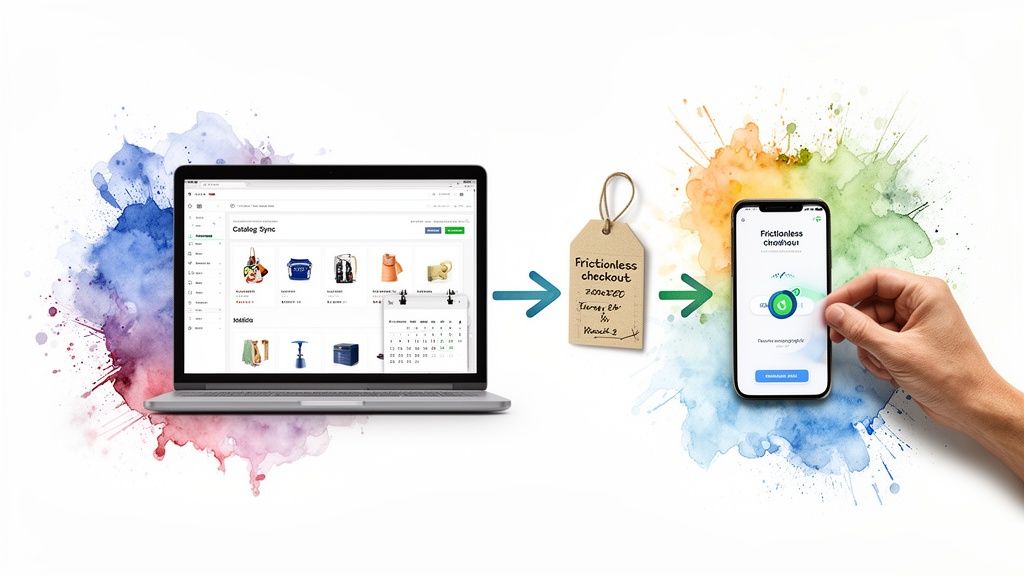
Without this sync, you’re setting yourself up for disaster. Imagine a customer seeing a product they love, only to find it's out of stock or listed at the wrong price. That's a quick way to lose trust. Thankfully, most major e-commerce platforms offer direct integrations that automate this, making it a set-it-and-forget-it part of your setup.
Optimize Product Listings for Social Discovery
Once your catalog is synced, it’s time to rethink how your products show up online. A product listing that works perfectly on your website will likely fall flat in a fast-scrolling social feed. Here, the game is all about visual appeal and instant understanding.
- Compelling Visuals: Ditch the sterile product shots. Use high-quality, platform-native images and videos that show your products in real-world situations. Match the vibe of the platform, whether that’s a polished Instagram aesthetic or an authentic, unscripted TikTok.
- Concise Descriptions: Keep it short and punchy. Write engaging descriptions that immediately highlight the key benefits. Use emojis and clever formatting to make the text easy to scan and inject your brand's personality.
- Clear Product Tagging: Make sure your product tags are accurate and easy to see. This tiny detail is what turns a simple piece of content into a shoppable post.
A common mistake is just copying and pasting website product descriptions into social listings. Social media requires a different language—one that is more conversational, direct, and built for a mobile-first audience that values speed and authenticity.
To really make this work, your social commerce efforts need to fit into a broader omnichannel marketing approach. This ensures your brand story and messaging feel consistent, no matter where a customer bumps into you.
Develop a Content-Driven Sales Plan
Your social storefront is just a space—it won't drive sales on its own. You need a constant flow of great content to pull people in. This means creating a plan that blends organic posts with paid ads, giving customers multiple ways to find and buy your products.
A solid content strategy should mix up the formats to show off your catalog in different ways. For example, you could use Instagram Stories for a behind-the-scenes peek, TikToks for fun product demos that could go viral, and stunning feed posts for those aspirational lifestyle shots.
Don't forget to work with creators. Their genuine endorsements can send a ton of traffic and sales your way, especially when you pair them with affiliate tools. To really dive deep, check out our guide on building a powerful user-generated content strategy to amplify your reach.
Create a Frictionless Checkout Experience
This is it—the final, most crucial step. You have to make the checkout process ridiculously easy. Every extra click, every form field, is another chance for a customer to abandon their cart. The holy grail of social commerce is keeping the user inside the app from start to finish.
This is where native checkout features are a game-changer. By letting customers use the payment and shipping info they already have saved on the platform, you can shrink the entire buying process down to a few quick taps.
Here's how to nail this final step:
- Enable In-App Checkout: Always choose platforms that offer a native checkout solution. Sending users to your website adds friction they don't want.
- Offer Multiple Payment Options: Make it easy for people to give you money. Support popular methods like Apple Pay, Google Pay, and PayPal.
- Communicate Clearly: Be upfront about shipping costs, delivery times, and your return policy right on the product page. No surprises.
By focusing on these four pillars—backend sync, optimized listings, a great content plan, and a seamless checkout—you can build a social commerce strategy that turns passive followers into loyal, active customers.
Measuring Success with the Right KPIs
So, how do you prove that your investment in social commerce is actually paying off? Forget likes and shares. To justify the spend, you need to track the metrics that connect the dots between social activity and actual sales.
Moving past these so-called vanity metrics is the only way to calculate a real ROI and make smart decisions about where to double down. The right Key Performance Indicators (KPIs) tell a clear story, showing you exactly how users are interacting with your products in their feeds and which paths from discovery to purchase are working best. This is the data you’ll build on to scale your efforts intelligently.
From Engagement to Conversion
The first and most important metric has to be your Conversion Rate from social channels. This tells you the percentage of users who actually buy something after clicking a shoppable post, story, or ad. A strong conversion rate is a clear sign that your content is hitting the mark and your in-app checkout is smooth and easy.
Next up is the Average Order Value (AOV) from your social sales. Tracking AOV gives you a feel for the spending habits of your social audience. For example, if you find that customers coming from TikTok consistently spend more than those from Instagram, that’s a signal to start pushing your higher-priced items on that platform.
The goal here is simple: connect every tap, view, and click to a real business outcome. If you can’t draw a straight line from your social commerce activity to your revenue, you're flying blind. You won't know the difference between genuine buying intent and passive scrolling.
Most platforms offer pretty detailed analytics dashboards to help you keep tabs on these numbers. Take this screenshot from TikTok Ads Manager, for instance. It shows exactly how you can monitor key conversion events and their associated costs.
This kind of data lets you see your cost per result for actions like "Add to Cart" and "Complete Payment," giving you a granular view of your funnel's performance.
Measuring User Intent and Long-Term Value
While sales are the end goal, you also need to track the earlier signs of interest. Metrics like Product Tag Taps or the Click-Through Rate (CTR) on your shoppable links are fantastic for gauging how much appeal your products have at first glance. If a video racks up thousands of tag taps but very few sales, that’s a red flag—it could point to an issue with your product page, your pricing, or a clunky checkout process.
Finally, don't forget the long game. Track the Customer Lifetime Value (CLV) of customers you acquire through social channels. This KPI estimates the total revenue you can expect from a single customer over time. A high CLV from a specific platform shows it’s bringing you more than just one-time buyers; it's delivering loyal, repeat customers who provide lasting value.
By focusing on these four core metrics, your team can build a solid framework for measuring what matters and fine-tuning your social commerce strategy for real, sustainable growth.
Choosing the Right Platform for Your Brand
Picking the best social commerce platform isn't about finding the one with the longest feature list. It's about strategic alignment—finding the platform that speaks the same language as your target audience and makes your products look their best. The right choice creates a direct line between what your brand does well and how your customers actually behave online.

To make this decision easier, let's walk through three different brand scenarios. Each one shows how a platform's unique ecosystem is a better fit for certain products and marketing styles. This approach helps shift the conversation from a dry list of features to practical, real-world recommendations.
For the Fast-Fashion Brand
Recommendation: TikTok Shop
Fast fashion moves at the speed of trends and thrives on impulse buys. TikTok's entertainment-first algorithm is the perfect engine for this. Products don't go viral here because of slick, polished ads; they explode when creators organically feature them in a viral challenge or a "get ready with me" video.
The entire strategy hinges on tapping into the "TikTok Made Me Buy It" phenomenon. This means you have to empower creators with affiliate links and give them the freedom to produce authentic, high-energy content that feels more like entertainment than a sales pitch. Success is all about how quickly you can spot, react to, and fuel emerging trends, turning those viral moments into instant sales.
For the Home Decor Brand
Recommendation: Pinterest Shopping
Buying home decor is a much more considered purchase, driven by long-term planning and a hunt for inspiration. Pinterest is essentially a visual search engine where people actively build out their future projects, whether it's a full room makeover or just some seasonal decorating ideas. They arrive with real intent, which makes them an incredibly qualified audience.
Pinterest's biggest advantage is the long shelf-life of its content. A post on other feeds might last a day, but a well-designed Product Pin can keep driving traffic and sales for months—or even years—as new users discover and save it to their boards.
Your strategy here should be built around evergreen, inspirational content. Focus on creating beautiful lifestyle images and practical tutorials that show your products in a real-world context. By organizing products into themed boards like "Minimalist Living Room Ideas" or "Cozy Bedroom Inspiration," you can catch users in the earliest stages of their planning and build a lasting sales funnel.
For the Beauty Brand
Recommendation: Instagram Shops
Beauty brands are built on stunning aesthetics, compelling visual stories, and trusted reviews. Instagram’s ecosystem is practically made for this, perfectly blending gorgeous visuals in Reels and Stories with a completely integrated storefront. You can learn more about how to get going in our guide to setting up an Instagram Shop that sells.
The game plan involves a smart mix of high-quality brand content and authentic creator collaborations. Features like AR try-on filters for makeup, influencer affiliate shops, and shoppable video tutorials can turn your profile into a virtual beauty counter. It's a place where followers can discover, experiment, and buy—all in just a few taps.
Social Commerce FAQs
When marketing and e-commerce teams start digging into social commerce, a few practical questions always pop up. Let's clear up some of the most common points of confusion.
What Is the Difference Between Social Commerce and E-commerce?
The real difference is where the sale actually happens. Traditional e-commerce uses social media to push you to an external website to buy something. You see an ad, you click, you leave the app, and you land on a product page.
Social commerce platforms get rid of that extra step entirely. The whole thing—from seeing a cool product to pulling out your credit card—happens right inside the social media app. It’s a much smoother, in-the-moment experience that nails those impulse buys you'd otherwise lose when someone has to jump to a different site.
How Much Does It Cost to Sell on These Platforms?
Most platforms don't hit you with big upfront fees. Instead, they usually work on a transaction-based model. When a sale goes through their in-app checkout, they'll typically take a small cut.
For example, a platform might charge a 2.9% processing fee for each purchase. It's super important to read the fine print on each platform’s fee structure because those little percentages can directly squeeze your profit margins.
How Do You Handle Customer Service for Social Sales?
Good customer service here means meeting people where they are. That means you’re handling questions and problems directly through the platform's messaging tools, like Instagram DMs or Facebook Messenger.
The best approach? Set up a dedicated workflow just for social media inquiries. You need a system to ensure quick replies to questions about orders, shipping, or returns. Your DMs are now a primary customer support channel, and treating them that way is key to keeping customers happy and coming back for more.
This keeps the entire conversation in one place, right where the customer first engaged with your brand, making the whole experience feel seamless.
Ready to create stunning, on-brand visuals for your social commerce campaigns in minutes? With Aeon, you can turn a simple prompt into high-converting ads and studio-quality product shots without the need for expensive photoshoots. Streamline your content creation and launch winning campaigns faster. Start your $5 trial at https://www.project-aeon.com.