Video is no longer just another content format; it's the core of digital communication and the primary driver of engagement, trust, and conversions. Yet, many marketing teams still rely on a limited playbook, creating the same one-size-fits-all content and wondering why their results are stagnating. The truth is, the world of video has fragmented into highly specialized formats, each with its own audience, platform, and purpose.
Simply 'making a video' isn't enough. Success in today's market demands a strategic understanding of the different types of videos at your disposal and how to deploy them effectively. To truly succeed, consider developing a comprehensive modern video content marketing strategy that effectively captivates your audience. This approach ensures every video you create serves a specific, measurable goal within your broader marketing ecosystem.
This guide moves beyond generic advice to provide a comprehensive catalog of the 12 most critical video formats every publisher and marketing team needs to master. We'll break down each type, from high-converting product demos to trust-building UGC videos.
For each format, we will detail:
- Ideal Platforms & Lengths: Where it performs best and for how long.
- Typical Objectives & KPIs: What you should aim to achieve and how to measure it.
- Production Complexity & Tips: A realistic look at the effort required and how to succeed.
- Examples & Use-Cases: Real-world scenarios to inspire your next campaign.
More importantly, we'll show you how to scale creation for each format using advanced tools like Aeon, turning what was once a resource-intensive bottleneck into a streamlined, automated engine for growth.
1. Product Demo Videos
Product demo videos are concise, feature-focused showcases that demonstrate how a product works in a real-world context. This video type is crucial for software-as-a-service (SaaS) companies and e-commerce brands, as it directly addresses customer questions and objections, effectively bridging the gap between consideration and conversion. By visually walking a potential customer through features and benefits, you demystify your offering and build trust.
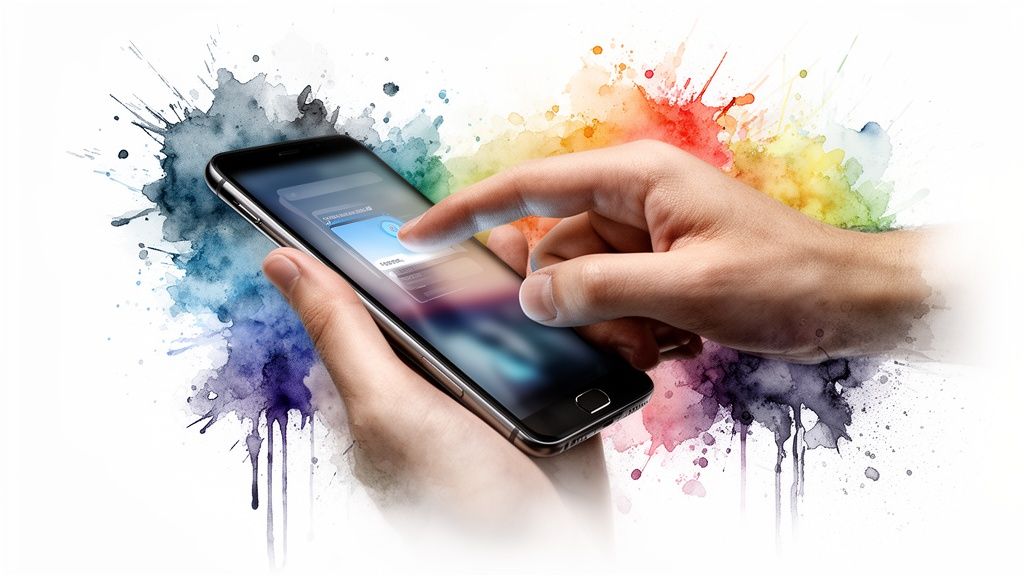
Great product demos, like those from Apple or Slack, focus on solving a specific pain point rather than just listing features. They show the product as a solution, making the value proposition tangible and compelling.
How to Create Effective Product Demos
- Ideal Platforms & Length: Best for product pages, landing pages, and YouTube. Keep them under 90 seconds to hold attention.
- Objectives & KPIs: The main goals are to increase conversion rates, reduce purchase hesitation, and decrease support ticket volume. Key metrics include click-through rate (CTR) to purchase, on-page time, and video completion rate.
- Production Tips: Start by immediately addressing the most significant problem your product solves. Use subtitles for sound-off viewing, especially on social media feeds. A clear call-to-action (CTA) like "Start Your Free Trial" or "Shop Now" is essential at the end.
Aeon Pro-Tip: You can automate the creation of product demos using Aeon's Veo 3.1 engine. It can dynamically generate videos using product catalog data and animate product references with precise screen recordings and object placement, allowing you to scale video production for every feature or product in your lineup.
2. Social Media Ads & Short-Form Content
Social media ads and short-form content are vertical or square-format videos optimized for platforms like TikTok, Instagram Reels, and YouTube Shorts. These fast-paced, attention-grabbing clips are designed to stop scrolling, convey messages quickly, and drive massive engagement within 15-60 seconds. This video format thrives on cultural relevance, authenticity, and immediate value, making it essential for brands looking to connect with a mobile-first audience.
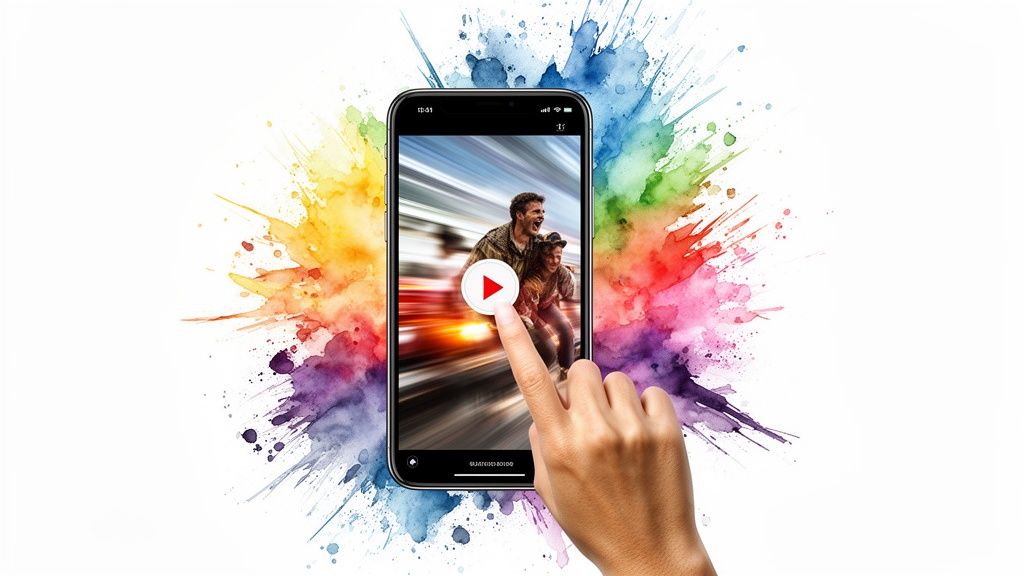
Brands like e.l.f. cosmetics and Duolingo excel in this space by leveraging trending sounds and creator-led styles to launch products and build brand personality. This approach feels less like traditional advertising and more like native entertainment, which is key to its success. Additionally, incorporating viral content such as marketing memes can significantly boost engagement in your social media campaigns.
How to Create Effective Social Media Videos
- Ideal Platforms & Length: TikTok, Instagram Reels, YouTube Shorts, and Facebook Feeds. Keep videos between 15 and 60 seconds for optimal performance.
- Objectives & KPIs: Key goals include increasing brand awareness, driving website traffic, and boosting engagement. Measure success with metrics like view-through rate (VTR), shares, comments, and click-through rate (CTR).
- Production Tips: Hook viewers within the first three seconds to combat scroll fatigue. Leverage trending audio and hashtags to maximize organic reach and discoverability. Use clean, bold text overlays for clarity, especially for sound-off viewing. Always end with a clear, concise call-to-action.
Aeon Pro-Tip: Use Aeon's Quick Ad Maker to instantly turn a single prompt into dozens of high-converting creative variations for A/B testing. Aeon's design tools ensure all text overlays and visual elements remain clean and perfectly on-brand, helping you scale production without sacrificing quality.
3. Testimonial & User-Generated Content (UGC) Videos
Testimonial and User-Generated Content (UGC) videos leverage the power of social proof by featuring real customers sharing their authentic experiences with a product or service. This type of video is incredibly powerful for building trust and credibility, as it presents an unbiased, third-party endorsement. It transforms satisfied customers into brand advocates, providing genuine narratives that resonate far more deeply with potential buyers than traditional advertising.
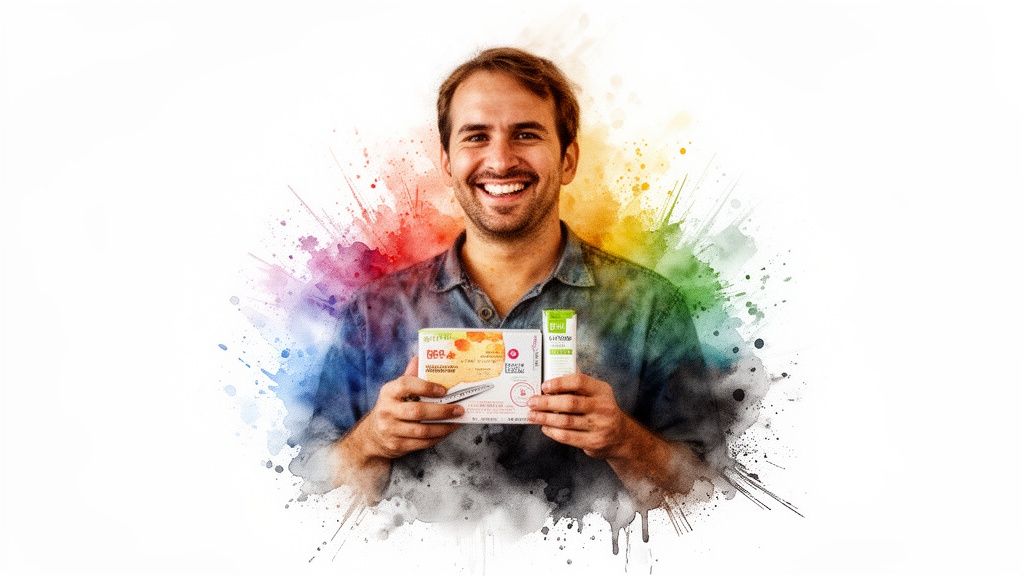
From polished customer success stories like those from Peloton to raw, unscripted before-and-after videos for skincare brands, these videos turn abstract benefits into tangible, relatable results. Campaigns from brands like Airbnb and Native deodorant showcase how authentic user content can create a powerful sense of community and relatability.
How to Create Effective Testimonial & UGC Videos
- Ideal Platforms & Length: Perfect for social media ads (Instagram, TikTok, Facebook), landing pages, and product pages. Keep them short and impactful, typically between 15 and 60 seconds.
- Objectives & KPIs: The primary goal is to build trust and increase conversion rates. Key metrics include engagement rate (likes, comments, shares), conversion rate from viewers, and Cost Per Acquisition (CPA) on paid social campaigns.
- Production Tips: Encourage customers to submit videos by running contests or offering incentives. Provide simple guidelines or prompts, asking them to highlight a specific problem your product solved. It's crucial to retain authenticity; avoid over-polishing the raw footage.
Aeon Pro-Tip: Aeon's AI can rapidly sift through hours of UGC to identify the most compelling moments and automatically compile them into high-impact testimonial ads. The Veo 3.1 engine can also enhance raw footage by stabilizing shaky video, improving audio clarity, and adding brand-compliant subtitles and graphics, all while preserving the authentic feel of the original content.
4. Tutorial & How-To Videos
Tutorial and how-to videos are educational assets that guide viewers through a process, teaching them how to use a product, solve a problem, or master a new skill. This video type is exceptionally powerful for building brand authority and trust, as it provides tangible value beyond the product itself. By helping your audience achieve their goals, you position your brand as a helpful expert and a go-to resource in your industry.
Industry leaders like Canva and HubSpot Academy leverage tutorials to educate users, increase product adoption, and drive organic traffic. These videos answer common user questions, effectively functioning as evergreen content that attracts new audiences through search engines and establishes long-term customer loyalty.
How to Create Effective Tutorial Videos
- Ideal Platforms & Length: Perfect for YouTube, blog posts, and knowledge bases. Aim for under 5 minutes for simple tasks, but longer, in-depth guides (10+ minutes) can perform well if broken into chapters.
- Objectives & KPIs: Key goals include improving customer onboarding, increasing organic traffic, and reducing customer support queries. Track metrics like search rankings for "how-to" keywords, average view duration, and audience retention.
- Production Tips: Use timestamp chapters in your video description to help viewers navigate to specific sections. Keep branding elements like logos and color schemes consistent. For software tutorials, combine clear screen recordings with voice-overs and animated callouts to highlight key actions.
Aeon Pro-Tip: Streamline your educational content with Aeon. Use our engine to automate the creation of software tutorials by combining screen recordings with dynamic overlays and text-to-speech voice-overs. You can easily update tutorials for new software versions by swapping out specific clips, ensuring your content is always current without a full re-shoot.
5. Influencer Collaborations & Sponsored Content
Influencer collaborations are videos created in partnership with content creators who feature your product or brand in their authentic style. This video type leverages the influencer's established credibility and engaged audience to build brand trust and reach new, targeted demographics. By placing your product in a native context, these videos feel less like an advertisement and more like a trusted recommendation, driving both awareness and sales.
These collaborations are powerful because they harness the authenticity of a creator the audience already follows and respects. Brands like FabFitFun with their unboxing videos or GoPro with their athlete-generated content excel at this, seamlessly integrating their products into compelling, creator-driven narratives.
How to Create Effective Influencer Collaborations
- Ideal Platforms & Length: Perfect for YouTube, TikTok, and Instagram Reels. Video length is flexible and should align with the platform's best practices, from 15-second TikToks to 10+ minute YouTube reviews.
- Objectives & KPIs: Key goals include increasing brand awareness, driving referral traffic, and boosting sales. Track metrics like engagement rate (likes, comments, shares), click-through rate on affiliate links, and conversion rate using unique discount codes.
- Production Tips: Focus on clear brand guidelines, not rigid scripts, to preserve the creator's authenticity. Negotiate usage rights upfront so you can repurpose the best-performing content on your own channels. Partnering with micro-influencers (10K-100K followers) often yields higher engagement and a better return on investment.
Aeon Pro-Tip: You can enhance influencer-generated content using Aeon's Veo 3.1. Easily add branded overlays, animated calls-to-action, or polished graphics to raw footage. This allows you to maintain brand consistency while repurposing authentic user content across paid social ads and your website, maximizing the value of each collaboration.
6. Behind-the-Scenes (BTS) Videos
Behind-the-scenes (BTS) videos pull back the curtain to offer an unpolished, authentic look at the people, processes, and culture that define a brand. This video type excels at humanizing a company, building an emotional connection with the audience by showcasing the genuine passion and hard work that goes into its products or services. In an era where consumers demand transparency, BTS content satisfies that need and fosters deep loyalty.
Brands like Patagonia and Everlane have mastered this format by aligning their BTS content with their core values, such as environmental activism or radical manufacturing transparency. These videos aren't just about showing how a product is made; they tell a larger story about the brand's mission and impact, making customers feel like part of a community.
How to Create Effective BTS Videos
- Ideal Platforms & Length: Perfect for Instagram Stories, TikTok, and YouTube. Keep them short and engaging, from 30 seconds for social media clips to 3-5 minutes for deeper dives into company culture or specific projects.
- Objectives & KPIs: The primary goals are to increase brand affinity, build community engagement, and enhance brand transparency. Key metrics include social media engagement rates (likes, comments, shares), brand sentiment scores, and audience retention.
- Production Tips: Authenticity is paramount; avoid over-polishing the footage. Highlight individual team members to give your brand a human face. Share stories about challenges and lessons learned, not just successes, to create a more relatable narrative.
Aeon Pro-Tip: Use Aeon's audio and text overlay tools to add context to raw footage without losing its authentic feel. You can quickly stitch together clips from a factory tour or a team event, adding dynamic captions and brand-aligned music to create compelling narratives that build trust and connection with your audience.
7. Carousel/Multi-Product Videos
Carousel or multi-product videos dynamically feature several products or variations either sequentially or simultaneously. This video type is a powerhouse for e-commerce brands wanting to showcase an entire collection, lookbook, or seasonal promotion in a single, engaging asset. It efficiently communicates range and variety without the need to produce dozens of individual videos, making it a highly scalable format.
Retailers like Nike and Sephora use this format to display new shoe collections or demonstrate a complete makeup look using multiple products. This approach not only boosts average order value by cross-promoting items but also enhances the user's shopping experience by providing curated inspiration.
How to Create Effective Carousel/Multi-Product Videos
- Ideal Platforms & Length: Perfect for social media ads (Instagram Stories, TikTok), product category pages, and email marketing. Keep them snappy, between 15-45 seconds.
- Objectives & KPIs: The primary goals are to increase product discovery, drive traffic to category pages, and lift average order value (AOV). Key metrics include click-through rate (CTR), add-to-cart rate, and conversion rate from viewers.
- Production Tips: Group products by a coherent theme like a new collection, color story, or specific use case. Use smooth, consistent transitions and limit the display to 5-7 products to avoid overwhelming the viewer. Add text overlays with pricing or product names to drive direct purchase intent.
Aeon Pro-Tip: Use Aeon's multi-product composition engine to automate the creation of catalog-driven videos at scale. You can dynamically generate carousels for every product category, A/B test different product combinations, and update pricing or availability in real-time without needing to re-render the entire video.
8. Live Streaming & Real-Time Video
Live streaming and real-time video are unscripted broadcasts that create an immediate, authentic connection with an audience. This video type thrives on platforms like TikTok Live, YouTube Live, and Instagram Live, fostering genuine interaction through Q&As, direct commentary, and real-time feedback. It dismantles the barrier between brand and consumer, offering a raw, unfiltered experience that builds community and trust.
Brands like Sephora use live streams for makeup tutorials, while GoPro covers live events and athlete streams, making viewers feel like part of the action. These broadcasts excel at capturing the excitement of the moment, from product launches to exclusive behind-the-scenes content, driving urgency and engagement.
How to Create Effective Live Streams
- Ideal Platforms & Length: Best for social media platforms like TikTok, Instagram, Facebook, and YouTube. Streams can range from 15 minutes for a quick Q&A to over an hour for events or tutorials.
- Objectives & KPIs: Primary goals include increasing audience engagement, building brand community, and driving immediate sales (live shopping). Key metrics are peak concurrent viewers, total unique viewers, average watch time, and chat engagement rate.
- Production Tips: Announce your stream in advance across all channels to maximize viewership. Prepare key talking points, but allow for spontaneous interaction. Actively monitor and respond to comments to make viewers feel heard. After the stream, record and repurpose the best moments into highlight clips for other content.
Aeon Pro-Tip: Leverage Aeon's Scribe 2.0 to enhance your live streams. It can generate real-time captions to improve accessibility and transcribe the entire session instantly. After the broadcast, you can use the transcript to automatically identify key moments and create short-form video clips or blog post summaries, maximizing the value of your live content.
9. Animated Explainer Videos
Animated explainer videos use motion graphics and stylized visuals to break down complex concepts, abstract ideas, or brand values into digestible, engaging content. This video type is exceptionally effective for illustrating intangible services or intricate processes that are difficult to show with live-action footage. By simplifying difficult information through dynamic movement and creative design, you can capture and hold audience attention while making your message memorable.
Iconic examples like Dropbox's original explainer or Slack's onboarding animations demonstrate how this format can clarify a value proposition almost instantly. They transform abstract software benefits into a clear, compelling narrative that resonates with viewers and drives understanding.
How to Create Effective Animated Explainer Videos
- Ideal Platforms & Length: Perfect for homepages, landing pages, social media ads, and YouTube. Aim for 60-120 seconds to maintain optimal engagement.
- Objectives & KPIs: Key goals include increasing user understanding, boosting conversion rates, and reducing bounce rates on key pages. Track metrics like video completion rate, play rate, and lead generation from the video's call-to-action.
- Production Tips: Start with a crystal-clear script; the animation should illustrate the narrative, not substitute for a weak one. Use a consistent color palette and design system aligned with your branding. Always include captions for accessibility and sound-off viewing environments.
Aeon Pro-Tip: You can streamline animated video creation with Aeon's Veo 3.1 engine. Its AI capabilities can generate motion graphics, animate brand assets, and enhance reference images with dynamic movement, allowing you to produce high-quality explainers without extensive manual animation work.
10. Virtual Try-On & Augmented Reality (AR) Videos
Virtual try-on and augmented reality (AR) videos represent a powerful fusion of digital content and the physical world, allowing customers to visualize products in their own space or on themselves. This interactive video type is a game-changer for e-commerce, particularly in fashion, beauty, and home goods, as it directly tackles the primary hesitation of online shopping: the inability to see or try a product before buying. By superimposing a product onto a user's live camera feed, AR videos create an immersive, personalized shopping experience.
Pioneering examples like Sephora's Virtual Artist and IKEA Place show how AR can remove purchase friction. These tools let users test dozens of lipstick shades or see how a new sofa fits in their living room, dramatically increasing purchase confidence and reducing return rates. This technology transforms the passive viewing experience into an active, engaging one.
How to Create Effective AR Videos
- Ideal Platforms & Length: Best integrated directly into product pages on e-commerce sites, mobile apps, and social media platforms like Instagram and Snapchat. The experience is interactive, so "length" is user-dependent, but the initial load time must be under 3-5 seconds.
- Objectives & KPIs: The primary goals are to increase conversion rates, reduce product returns, and boost user engagement. Key metrics include interaction rate (how many users start the AR experience), time spent using the feature, and the conversion rate of AR users versus non-users.
- Production Tips: Ensure the AR experience is intuitive, fast-loading, and works flawlessly across a wide range of devices. Provide clear instructions and a simple user interface. For users without AR-capable devices, offer a fallback static image or standard video to ensure a good experience for everyone. A direct "Add to Cart" CTA within the AR interface is crucial.
Aeon Pro-Tip: You can launch a sophisticated virtual try-on experience without expensive 3D modeling or reshoots. Aeon's Veo 3.1 engine uses AI to repurpose your existing model photos into interactive AR try-on videos, allowing customers to see how clothing fits on different body types, dramatically scaling this high-impact video format.
11. Case Study & Success Story Videos
Case study and success story videos are powerful, in-depth narratives that document how a real customer achieved significant results using your product or service. Going far beyond a simple testimonial, these videos use a storytelling framework to show concrete metrics, outline the transformation process, and provide tangible proof of value. This video type builds immense trust and credibility by letting a satisfied customer become your most convincing advocate.
Major B2B brands like HubSpot and Salesforce use case study videos extensively to demonstrate ROI. They effectively move prospects from consideration to decision by showing a clear, relatable path from a common business challenge to a measurable, successful outcome.
How to Create Effective Case Study Videos
- Ideal Platforms & Length: Perfect for your website's case study section, landing pages, and LinkedIn. Aim for 2-5 minutes for the full story, with 30-second teaser clips for social media.
- Objectives & KPIs: The primary goal is to build social proof and accelerate the sales cycle. Key metrics include lead generation from video views, conversion rates on associated landing pages, and video engagement rate.
- Production Tips: Structure the narrative around Challenge → Solution → Results. Always include specific metrics like revenue increase, time saved, or cost reduction to make the impact concrete. Balance the customer’s authentic voice with professional production quality for maximum credibility.
Aeon Pro-Tip: Use Aeon's Veo 3.1 to automate the creation of case study video variations. Input customer quotes, data points, and B-roll footage, and the engine can generate multiple versions tailored for different platforms or industries. Aeon’s automated subtitling and audio enhancement tools ensure every customer's story is clear and accessible.
12. Shoppable & Interactive Videos
Shoppable and interactive videos transform passive viewing into an active, transactional experience by embedding clickable elements directly into the video player. This type of video content includes product tags, quizzes, polls, and direct checkout links, effectively collapsing the buyer's journey. For e-commerce brands and retailers, this format reduces friction by allowing customers to purchase products at the peak of their interest without ever leaving the video.
This powerful format is a cornerstone of social commerce, with platforms like Instagram, TikTok, and YouTube enabling brands to create seamless shopping experiences. By making video content a direct point of sale, you capitalize on impulse and engagement, turning inspiration directly into revenue.
How to Create Effective Shoppable Videos
- Ideal Platforms & Length: Perfect for social media platforms (TikTok Shop, Instagram Shopping), YouTube, and on-site e-commerce product pages. Length can vary, but short-form videos under 60 seconds excel at driving quick conversions.
- Objectives & KPIs: The primary goals are to shorten the sales cycle, increase conversion rates, and boost average order value (AOV). Key metrics include click-through rate (CTR) on interactive elements, add-to-cart rate, and direct revenue attributed to the video.
- Production Tips: Tag products the moment they appear on screen for contextual relevance. Limit interactive elements to two or three per video to avoid overwhelming the viewer. Ensure clickable hotspots use contrasting colors for high visibility and include essential product details like price in the hover-over information.
Aeon Pro-Tip: With Aeon's Veo 3.1, you can automate the creation of shoppable videos at scale. The engine can ingest your product feed, dynamically generate videos, and automatically overlay interactive product tags and "Add to Cart" CTAs, creating a fully interactive catalog for every SKU.
Comparison of 12 Video Types
From Strategy to Scale: Your Next Move in Video Marketing
We've journeyed through twelve distinct and powerful types of videos, each offering a unique way to engage, educate, and convert your audience. From the raw authenticity of User-Generated Content to the futuristic appeal of Augmented Reality try-ons, it's clear that video is no longer a monolithic marketing channel. It is a dynamic, multifaceted language spoken fluently by modern consumers.
The sheer volume of options can feel overwhelming, but the path forward is one of strategic selection, not exhaustive creation. The power lies not in producing every single video format, but in choosing the right one for the right moment in the customer journey. Your strategy should be a direct response to your business goals and your audience’s needs.
Key Takeaway: A successful video strategy isn't about doing everything at once. It's about identifying a specific objective, selecting the video type that most efficiently achieves it, and executing that format with excellence before expanding.
Charting Your Course: Actionable Next Steps
To transform this comprehensive guide into tangible results, you need a clear plan of attack. Don't let analysis paralysis set in. Instead, focus your efforts by following a simple, three-step process to launch your next video initiative.
- Identify Your Primary Goal: Start by pinpointing your most pressing business need. Are you struggling with low conversion rates on product pages? A Product Demo Video or an interactive Shoppable Video could be your solution. Is your brand failing to build trust and social proof? Prioritize Testimonial Videos or Case Studies.
- Align Format with Funnel Stage: Map your chosen goal to a specific stage of the marketing funnel. For top-of-funnel awareness, Social Media Ads and Influencer Collaborations excel. For mid-funnel consideration and education, Tutorials and Behind-the-Scenes content build connection. For bottom-of-funnel decision-making, nothing beats a compelling Case Study or a hyper-realistic Virtual Try-On.
- Execute and Measure: Once you’ve chosen your format, commit to a pilot campaign. Define your Key Performance Indicators (KPIs) based on the video’s objective, whether it's click-through rate, conversion rate, engagement time, or lead generation. Launch, gather data, and use the insights to refine your next iteration.
Beyond Production: The Scalability Imperative
Mastering the different types of videos is only half the battle. The true challenge for most marketing and e-commerce teams is not a lack of ideas, but a lack of resources to execute those ideas at scale. This is where the traditional production model breaks down, constrained by high costs, long timelines, and creative bottlenecks.
The future of video marketing belongs to teams who can bridge the gap between strategy and execution efficiently. This means leveraging technology to automate the repetitive aspects of creation, allowing your team to focus on high-level strategy and creative direction. Imagine being able to generate hundreds of on-brand product carousels, social ads, or virtual try-on experiences in the time it used to take to produce a single asset.
This level of agility is no longer a distant dream. By integrating AI-powered creation platforms, you can transform your content workflow from a linear, project-based system into a scalable, always-on engine. You gain the ability to test more, learn faster, and respond to market trends in real-time, giving you a decisive competitive advantage. The knowledge you've gained from this article is your strategic map; now it's time to choose the vehicle that will get you to your destination faster than anyone else.
Ready to move from theory to high-volume production? Aeon empowers your team to automate the creation of every video type discussed, from AI-generated social ads to scalable virtual try-on experiences. See how you can build a world-class video strategy without the traditional costs and complexities by exploring Aeon today.