A solid video intro is all about grabbing someone's attention immediately so they don't just scroll on by. It’s a lightning-fast blend of sharp branding, eye-catching visuals, and punchy audio that sets the entire mood for what’s to come and makes your brand instantly recognizable.
Why the First Five Seconds Define Your Video's Success
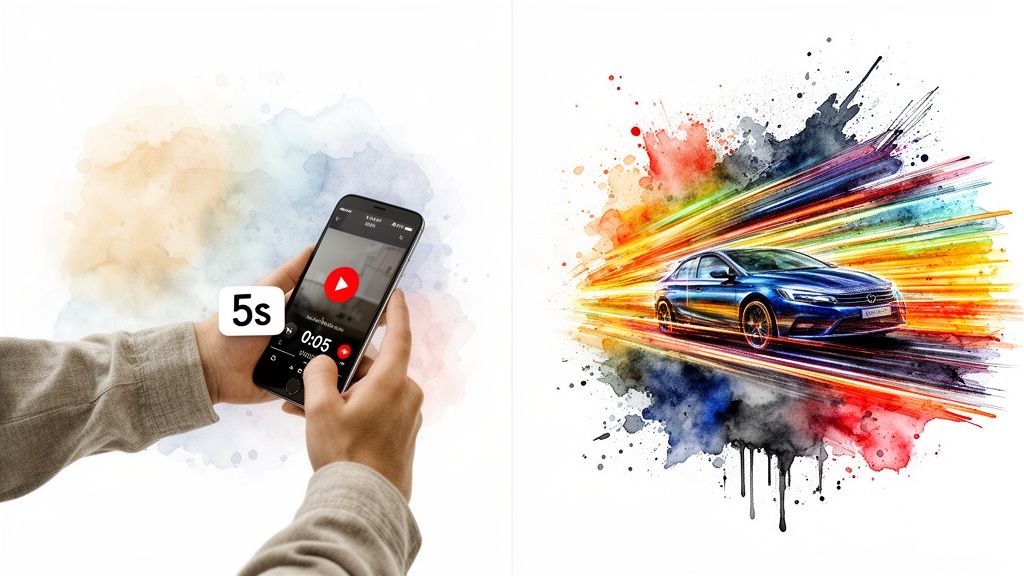
That opening moment—that tiny, fleeting window—is where you either win or lose your audience. We all know attention spans are shot, and a powerful intro isn't just some creative flair anymore. It's a make-or-break business tool that decides whether someone sticks around or swipes away. The old saying "first impressions matter" isn't just a cliché; it's backed by cold, hard data in the video world.
The Science of Viewer Retention
Look at any study on video engagement, and you'll see a massive drop-off right at the beginning. One deep-dive analysis we did found that while a decent 65% of viewers will watch the first 10 seconds, that number absolutely tanks to just 33% by the 30-second mark. You can read our full breakdown here: https://project-aeon.com/blogs/unlocking-the-secrets-of-video-engagement-insights-from-1500-videos.
That staggering decline puts immense pressure on those first few seconds to hook someone. Your intro has to instantly answer the viewer's subconscious question: "Why should I care about this?"
A video intro isn't just a formality—it's a strategic asset. It’s your single best chance to communicate value, establish credibility, and spark curiosity before the viewer’s thumb decides its fate.
From Creative Hurdle to Strategic Advantage
Let me give you a real-world example. An e-commerce brand we know A/B tested two different intros for a new product video.
- Version A: A pretty standard intro with a simple logo animation. Nothing special.
- Version B: A dynamic, 5-second intro that threw the viewer right into the action, showing the product being used in a high-energy, real-world setting.
The results were night and day. Version B didn't just get more clicks to the product page; it drove a noticeable lift in actual sales. This proves that a thoughtful, engaging intro isn't just another production cost—it's an investment with a real, measurable return.
For a quick reference on what makes an intro work, check out this table summarizing the key ingredients.
Table: Key Elements of a High-Impact Video Intro
This table breaks down the essential components that turn a simple opening into a powerful viewer-retention tool.
Getting these elements right is crucial. The good news is that modern platforms are finally removing the bottlenecks that used to make creating high-impact intros a huge pain. It's now totally possible to produce these assets at scale, ensuring every single video you publish starts off on the right foot.
If you want to make sure your intro doesn't just look good but actually gets results, it's worth learning how to make marketing videos that drive conversions.
Blueprint Your Intro Before You Build It
A killer video intro doesn’t just happen in the editing suite. It’s born from a solid plan. I’ve seen it time and time again: teams dive straight into After Effects without a clear vision, and the result is a messy, ineffective intro that took way too long to create. Pre-production is where you translate those big ideas into a concrete, actionable strategy.
It all boils down to one simple question: What is the single, most important goal of this intro? Are you trying to hammer home brand recognition? Maybe you're showcasing a new product or driving viewers to a specific action. Whatever it is, every single decision you make from here on out has to serve that one core purpose.
Define Your Core Message and Vibe
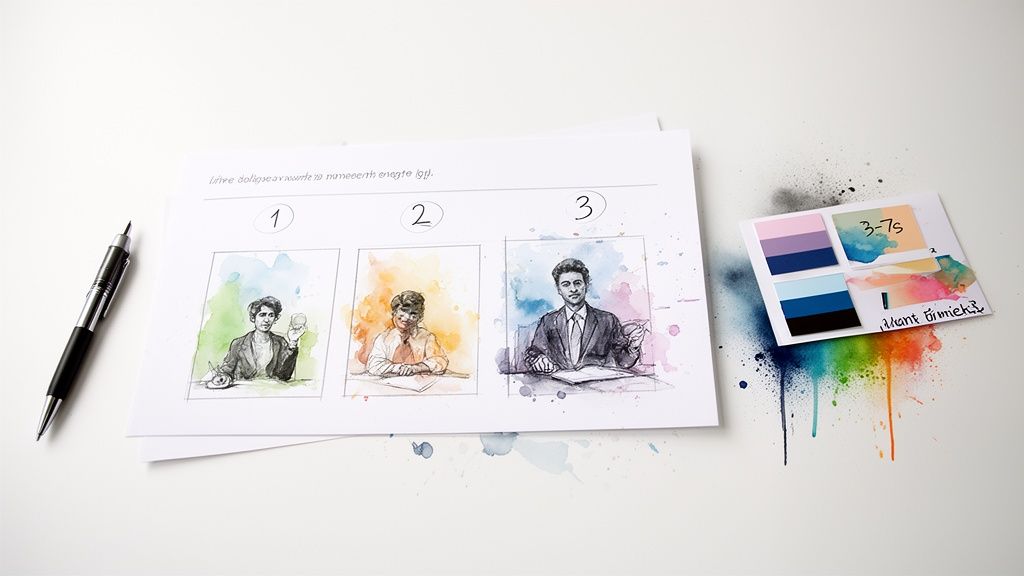
With a goal in hand, you can start to think about the feel of the intro. One of the best ways to get started is by throwing together a simple mood board. This isn't about getting bogged down in complex design work; it's pure inspiration gathering. Pull in colors, fonts, and screenshots of other videos—anything that captures the tone you're aiming for.
This visual reference becomes your north star. It keeps the whole team aligned before a single frame is ever animated, saving you from endless back-and-forth and revisions down the road.
Your intro's job is to make a promise to the viewer about the content to come. A well-planned intro ensures you deliver on that promise from the very first second, building immediate trust and engagement.
Once the mood and message are clear, it's time to map out the sequence. You don't need a Hollywood-level script. For a short intro, a simple storyboard or even a bulleted list outlining the visual flow is more than enough. If you need a hand getting started, check out our practical guide on how to storyboard a video for some actionable tips.
Nail Down the Technicals: Timing and Aspect Ratios
Don't treat the technical details like an afterthought. Things like timing and format are absolutely crucial to your intro's success across different platforms.
-
Timing is everything. The sweet spot for most video intros is somewhere between 3 and 7 seconds. Any shorter and it might not even register. Any longer, and you're practically begging viewers to click away. That brief window is all you need to establish your brand and create a hook without testing anyone’s patience.
-
Adapt to the platform. That classic 16:9 horizontal format you use for YouTube is going to look terrible on TikTok or an Instagram Reel, which lives in a 9:16 vertical world. You have to plan for these different aspect ratios from the get-go. Instead of just awkwardly cropping a horizontal intro, design unique variations that feel native to each platform. Your vertical version, for example, might stack text and graphics differently to make better use of the screen real estate.
This blueprinting phase locks in both your creative direction and your technical specs. By sorting this stuff out up front, you build a solid foundation that makes the actual production process smoother, faster, and way more effective.
Designing Your Brand's Visual Signature
Okay, you’ve got your plan locked down. Now for the fun part: bringing your brand’s visual identity to life on screen. This is where you translate all those static brand guidelines into a moving, breathing signature that people will actually remember. A well-designed intro is your best shot at establishing clear brand positioning right from the get-go.
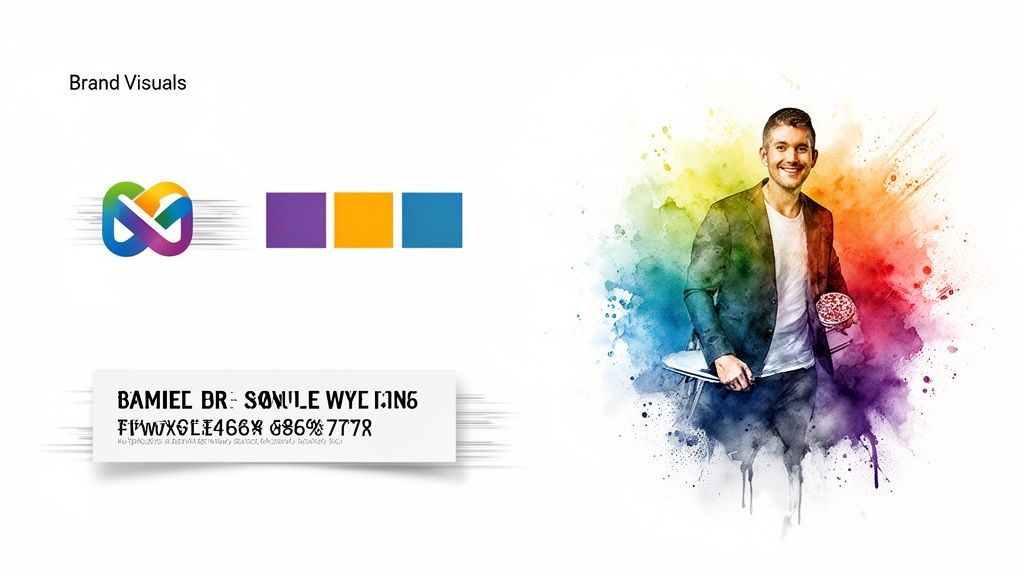
This all starts with your core brand assets. Now is not the time to get experimental with fonts and colors you found on Pinterest. Consistency is everything. Your brand colors need to own the palette, and your typography has to be readable and feel like you, even when it's in motion.
And let's talk about your logo. It's the hero, of course, but that doesn't mean it needs to be slapped across every frame. Sometimes a clever reveal or a clean, final lockup at the end makes a much stronger statement than having it loom over the whole intro.
Choosing an Animation Style That Fits
How your graphics move is just as important as how they look. The animation style should feel like a genuine extension of your brand’s personality. You've got a whole spectrum of options, and each one sends a different signal.
For instance, think about these very different approaches:
- Minimalist Motion Graphics: Clean lines, simple shapes, and buttery-smooth transitions. This is a go-to for tech companies or financial services—any brand aiming for a modern, sophisticated, and efficient vibe.
- Dynamic 3D Reveals: A logo or product popping into existence in 3D can add a seriously premium, high-production feel. This works great for automotive brands, gaming companies, or anyone looking to create a big, cinematic moment.
- Fluid & Organic Motion: Softer, flowing animations just feel more personal and approachable. You see this a lot with lifestyle brands, wellness companies, and creative agencies trying to create a warm, inviting atmosphere.
Your animation isn't just eye candy; it's a form of communication. The speed, the smoothness, and the complexity of the movement all need to align with the story your brand is telling.
Establishing Your Motion Standards
Beyond picking a general style, it's a really smart move to define a set of motion standards. Think of this as your brand's style guide, but for movement. It lays out the specific rules for how things animate, which is crucial for keeping everything consistent across all your videos.
These standards might cover things like:
- Easing Speeds: Do elements ease in and out gently, or do they snap into place with a jolt of energy?
- Transition Types: Are you a fan of smooth fades, sharp cuts, or more playful wipes between scenes?
- Object Behavior: How does text appear? Does it type itself out, fade in, or slide into position?
Defining these rules is what helps build a cohesive brand identity, even if different people or teams are creating the content. It’s a subtle detail, but it’s incredibly powerful for making your brand's visual language instantly recognizable.
And this isn't just fluff. Data shows 80% of viewers form an opinion within the first few seconds, which has a direct impact on how well your campaigns perform. The entire content creation market—which these intros are a big part of—is expected to jump from $43.44 billion in 2026 to $73.49 billion by 2031. This level of detail ensures your investment actually pays off.
Using Sound and Audio to Create an Impact
 While stunning visuals are what grab the eye, it’s the audio that truly makes a video intro stick in someone’s memory. Sound works on a subconscious level, setting the emotional tone faster than any visual ever could. The right audio track can take a decent intro and turn it into an unforgettable brand signature.
This auditory experience is a massive part of making your video intro feel professional and complete. You're looking for audio that doesn't just fill the silence, but actively elevates the on-screen action and reinforces your brand’s personality. It's the difference between a silent film and a blockbuster—sound adds the depth and emotional weight.
Selecting the Right Music
The music you choose is the emotional backbone of your entire intro. It has to match the energy and vibe of your brand. A high-energy tech startup, for example, might go for an upbeat electronic track, while a luxury brand would probably lean toward something more cinematic and refined.
You’ve got a couple of primary paths to take here:
- Royalty-Free Libraries: Platforms like Artlist or Epidemic Sound are goldmines. They offer huge collections of professional-quality music for a simple subscription fee, which is the most practical and cost-effective route for most brands.
- Custom Scores: For a truly one-of-a-kind sonic identity, you can hire a composer to create a custom track. It's more of an investment, but it guarantees your intro music is 100% unique to your brand.
Whatever you choose, the key is finding a track with a clear, impactful beginning. It needs to be easily editable to fit your intro's very short duration.
A common mistake is picking a great song that takes way too long to build. Your intro is only a few seconds long, so you need a track that delivers its energy and melody almost instantly.
The Power of Subtle Sound Design
Beyond the music, it's the small, subtle sound effects—the sound design—that really elevate the perceived quality of your intro. These are the tiny auditory cues that bring your visuals to life. Think of the crisp swoosh as your logo flies onto the screen or the soft click as a tagline locks into place.
These little details make an intro feel more polished and tangible. They add a layer of texture that, while often unnoticed consciously, makes the whole experience more satisfying for the viewer. Nailing this is a huge step in making a video intro that feels genuinely high-end. For anyone looking to master this, our guide on syncing audio to video effectively dives much deeper.
Designing for Silent Viewing
Here’s the modern reality: a huge chunk of your audience, especially on social media, will watch your video with the sound off. A 2019 study showed that up to 85% of Facebook videos are viewed without sound. That means your intro absolutely must be just as compelling in complete silence.
The only way to pull this off is with strong visual storytelling. Use dynamic text overlays, kinetic typography, and powerful animations that get your message across without needing any audio support. The goal is an intro that feels complete with sound on, but is perfectly understandable and engaging with it off. A great silent intro hooks the viewer and might even be the thing that convinces them to turn the sound on.
How to Scale Intro Production Without Sacrificing Quality
Nailing one perfect intro feels great. But the real win is figuring out how to produce hundreds of on-brand, high-quality variations without burning out your team or your budget. This is where you have to stop thinking like a one-off creator and start acting like an architect, building a system that can scale. It’s absolutely essential for any team that needs intros for different campaigns, products, or audiences.
The secret is to get away from the "start from scratch" mentality. You need a reusable foundation—a master intro template designed from day one for rapid customization. This way, you’re always starting with a pre-approved, on-brand framework.
Build a Modular Template
Think of your master template less like a finished video and more like a set of LEGO bricks. It needs defined, yet flexible, components you can easily swap out without breaking the core design or motion.
- Editable Text Fields: Have designated spots for headlines, taglines, or product names that anyone can update in seconds.
- Swappable Visuals: Create placeholder slots for different product shots, customer photos, or campaign-specific images.
- Color Palette Variations: Lock in pre-set color schemes that match different product lines or seasonal campaigns. This allows for quick visual shifts that stay on-brand.
When you take a modular approach, you bake quality and consistency right into the workflow. Even when you're cranking out dozens of intros, each one is locked into your brand's visual and motion standards. No more guesswork.
Automate the Entire Process with AI
This is where things get really interesting. Manually tweaking templates is definitely faster than starting fresh, but true scale comes from automation. Imagine typing a simple prompt and getting back multiple high-converting intro variations for an entire campaign, each one already tailored to a specific audience.
By turning your creative strategy into an automated workflow, you kill the slow, one-off process. You replace it with an efficient system that delivers professional, on-brand intros in minutes, not days.
This isn't some far-off sci-fi concept; it’s happening right now. The AI video generator market is set to explode, growing from $716.8 million in 2025 to a massive $3,350 million by 2034. That's fueled by an 18.8% compound annual growth rate. You can dig into the numbers in this detailed industry report. For marketing and e-commerce teams, this isn't just a trend—it's a huge opportunity to get ahead.
Let’s be real about the difference this makes. The old way of doing things is time-consuming and expensive, while an automated approach fundamentally changes the economics of content creation.
Manual vs. AI-Powered Intro Creation
The table really tells the whole story. Platforms like Aeon are designed to make this shift happen. They use "playbooks"—basically step-by-step guides—that take you from a raw idea to a final launch, slashing production time by as much as 90% compared to legacy tools.
For digital teams, this means you can test more, launch faster, and react to what's happening in the market with incredible speed. You end up with a system that not only scales your production but also protects the high quality your brand is known for.
Common Questions About Making Video Intros
Even with the best-laid plans, a few practical questions always pop up when you start making video intros at scale. Let's tackle some of the common hurdles head-on so you can keep your creative process moving smoothly.
Think of this as the troubleshooting section—the stuff that can trip up even experienced teams. Answering these now will save you from major roadblocks down the line and help you make smart decisions that line up with your brand, budget, and goals.
What Is the Best Software for Making a Video Intro?
There's no single "best" software—it all comes down to your team's skills, your budget, and what you're trying to accomplish. You don't always need the most complex (or expensive) tool to get professional results.
Here’s a quick breakdown of the usual suspects:
- For Beginners: Tools like Canva or Adobe Express are a fantastic starting point. They're built around user-friendly templates, letting you create clean, professional-looking intros without getting bogged down in a steep learning curve.
- For Intermediate Users: If your team has some design chops, Adobe After Effects is the undisputed industry standard for motion graphics. It gives you total creative freedom, but be warned: it requires a serious time investment to really master.
- For Scaling Production: When you need to crank out dozens, or even hundreds, of variations, a platform like Aeon is the only way to go. It automates the heavy lifting, turning your brand guidelines and creative assets into countless on-brand intros in just minutes.
Ultimately, the right tool is the one that slots into your workflow and lets your team produce consistently great content without creating bottlenecks.
How Do I Work with Strict Brand Guidelines?
Think of strict brand guidelines not as a limitation, but as a creative framework. The real magic happens when you find ways to be dynamic within those rules. That limited color palette isn't restrictive; it’s an opportunity to create bold, high-contrast animations that are instantly recognizable as yours.
The real secret? Focus on motion standards.
If your brand guide is silent on animation, it's time to propose some motion principles. Define how elements enter and exit the frame, the exact speed of your transitions, and the easing on your text reveals. This adds a powerful layer of brand consistency that goes way beyond logos and colors, making every video intro feel cohesive and intentional.
It's a classic challenge: how do you stay on-brand while still standing out? The answer is to innovate within your brand's established visual language, not by breaking it. Use motion and sound to bring your static brand elements to life in a way that feels fresh and totally new.
How Often Should I Refresh My Video Intro?
There's no magic number here, but a solid rule of thumb is to review your intro's effectiveness annually or whenever your brand goes through a significant update. The last thing you want is a video intro that looks dated, especially if your overall brand aesthetic has moved on.
A refresh doesn't have to be a full-blown redesign. Often, small, subtle tweaks are all you need.
You might just update the background music to something more current, refine the animation speed for a snappier feel, or swap out the tagline to reflect a new campaign. This approach keeps your intro feeling modern without sacrificing the brand recognition you've worked so hard to build. The goal is evolution, not a revolution every six months.
Ready to stop making intros one by one and start scaling your video content? Aeon combines expert playbooks with powerful AI to help your team produce on-brand, high-converting video intros and ads in minutes, not days. See how it works at https://www.project-aeon.com.