In the crowded social media landscape, simply posting is not a strategy. Winning requires a diverse and video-first approach. Gone are the days of a one-size-fits-all plan; today's algorithms and audiences demand a rich mix of formats that educate, entertain, and build authentic connections. Understanding the various types of content for social media is the critical first step toward building a resilient brand that captures attention and drives measurable results. A well-executed content mix doesn't just fill a calendar, it systematically builds community and guides followers toward conversion.
This comprehensive guide breaks down the 12 most powerful content formats you need to master. We will dive deep into what each type is, why it works, which platforms it thrives on, and how to produce it effectively and at scale. From the explosive viral potential of short-form video to the trust-building power of user-generated content, this list is your practical roadmap to a more engaging and impactful social media presence. For a foundational understanding of maximizing your content's impact and connection with your audience, explore these strategies to create engaging social media content.
We will move beyond generic advice to provide actionable insights for each content type, including platform-specific examples, production tips, key performance indicators (KPIs) to track, and smart repurposing advice. Let's explore the content that will define your success this year.
1. Short-Form Video Content
Short-form video is a dominant force among the various types of content for social media, defined as vertical videos typically 15 to 90 seconds long. Optimized for mobile-first consumption, this format excels at capturing audience attention quickly in fast-scrolling feeds. Platforms like TikTok, Instagram Reels, and YouTube Shorts have propelled this content type to the forefront of digital marketing, making it essential for brand visibility and engagement. Its power lies in its digestibility, authenticity, and potential for viral reach.
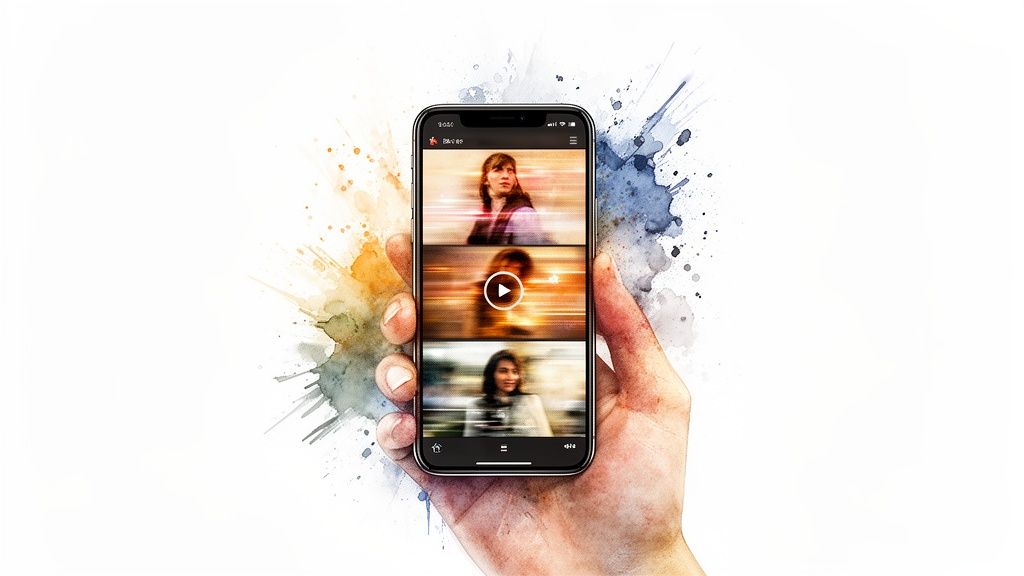
This format works because it aligns perfectly with modern media consumption habits. Brands like Sephora use it for quick beauty tutorials, while Shopify showcases products in dynamic, engaging clips on Instagram Reels. The key is to deliver value or entertainment almost instantly.
Actionable Implementation Tips
To effectively integrate short-form video into your strategy, focus on both production efficiency and creative execution.
- Hook Immediately: The first 3 seconds are critical. Use a strong visual hook, a provocative question, or an intriguing sound to stop the scroll.
- Leverage Trends: Incorporate trending audio, filters, and formats to increase discoverability. However, ensure the trend aligns with your brand's voice and message.
- Prioritize Value: Each video should offer clear value, whether it's educational (a quick tip), entertaining (a behind-the-scenes look), or inspiring (a customer success story).
- Include a Clear CTA: Tell viewers what to do next. Use on-screen text or a verbal cue to direct them to "shop now," "learn more," or "follow for more."
- Scale with AI: Use AI-driven tools like Aeon to repurpose a single long-form video (like a webinar or podcast) into dozens of unique, ready-to-post short-form clips. This dramatically reduces production time and maintains a consistent content pipeline.
2. Educational/Tutorial Content
Educational and tutorial content is a cornerstone among the various types of content for social media, designed to teach an audience a specific skill or provide valuable information. This format positions a brand as a trusted authority by delivering tangible value, moving beyond simple promotion to solve genuine customer problems. Whether through step-by-step video guides, detailed infographics, or how-to blog posts, educational content builds lasting audience relationships and drives consistent organic traffic.
This content works because it directly addresses user intent, especially for search-driven platforms like YouTube and Pinterest. For example, Adobe’s Creative Cloud YouTube channel provides expert tutorials that not only help users master their software but also reinforce Adobe's position as an industry leader. Similarly, HubSpot's Marketing Academy offers free courses that educate potential customers, building brand loyalty and generating qualified leads.
Actionable Implementation Tips
To effectively create educational content, focus on clarity, depth, and accessibility, ensuring your audience can easily apply what they learn.
- Break Down Complexity: Deconstruct a large topic into a series of shorter, more digestible videos or posts. This "micro-learning" approach keeps users engaged and makes complex information less intimidating.
- Enhance with Resources: Supplement your tutorials with downloadable checklists, templates, or guides. This adds value and provides a tangible takeaway for your audience.
- Incorporate Interactive Elements: Use polls, quizzes, and Q&A sessions within your content on platforms like Instagram Stories or live videos to boost engagement and reinforce learning.
- Optimize for Search: Use clear, descriptive titles and language that aligns with what your audience is searching for. Answering specific questions directly can improve visibility in search results.
- Automate with AI: Use AI tools like Aeon to automatically convert text-based content, like blog posts or whitepapers, into engaging video tutorials. This allows you to scale production and reach audiences who prefer visual learning.
3. Behind-the-Scenes Content
Behind-the-scenes (BTS) content is a powerful entry in the list of types of content for social media, offering an authentic, unpolished look into your brand's operations. It showcases everything from how products are made to how teams collaborate, humanizing your business and fostering a deeper emotional connection with your audience. This format builds trust through transparency, bridging the gap between polished marketing and genuine storytelling that modern consumers crave.

This format works because it satisfies audience curiosity and makes them feel like insiders. Brands like Glossier excel at this, sharing raw footage of product development meetings, while Buffer has built its brand on radical transparency, openly sharing its company culture. The goal is to reveal the people and processes that make your brand unique.
Actionable Implementation Tips
To effectively leverage behind-the-scenes content, prioritize authenticity and a consistent narrative.
- Spotlight Your People: Feature employee spotlights, team brainstorming sessions, and day-in-the-life stories. This puts a human face to your brand and highlights your company culture.
- Show the Process, Not Just the Product: Document product development milestones, from initial sketches to the final creation. Show the challenges your team overcomes to deliver value.
- Keep It Raw and Authentic: Use natural lighting and minimal editing to maintain an unpolished feel. Authenticity is more important than perfection with BTS content.
- Create a BTS Content Calendar: Plan to feature different departments or processes weekly to provide a varied and engaging look into your company's inner workings.
- Streamline Editing: Use AI-powered tools like Aeon to quickly edit, caption, and format raw footage from your factory floor or office, making it easy to share professional-looking BTS clips at scale.
4. User-Generated Content (UGC) & Testimonials
User-Generated Content (UGC) is one of the most powerful types of content for social media, encompassing any content created by customers or community members that features your brand. It serves as powerful social proof, building trust and authenticity in a way that traditional brand-led advertising cannot replicate. This format turns your most passionate customers into a distributed team of content creators, providing a steady stream of genuine, relatable material.
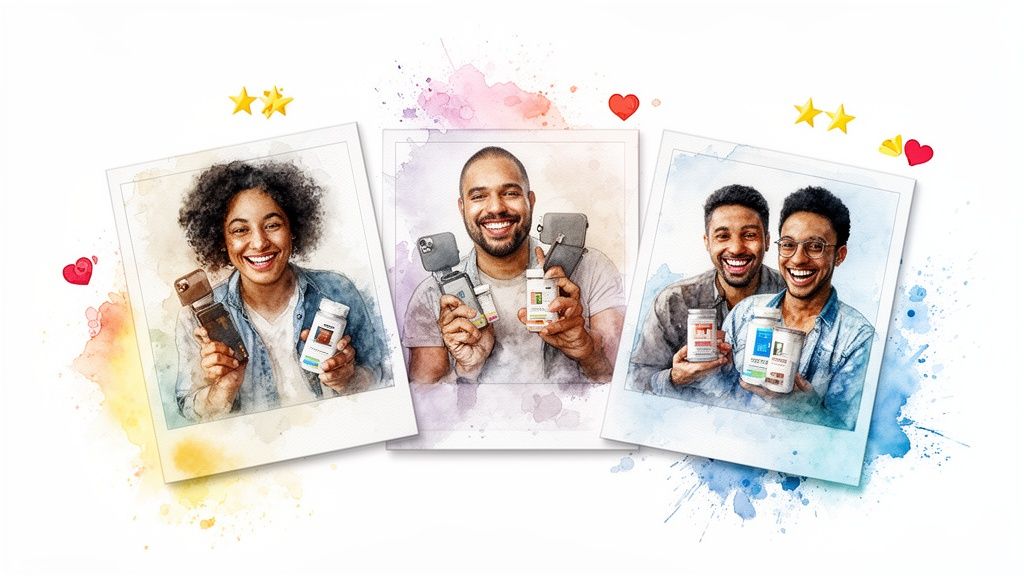
This format works because it leverages the inherent trust people have in their peers over brands. GoPro built its brand on user-submitted adventure videos, while Glossier showcases real customers to highlight product efficacy. The key is to celebrate your community and let their authentic experiences do the marketing for you.
Actionable Implementation Tips
To effectively integrate UGC into your strategy, you need to encourage, collect, and properly feature contributions from your audience.
- Create Branded Hashtags: Establish a simple, memorable hashtag (e.g., Lululemon's #thesweatlife) to easily track and aggregate user submissions across platforms.
- Incentivize Creation: Encourage participation by offering rewards, such as features on your official page, discounts, or entry into a giveaway. Public recognition is often a powerful motivator.
- Always Credit Creators: When you repost UGC, always tag and credit the original creator. This shows respect for their work and encourages others to contribute.
- Feature Diverse Stories: Showcase a wide range of customer demographics, use cases, and experiences to make your brand feel more inclusive and relatable to a broader audience. For more insights, learn about building a user-generated content strategy on project-aeon.com.
- Scale with AI: Use AI tools like Aeon to quickly edit, caption, and format video testimonials submitted by customers, transforming raw footage into polished, on-brand social media assets in minutes.
5. Product Demonstration & Showcase Videos
Product demonstrations are a vital component among the various types of content for social media, specifically designed to showcase a product's features, benefits, and real-world applications. These videos bridge the crucial gap between marketing and consumer education by moving beyond static images to show a product in action. By visually answering customer questions and highlighting value, this format builds trust and significantly influences purchase decisions, making it indispensable for e-commerce and tech brands.
This format is effective because it makes the product tangible for online shoppers. Dyson excels at this, with sleek videos demonstrating its vacuum technology, while Apple’s launch videos set the industry standard for showcasing new features. The goal is to clearly and compellingly illustrate how the product solves a problem or enhances the user's life, leaving no room for doubt about its functionality.
Actionable Implementation Tips
To create impactful product demonstrations, focus on clarity, context, and a direct path to purchase.
- Highlight Key Features: Don't try to show everything at once. Focus each video on one to three core features and demonstrate how they benefit the user.
- Show, Don't Just Tell: Use close-up shots, slow-motion, and graphic overlays to visually explain complex features. Show the product being used in its intended environment.
- Include Specifications: Add text overlays with critical information like dimensions, materials, or compatibility to answer common technical questions directly within the video.
- Present Variations: If applicable, showcase the product in different colors, sizes, or configurations to help customers visualize their preferred option and manage expectations.
- Generate A/B Test Variations: Use AI tools to quickly create different versions of your showcase videos. Test different hooks, feature highlights, or calls-to-action to see what resonates most with your audience and drives conversions.
6. Trending/Viral Challenge & Meme Content
Tapping into viral trends is a powerful way to position your brand as culturally relevant and timely among the different types of content for social media. This approach involves creating content that participates in current challenges, utilizes popular memes, or incorporates trending audio and formats. By joining these conversations, brands can leverage the algorithm's favor towards trending content, significantly boosting visibility and demonstrating a relatable, human side. Its effectiveness lies in its potential for massive organic reach and audience connection.
This format thrives on speed and authenticity. Duolingo’s TikTok account has become a masterclass in meme-heavy brand content, building a distinct personality that resonates deeply with its audience. Similarly, Wendy's has long used trending social commentary on Twitter to engage users and stay top-of-mind. The key is to act fast while ensuring the trend aligns with your brand's voice.
Actionable Implementation Tips
To effectively use trending content, you need a process that combines quick identification with rapid, on-brand execution.
- Monitor Trends Daily: Actively browse the TikTok "For You" page, Instagram Reels tab, and Twitter's trending topics. Identify emerging sounds, hashtags, and formats that your brand could authentically join.
- Act Quickly: The window of opportunity for a trend is often short. Move swiftly from identifying a relevant trend to producing and publishing your version of it.
- Maintain Brand Authenticity: Don't force participation in trends that feel disconnected from your brand’s values or message. Audiences can spot inauthenticity, which can do more harm than good.
- Analyze for Alignment: Before jumping on a trend, ask if it aligns with your brand’s personality and if your target audience will understand and appreciate the reference.
- Accelerate Production: Use AI tools like Aeon to quickly generate multiple variations of a trending format. This allows you to test different angles or produce content faster than manual editing would allow, capitalizing on the trend at its peak.
7. Live Streaming & Real-Time Content
Live streaming is one of the most powerful types of content for social media, involving real-time, unscripted video broadcasts on platforms like Instagram Live, LinkedIn Live, and Twitch. This format builds a direct, authentic connection with audiences that pre-recorded content cannot replicate. It creates a sense of urgency and community, inviting immediate interaction and feedback. The unpolished nature of live content makes brands feel more human and accessible, fostering deep loyalty and trust.
This format works because it creates an exclusive, event-like experience. Brands like Sephora use Instagram Live for real-time product launches and tutorials, while Microsoft hosts industry expert discussions on LinkedIn Live. The key is to leverage the interactive features to make viewers feel like active participants rather than passive observers.
Actionable Implementation Tips
To maximize the impact of your live streams, focus on preparation, engagement, and post-event follow-up.
- Promote in Advance: Announce your live event 3-7 days prior across all channels to build anticipation and maximize attendance. Use countdown stickers and reminders.
- Prepare Engagement Hooks: Plan specific questions, polls, and conversation starters to keep the audience engaged throughout the broadcast. Have a moderator ready to manage comments.
- Drive Interaction: Acknowledge viewers by name and respond to their questions in real-time. Use interactive platform features like polls and Q&A boxes to encourage participation.
- Maintain a Consistent Schedule: If you plan to go live regularly, stick to a consistent schedule. This trains your audience to tune in at a specific time, building a loyal viewership.
- Repurpose the Recording: After the event, use a tool like Aeon to slice the full-length recording into dozens of valuable short-form clips, highlights, and quote cards. This extends the life of your content and populates your calendar for weeks.
8. Carousel & Multi-Part Video Series
Sequential storytelling is a powerful tool, and among the many types of content for social media, multi-part video series excel at building anticipation and sustained engagement. This format involves breaking down a larger narrative or topic into smaller, digestible episodes posted sequentially. This strategy hooks viewers and encourages them to follow along for the complete story, increasing watch time and repeat engagement. Platforms like TikTok, YouTube, and LinkedIn are ideal for serialized content that keeps audiences coming back for more.
This format works by turning passive viewing into an active journey. For instance, Netflix effectively uses this by releasing a series of preview clips from a new show, while creators on TikTok build massive followings with "Part 1, Part 2, Part 3..." story times. The key is to create a compelling narrative arc that leaves the audience wanting to know what happens next.
Actionable Implementation Tips
To execute a successful multi-part video series, detailed planning and consistent delivery are crucial.
- Create Cliffhangers: End each episode at a peak moment of tension or with an unanswered question to create a strong incentive for viewers to watch the next part.
- Number Episodes Clearly: Use on-screen text and captions to label each video (e.g., "Part 1," "Episode 2/5"). This helps users navigate the series and understand where they are in the story.
- Maintain a Consistent Schedule: Post episodes at regular, predictable intervals (daily, weekly) to build a routine and manage audience expectations.
- Cross-Promote the Series: Promote upcoming and previous episodes within each video's description and comment section to guide viewers through the entire series.
- Batch-Produce Content: Use AI tools like Aeon to produce the entire series from a single script or long-form video. This ensures consistency in tone and style and simplifies the production workflow, allowing you to focus on the narrative.
9. Influencer Collaboration & Partnership Content
Influencer collaborations are a powerful addition to the various types of content for social media, involving co-created posts with external creators or brands. This strategy leverages the influencer's established credibility and audience trust to introduce your brand to a new, engaged community. It’s an effective way to amplify reach, generate authentic endorsements, and add fresh perspectives to your marketing narrative, moving beyond traditional advertising.
This format thrives on authenticity. For instance, fashion brands like Revolve partner with style influencers for "takeover" stories on Instagram, while tech brands often provide early access to YouTube reviewers for in-depth, honest product critiques. The content feels less like an ad and more like a trusted recommendation, which is key to converting modern consumers.
Actionable Implementation Tips
To maximize the impact of influencer partnerships, focus on strategic alignment and clear communication.
- Prioritize Audience Alignment: The most crucial step is ensuring the influencer's audience matches your target customer demographic. A mismatch can lead to wasted investment and low engagement.
- Embrace Micro-Influencers: Look beyond follower counts. Micro-influencers (10k-100k followers) often have higher engagement rates and a more niche, dedicated community, which can deliver a better ROI.
- Balance Guidelines with Freedom: Provide clear campaign goals and brand guidelines, but allow the creator artistic freedom to speak in their own voice. This ensures the content remains authentic to their audience. For more insights, exploring best practices for partnering with influencers can provide a strategic advantage.
- Cross-Promote Everywhere: Amplify the content by sharing it on your own brand channels. Feature their posts in your stories, on your feed, and even in your email newsletters to maximize its reach.
- Repurpose with AI: Use tools like Aeon to take a single influencer video or livestream and create dozens of clips, quotes, and social posts. This extends the life of the collaboration and populates your content calendar.
10. Interactive & Gamified Content
Interactive and gamified content transforms passive viewers into active participants, making it one of the most powerful types of content for social media. This format includes polls, quizzes, challenges, and other features that prompt direct user interaction. By encouraging a two-way conversation, it dramatically boosts engagement metrics, which are highly favored by platform algorithms. It makes your content memorable and builds a stronger community by giving your audience a voice.
This format works because it leverages the human desire for participation and competition. For example, Airbnb uses Instagram Stories polls to let users vote on their dream destinations, while Duolingo creates viral TikTok challenges that encourage user-generated content. The key is to make participation simple, fun, and rewarding.
Actionable Implementation Tips
To effectively integrate interactive content, focus on creating low-friction experiences that invite participation and provide instant gratification.
- Keep It Simple: Design polls and quizzes with a maximum of 2-4 clear choices. The easier it is to participate, the higher the engagement rate will be.
- Offer Rewards: Integrate gamification with tangible rewards, like a discount for completing a quiz or entry into a giveaway for participating in a challenge.
- Create Branded AR Filters: Develop custom AR filters or lenses for Instagram and Snapchat. This encourages users to create content featuring your brand, amplifying your reach.
- Announce Results: Follow up publicly by sharing poll results, highlighting quiz winners, or featuring the best user submissions. This closes the loop and encourages future participation.
- Scale with Captions: Use AI tools like Aeon to quickly add interactive prompts and questions as on-screen text or captions to your videos, turning standard content into an engagement opportunity without extra filming.
11. Repurposed & Multi-Format Content
Repurposed content is a cornerstone strategy among the most efficient types of content for social media, involving the strategic repackaging of existing assets into new formats. This approach maximizes the value of your core content, like blog posts, webinars, or podcasts, by transforming it into platform-native videos, infographics, or carousels. It's about working smarter, not harder, to extend your content's reach, reinforce your message, and maintain a consistent presence across channels without starting from scratch every time.
This method works because it capitalizes on content that has already proven its value. For example, HubSpot expertly converts its in-depth blog posts into animated explainer videos for YouTube, while countless podcasts create shareable 30-second quote clips for Instagram Reels. The core idea is to meet different audience segments where they are with a format they prefer.
Actionable Implementation Tips
To effectively repurpose content, build a system that identifies high-performing assets and streamlines their transformation.
- Identify "Pillar" Content: Start with your most comprehensive and valuable assets, such as webinars, ultimate guides, or research reports. These are rich sources for smaller, derivative pieces.
- Extract Key Insights: Pull out key statistics, compelling quotes, or step-by-step processes from your pillar content. Each of these can become a standalone graphic, a short video, or a carousel slide.
- Adapt to Platform Nuances: Don't just copy and paste. A LinkedIn article can become an educational carousel on Instagram, but the tone, visuals, and caption must be adapted for the platform's audience and best practices.
- Create Format Variations: Test which repurposed formats resonate most. A single webinar could be turned into a YouTube highlights video, a series of TikTok tips, and an audiogram for social sharing.
- Automate with AI: Leverage AI tools like Aeon to automate the conversion process. Aeon can analyze a blog post or article and automatically generate dozens of unique, engaging video clips, complete with visuals and captions, saving immense time.
12. Data Visualization & Explainer Animated Videos
Data visualizations and explainer animations are powerful types of content for social media that transform complex data, processes, or abstract concepts into simple, visually engaging narratives. This format is exceptional for establishing thought leadership, educating an audience, and making intricate information both understandable and memorable. By using motion graphics, these videos can deconstruct a difficult topic or highlight key findings in a way static images cannot.

This format works because it simplifies complexity and boosts information retention. Media outlets like Vox use their "Explainer" series to break down current events, while financial services firms create animated videos to explain investment strategies. The goal is to make the viewer feel smarter and more informed in just a few minutes, building trust and authority for your brand.
Actionable Implementation Tips
To create effective animated explainers, you must balance clear storytelling with purposeful visual design. For a deeper dive into the production process, you can explore detailed guides on how to create explainer videos.
- Start with a Solid Script: Before any animation begins, write a clear script that outlines every point. A strong narrative is the foundation of a successful explainer.
- Maintain Brand Consistency: Use a consistent color scheme, typography, and illustration style that aligns with your brand guidelines to ensure immediate recognition.
- Keep Animations Purposeful: Avoid overly complex animations that distract from the message. Each movement should serve to clarify a point or guide the viewer's attention.
- Use Text Overlays for Key Data: Reinforce crucial statistics and key takeaways with on-screen text to improve viewer comprehension and recall.
- Cite Your Sources: If presenting data, include citations or source information on-screen or in the description to build credibility and trust with your audience.
Comparison of 12 Social Media Content Types
Unifying Your Strategy: Scaling Content Production with Automation
We've explored a comprehensive arsenal of twelve powerful types of content for social media, from the viral potential of short-form video to the trust-building power of user-generated content and the deep engagement of live streaming. Each format serves a unique purpose in a well-rounded strategy, speaking to different audience segments at various stages of their journey. Understanding these formats is the foundational step, but the true challenge lies in executing this diverse strategy consistently and at scale.
The modern content landscape demands a high volume of platform-native assets, and manual production can quickly lead to creative burnout and operational bottlenecks. The solution isn't simply to work harder or hire a larger team; it's to work smarter by building an efficient, technology-driven content engine. This is where strategic repurposing and intelligent automation become non-negotiable pillars of a successful social media program.
From Blueprint to Execution: Your Actionable Next Steps
Mastering the theory is only half the battle. To translate this knowledge into tangible results, your team needs a clear, actionable plan. The goal is to move from a reactive, format-by-format approach to a proactive, system-driven one.
Here are the immediate steps you should take to operationalize the insights from this guide:
- Conduct a Content Audit: Review your current social media output against the twelve types we've discussed. Identify your strengths and, more importantly, pinpoint the critical gaps. Are you over-reliant on product showcases but neglecting behind-the-scenes content? Are you missing out on the engagement of interactive formats?
- Map Content Types to Funnel Stages: Assign specific content formats to different marketing objectives. For instance, use educational tutorials and data visualizations for top-of-funnel awareness, product demos and UGC for mid-funnel consideration, and live Q&A sessions for bottom-of-funnel conversion. This strategic mapping ensures every piece of content has a clear purpose.
- Identify Your "Pillar" Content: Pinpoint your most valuable, long-form assets. These could be webinars, in-depth blog posts, customer case studies, or podcast episodes. These pillars will serve as the source material for a vast array of repurposed micro-content.
The Power of an Automated Content Engine
The most significant barrier for marketing teams is not a lack of ideas but a lack of time and resources to bring them to life. Imagine trying to manually create a unique TikTok video, an animated explainer for YouTube, a carousel for Instagram, and a quote graphic for LinkedIn every single day. The workload is unsustainable.
This is precisely the problem that AI-driven automation solves. By integrating tools designed for intelligent content scaling, you can transform a single piece of pillar content into a dozen platform-optimized assets. Think of it as a content multiplier. A 30-minute podcast episode can be automatically transcribed, with key insights identified and transformed into:
- Five short-form video clips with animated captions for Reels and TikTok.
- A multi-slide carousel summarizing the main takeaways for LinkedIn.
- Three visually engaging quote graphics for Instagram Stories.
- An animated explainer video visualizing a key concept discussed in the episode.
This approach fundamentally shifts your team's focus from tedious, repetitive production tasks to high-level strategy, creative direction, and community engagement. You maintain a high-volume, high-variety content calendar without sacrificing quality or burning out your creators. The future of social media success isn't just about knowing the right types of content for social media; it's about having the systems in place to produce, adapt, and distribute them at the speed of culture.
Ready to stop the content treadmill and start building a scalable production engine? Aeon is the AI-powered platform designed to help teams like yours transform long-form content into a library of ready-to-publish social assets. Discover how Aeon can automate your content creation and amplify your social media presence.