Artificial intelligence clothing isn't just a sci-fi concept anymore. It's the real-deal fusion of traditional apparel with smart, responsive technology, turning the clothes we wear from passive garments into active partners in our daily lives.
This shift covers everything from sensor-embedded smart textiles that keep an eye on our health to AI-generated fashion designs and hyper-personalized shopping experiences that finally promise a perfect fit.
What Is Artificial Intelligence Clothing
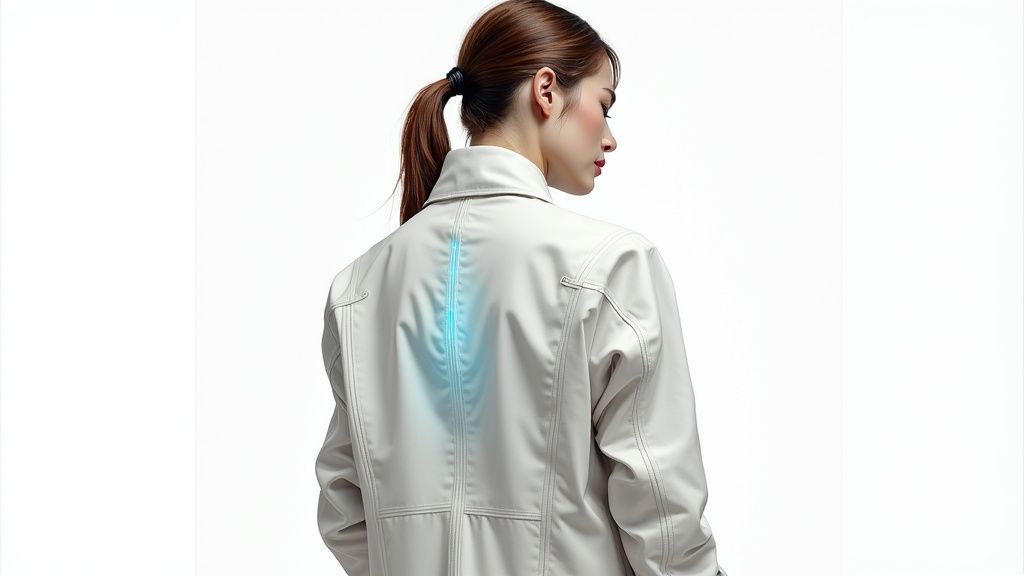
Think about your favorite jacket. Now, what if it didn't just keep you warm but also learned your schedule, monitored your vitals, and even suggested the perfect outfit for your day? That’s the big idea behind artificial intelligence clothing—a space where fashion meets function in a way we've never seen before.
It’s not just about looking cool. It’s about creating garments that think, react, and adapt to you and your surroundings.
This evolution is fundamentally changing clothing from a simple covering into an intelligent extension of ourselves. To really get what’s happening, it helps to break the concept down into its three core pillars. Each one represents a unique way AI is making a huge impact on what we wear and how we use it.
The Three Pillars of AI in Clothing
The world of AI clothing is really built on three foundational ideas that work together to create a smarter wardrobe. Let’s break them down.
Each of these pillars is a game-changer, pushing the fashion industry toward a more innovative, personalized, and efficient future.
These pillars aren't just futuristic concepts; they are actively solving real-world problems. By creating more personalized and efficient systems, AI is making the fashion industry more sustainable and consumer-focused.
This deep integration of technology is lighting a fire under the market. The global AI in fashion market is expected to skyrocket, climbing from over USD 2.92 billion in 2025 to a massive USD 89.41 billion by 2035.
The clothing segment alone is predicted to grab over 35% of this market share. What's driving it? A huge demand for personalized shopping that helps retailers slash those notoriously high return rates. This growth isn't just a trend; it's a signal of a major shift in how our clothes are designed, made, and sold.
The Technologies Powering Smart Apparel
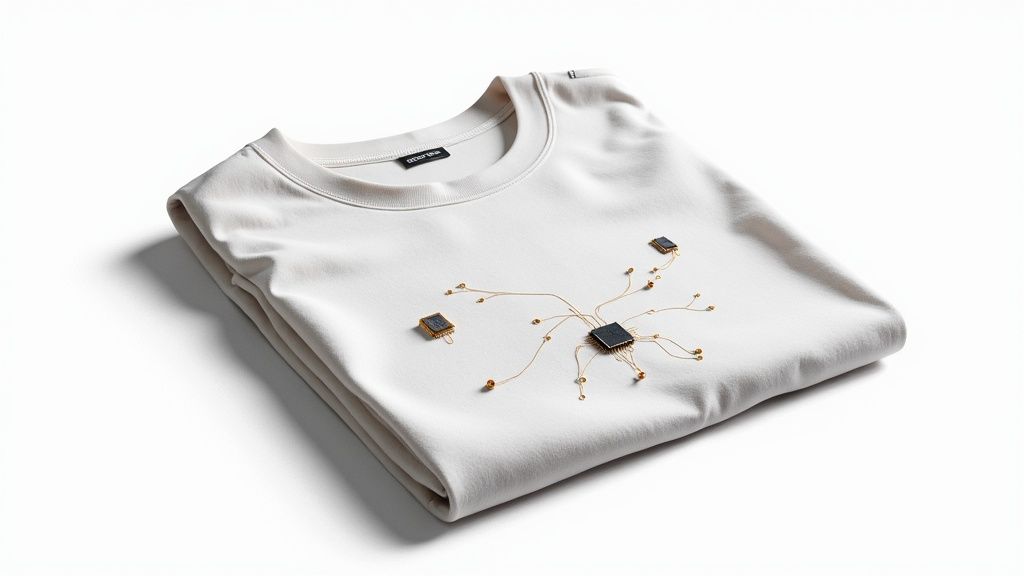
So, how does a simple shirt become intelligent? It's not magic. We need to look under the hood at the specific technologies making it all possible. It’s less about a single invention and more about a cocktail of powerful AI disciplines working in concert, each playing a crucial role in turning fabric into a functional, data-driven device.
Think of it like building a high-performance car. You need an engine for power, a GPS for direction, and a whole suite of sensors to read the road. AI clothing works on a similar principle, with different technologies forming one cohesive, intelligent system.
These are the components that give smart apparel its ability to learn, see, communicate, and even feel the world around it, opening up a wild new frontier for fashion.
Machine Learning: The Personal Stylist
At the absolute heart of AI clothing is Machine Learning (ML). This is a type of AI that lets systems learn from data without someone having to program every single rule. Think of it as a personal stylist who pays freakishly close attention to your tastes, learning what you love and hate over time. The more you show it, the better its recommendations get.
In fashion, ML algorithms chew through massive datasets—everything from runway trends and sales figures to your own purchase history—to predict what you’ll want to wear next. This is the engine behind those eerily accurate shopping feeds and the trend forecasting that helps brands stop making stuff nobody wants. An AI can scan thousands of social media posts, spot a rising color trend, and help a brand design its next collection with far greater confidence.
ML also drives dynamic pricing, tweaking the cost of an item based on demand, inventory levels, and what competitors are doing, all in real time. It's the brain of the operation.
Computer Vision: The Digital Eye
If machine learning is the brain, then Computer Vision is the eyes. This branch of AI trains computers to interpret and make sense of the visual world. Using images and videos, machines can identify and process what they "see" almost like a human does.
This is exactly what makes virtual try-on experiences possible. When you upload a photo to see how a shirt might fit, computer vision models analyze your body shape and the garment’s properties—like how the fabric hangs—to create a surprisingly realistic preview.
By enabling machines to "see," computer vision is solving one of the biggest headaches in e-commerce: the inability to try before you buy. This cuts down on returns and makes shoppers feel a lot more confident hitting that "add to cart" button.
Beyond just shopping, computer vision is a game-changer in manufacturing. AI-powered cameras can scan fabrics for tiny defects at speeds no human could ever hope to match, ensuring only top-quality products make it out the door. This tightens up quality control and slashes waste.
NLP and IoT: The Voice and Nerves
Two other key pieces complete the puzzle: Natural Language Processing (NLP) and the Internet of Things (IoT). NLP is what gives machines the ability to understand and respond to human language, essentially acting as the voice and ears of the system.
This is what lets you chat with a bot for style advice or use voice commands to tell your smart jacket to turn up the heat. NLP is the bridge between you and your intelligent clothing. We dive deeper into how these concepts come together in our guide to using an AI outfit generator.
Finally, IoT provides the garment’s nervous system. This refers to the network of tiny physical objects—sensors and actuators—embedded right into the fabric and connected to the internet.
- Sensors are the data collectors. They can track your heart rate, body temperature, or even things like air quality.
- Actuators are the responders. They take that data and perform an action, like vibrating to guide you on a run or tightening to give your muscles extra support.
Pulled together, these technologies are the foundation of AI clothing. They allow a garment to learn your style, see your surroundings, understand what you’re saying, and feel your body's needs—creating a truly personal and interactive experience.
How AI Is Reshaping Fashion Today
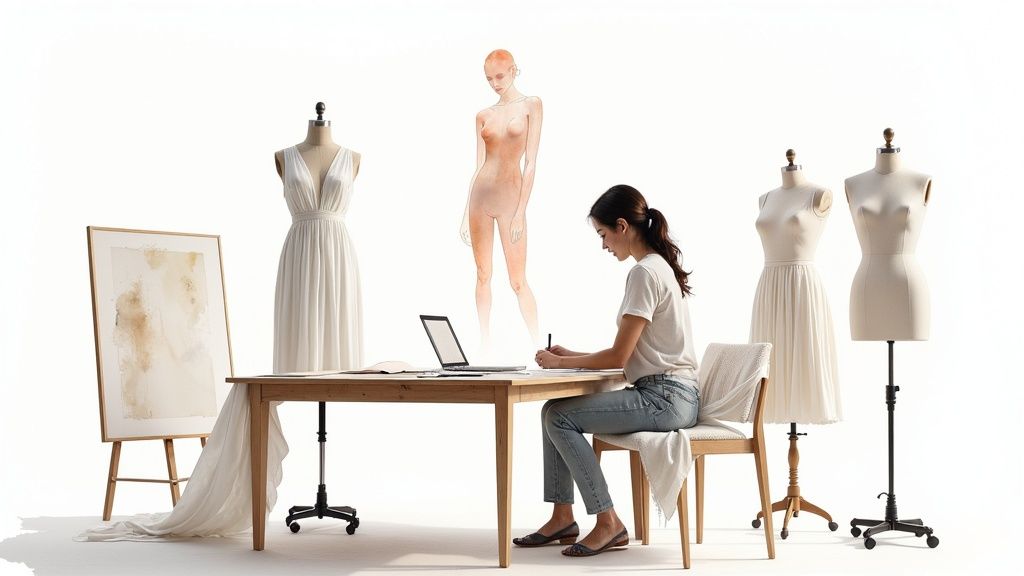
AI in fashion isn't some far-off concept anymore. It’s here, right now, changing everything from the first design sketch to how a package lands on your doorstep. We're seeing real, practical applications that are making the industry smarter, faster, and more personal.
This isn't just about tweaking a few processes. AI is fundamentally rethinking how clothes are made and sold. Brands are using these tools to get ahead of trends, cut down on waste, and deliver products that actually fit. This is the real story of artificial intelligence clothing.
From Creative Spark To Smart Production
The designer’s studio is getting a serious upgrade. Instead of just relying on mood boards and gut feelings, designers are now working alongside AI to dream up new patterns, textures, and even completely original silhouettes. These tools can sift through decades of fashion history and real-time trends in an instant, spitting out fresh ideas that a human designer can then refine.
AI is also a powerful ally against waste. By running simulations, it can figure out the most efficient way to lay out pattern pieces on a roll of fabric, drastically reducing the amount of material that ends up on the cutting room floor. This digital-first approach helps tackle one of fashion’s biggest sustainability headaches before a single piece of cloth is even cut.
And when a design hits the factory, AI is there to keep things running smoothly.
- Predictive Maintenance: AI keeps an eye on manufacturing equipment, flagging machines that need a tune-up before they break down. No more surprise shutdowns or costly delays.
- Automated Quality Control: Computer vision systems use high-speed cameras to scan every garment for tiny flaws—a missed stitch, a slight discoloration—with a speed and accuracy no human eye could match.
- Supply Chain Optimization: Complex algorithms analyze global shipping data to find the quickest, cheapest, and greenest routes to get products from the factory to the warehouse.
Revolutionizing The Customer Experience
The most obvious changes are happening where it matters most: the shopping experience. Predictive analytics helps brands make much smarter guesses about what people will want to buy, forecasting demand for specific styles, colors, and sizes. This helps avoid the classic problem of overproduction, which leads to mountains of unsold inventory and endless clearance sales.
To see just how powerful this can be, check out our deep dive into how AI built and disrupted SHEIN's fast fashion empire.
But the biggest win for online shopping has been tackling the fit problem. Returns are a massive headache for e-commerce, and bad fit is the number one culprit. AI is proving to be the solution. By 2035, the clothing category is expected to make up over 35% of the AI in fashion market, mostly because these tools can finally crack the code on getting sizing right. This tech directly fights back against online return rates that can top 30%, saving the industry from a slice of the estimated USD 500 billion it loses to returns every year. For more on this trend, see the latest AI in fashion market report on precedenceresearch.com.
By transforming raw data into actionable insights, AI is shifting the industry from a reactive "make and sell" model to a proactive "sense and respond" approach.
This shift isn't just about efficiency; it's about building a more intelligent and sustainable industry where what gets made is closely tied to what people actually want. The result is a fashion world that's not only more profitable but also a lot kinder to the planet.
Here’s a quick look at how these applications are being deployed across the entire lifecycle of a garment.
AI's Impact Across the Fashion Value Chain
From the drawing board to the customer's closet, AI is weaving itself into the very fabric of the fashion industry, making every step smarter and more responsive.
The North American Market is Leading The AI Charge

While the AI fashion movement is definitely a global one, North America has clearly planted its flag as the command center. This isn't just a happy accident. The region’s dominance is the direct result of a powerful mix of factors that have created the perfect breeding ground for artificial intelligence clothing to take off.
Think of it as a perfect storm: a deeply rooted tech ecosystem, unbeatable access to venture capital, and a huge consumer base that jumps on new digital tools. Brands across the U.S. and Canada aren't just dipping their toes in the water—they're diving in headfirst, using AI to carve out a serious market advantage.
And it’s paying off, big time. North America currently owns the largest global share of the AI in fashion market, a position it secured by being early to the party. The U.S. fashion market alone hit a value of USD 358.7 billion in 2024, which is a massive 21% jump from the previous year. Underscoring this trend, data shows that over 35% of fashion executives in the region are already putting generative AI to work for everything from customer service bots to creating ad visuals. You can find more insights about AI in the fashion market on researchnester.com.
A Fertile Ground for Innovation
So, what's the secret sauce? The biggest driver behind North America's lead is its incredible tech infrastructure. Being so close to Silicon Valley and other tech hubs gives fashion companies a direct line to world-class AI talent and the latest research. This creates a really powerful feedback loop where fashion brands can team up with tech firms to build custom-fit solutions.
On top of that, a healthy venture capital scene means that promising AI fashion startups get the cash they need to scale their ideas, and fast. Investors see the massive upside in using AI to finally crack tough industry nuts like high return rates and messy supply chains.
This financial muscle allows brands to go all-in on a few key areas:
- Hyper-Personalization: Using AI to dig into customer data and serve up tailored product recommendations that actually feel personal.
- Virtual Try-On Solutions: Rolling out advanced computer vision so shoppers can see how a garment fits their specific body type without leaving their couch.
- On-Demand Manufacturing: Flipping the script by using AI to produce clothing after an order is placed, which cuts down waste and inventory costs in a huge way.
Pioneering Brands and Smart Supply Chains
Forward-thinking North American brands are showing the world what this tech can really do. They're using AI to craft hyper-personalized shopping journeys that build die-hard customer loyalty. By looking at everything from browsing habits to purchase history and even social media chatter, these companies are serving up recommendations that feel less like a pop-up ad and more like advice from a personal stylist.
North American retailers are not just selling clothes; they are selling a data-driven experience. AI allows them to anticipate customer needs and deliver solutions before the customer even knows they need them, setting a new global standard for retail.
But it’s not just about the customer-facing side. Behind the scenes, AI is untangling the notoriously knotted supply chains of the fashion world. Predictive analytics helps companies forecast demand with way more accuracy, stopping them from over-ordering and creating waste. AI-driven logistics platforms are also optimizing shipping routes on the fly, saving money and reducing carbon footprints.
This blend of smart tech adoption and practical market application is exactly why the region is setting the pace for the future of what we wear.
When you're marketing a product that thinks, you need a different kind of storytelling.
Selling artificial intelligence clothing isn't just about selling a garment; it's about selling a whole new experience. People need to see and feel how this tech will genuinely improve their lives, and honestly, video is the best way to bridge that gap.
Bombarding them with technical specs is a surefire way to cause confusion and tune-outs. The real goal is to tell a human story. Your videos should answer simple but vital questions: How does this make my life easier? How does it solve a problem I actually have? Good videos make the abstract feel tangible and the complex feel simple.
The key is to ditch the feature list and show the benefit in action. Let’s walk through three powerful video formats that can demystify smart fashion and get people genuinely excited.
Explainer Videos That Demystify
An explainer video is your chance to clearly and concisely answer the question, "So, what does it actually do?" This format is perfect for building a solid foundation of understanding and earning a bit of trust right off the bat. The goal isn't to be a technical manual but a friendly guide.
Think of it as a visual "how-to" that simplifies the whole experience. You can use a mix of live-action shots with some simple animated graphics to highlight key features without overwhelming anyone. For instance, show someone tapping their cuff to change a song and just overlay a small, clean icon representing that action.
Here’s a simple workflow for an explainer video that works:
- Hook with a Problem: Start with a relatable frustration, like shivering on a walk or struggling to find the right workout intensity.
- Introduce the Solution: This is where you bring in your smart garment as the hero. Show the product clearly from a few different angles.
- Demonstrate the Core Feature: Dedicate 15-20 seconds to showing one key feature in action. Think of a heated jacket automatically adjusting its temperature as the clouds roll in.
- End with a Clear Benefit: Wrap it up by summarizing the outcome—perfect comfort, optimized performance, or just seamless convenience.
Lifestyle Videos That Inspire
Once your audience gets what your product does, you need to show them why they need it. Lifestyle videos slot your AI clothing into the context of an aspirational, yet totally relatable, daily life. This format is all about emotion and connection.
Instead of zeroing in on the technology, focus on the feeling it creates. A runner isn't just tracking biometrics; she's pushing her limits with total confidence. A commuter isn't just wearing a smart jacket; he's navigating his day effortlessly. The product becomes a seamless part of a better life, not some clunky gadget.
The most effective lifestyle videos don't sell a product; they sell an outcome. The technology should feel invisible, working in the background to enhance the user's experience without demanding their constant attention.
These videos are tailor-made for social media, where authentic, story-driven content just works better. Short, visually engaging clips can grab attention in a heartbeat. If you need to produce a bunch of dynamic short video ads for platforms like Instagram, an AI Reel Generator can seriously speed up your content creation process.
Behind-The-Scenes Videos That Build Trust
In a market swimming with bold claims, transparency is everything. Behind-the-scenes content gives you a chance to pull back the curtain and show the innovation, craftsmanship, and pure human effort that goes into creating your smart fashion.
This is where you can really show off the "why" behind your brand. Introduce your designers, engineers, or material scientists. Show little snippets of the design process, from the first AI-generated concepts to the meticulous work of embedding sensors into fabric. This humanizes your brand and adds a layer of authenticity that’s impossible to fake.
For brands using complex systems like AI-powered fit technology, showing the process is especially powerful. You could create a video illustrating how your system analyzes data to guarantee a perfect fit—a concept we dive into in our article on tools like Fitroom AI. This kind of content positions you not just as a seller of clothes, but as a true innovator in the space.
By mixing and matching these three video formats, you create a complete narrative. Explainers build understanding, lifestyle videos create desire, and behind-the-scenes content builds the trust you need to turn a curious viewer into a loyal customer.
Alright, you've created some killer video content for your new AI clothing line. That's a huge first step. But how do you actually know if it's working?
To figure out the real impact of your campaigns, you have to look past vanity metrics like view counts. We need to focus on what really moves the needle: metrics that tie directly back to business results. It’s all about tracking how your content is shaping customer behavior and, ultimately, driving growth.
Once you’ve got a solid way to measure what’s happening, you can dream up your next big idea with real confidence. The trick is to create campaigns that are just as interactive and exciting as the smart garments themselves. You want to pull your audience into the story, not just have them watch from the sidelines.
Key Metrics That Actually Matter
When you're digging into the data, you need to find the numbers that tell a story about engagement and conversion. The usual metrics are a decent starting point, but for something as unique as smart fashion, we need to go a little deeper.
- Feature Demo Engagement: Don't just look at total video views. Use your analytics to see how many people are watching your feature demos all the way to the end. A high viewer retention rate on a video showing off a virtual try-on feature? That’s a massive signal of genuine interest.
- Conversion Lift: Let's measure the direct sales impact of your AI-focused content. For instance, does traffic coming from a lifestyle video that features a smart jacket convert at a higher rate than traffic from a standard product page? You can A/B test your landing pages to get a clean read on this.
- Interaction Rate on Interactive Content: If you’re running polls or quizzes about your AI features, the interaction rate is your north star. It tells you exactly how many people are leaning in and actively engaging with the concepts behind the tech.
When you track these specific metrics, you can draw a straight line from your marketing dollars to real, tangible outcomes. The conversation shifts from, "How many people saw our ad?" to "How did our ad actually influence someone to buy?"
This data-first approach doesn't just prove ROI. It gives you the critical insights needed to sharpen your strategy for the next campaign, making each one better than the last.
Your Next Campaign Ideas
Ready for a little inspiration? Here are a few campaign ideas you can run with to highlight the unique magic of artificial intelligence clothing and get people talking.
- The Influencer Smart Challenge: Team up with influencers in both the tech and fashion spaces. Give them a smart garment and challenge them to use its features to accomplish something cool—like navigating a new city using only the haptic feedback from a jacket. This approach creates authentic, story-driven content that shows the tech in action.
- "You Design It" AI Poll: Get your community involved in the creation process. Use social media polls to let your audience vote on different AI-generated designs. Show them three unique patterns or silhouettes cooked up by your design algorithm and let them decide which one gets a limited-edition production run. It builds a powerful sense of co-creation and ownership.
- AI Stylist UGC Campaign: Kick off a user-generated content campaign built around your AI-powered styling feature. Encourage customers to share outfits recommended by your app or platform using a unique hashtag. You can then feature the best looks on your brand’s own channels, turning your customers into your best advocates.
Of course. Here is the rewritten section, crafted to sound completely human-written and natural, following all the provided instructions and examples.
Common Questions About AI Clothing
As AI clothing moves from sci-fi to our closets, it’s understandable that a lot of questions pop up. This new wave in fashion is fascinating, but it also gets you thinking about real-world things like privacy, how long these clothes will last, and what’s actually coming next.
Let’s tackle some of the most common questions people have about building a smarter wardrobe. Getting these answers can help you feel more comfortable and confident as you start exploring these innovative garments.
Is My Personal Data Safe?
This is usually the first thing people ask, and for good reason. When a jacket can track your location or a shirt knows your heart rate, you want to know where that information is going. Reputable brands making artificial intelligence clothing are serious about this, using strong encryption to lock down your data, both on the garment itself and when it’s sent elsewhere.
Still, it pays to be a little proactive. Before you click "buy," spend a few minutes with the company's privacy policy. You want to see clear, simple language explaining what data they collect, what they do with it, and if you can opt out.
The golden rule here should always be user control. You should have the final say over your personal data, with straightforward options to manage or even delete your information whenever you want.
What Is The Future Of AI In Fashion?
Honestly, we're just scratching the surface of what AI can do for fashion. In the near future, you can expect clothing that’s not just responsive, but predictive. Think about a shirt that starts a cooling process a few moments before your body temperature rises, anticipating your needs before you even feel them.
We’re also going to see huge strides in making fashion more sustainable and efficient. AI will power more on-demand manufacturing, which means clothes are only created once an order is placed. This simple shift can drastically cut down on waste and help the industry operate more responsibly.
Ultimately, artificial intelligence clothing is setting the stage for a fashion world that's smarter, more personalized, and way more conscientious—a win for us and for the planet.
Ready to bring your fashion stories to life with stunning visuals? Aeon can help you transform your concepts into compelling video content automatically. Discover how to create engaging videos at scale.