Whether you're designing characters, illustrating fashion concepts, or simply trying to master the complexities of drapery, finding a high-quality clothes drawing reference is a non-negotiable step. Generic web searches often yield a frustrating mix of low-resolution, poorly lit, or copyrighted images that can hinder your artistic process more than they help. The right reference library, however, can completely transform your work by providing clear, detailed views of fabric folds, garment construction, and how different materials interact with the human form in motion.
This guide cuts through the noise. We have curated a definitive list of 12 exceptional resources, from professional studio photo packs to dynamic 3D modelers and specialized fashion templates, designed to elevate your art. Forget endless scrolling and questionable image quality. Here, you'll find a direct path to the exact references you need to draw clothing with confidence and accuracy. To deepen your understanding of the artistic discipline behind depicting clothing, you might want to explore a guide on what is fashion illustration.
We will explore the specific strengths and practical use cases for each platform, offering honest assessments to help you choose the best tools for your specific projects. Every entry includes direct links so you can immediately access these powerful resources and start integrating them into your creative workflow. Let's find the perfect reference to bring your ideas to life.
1. Grafit Studio on ArtStation Marketplace
Grafit Studio's storefront on the ArtStation Marketplace is an essential resource for any artist serious about finding a high-quality clothes drawing reference. Unlike generic stock photos, their extensive library consists of photo packs shot specifically for artists. This means every image is composed to highlight the most challenging aspects of drawing clothing: fabric behavior, complex folds, and how garments interact with the human form in motion. The studio lighting is clean and consistent, making it easy to understand form and texture without distracting shadows.
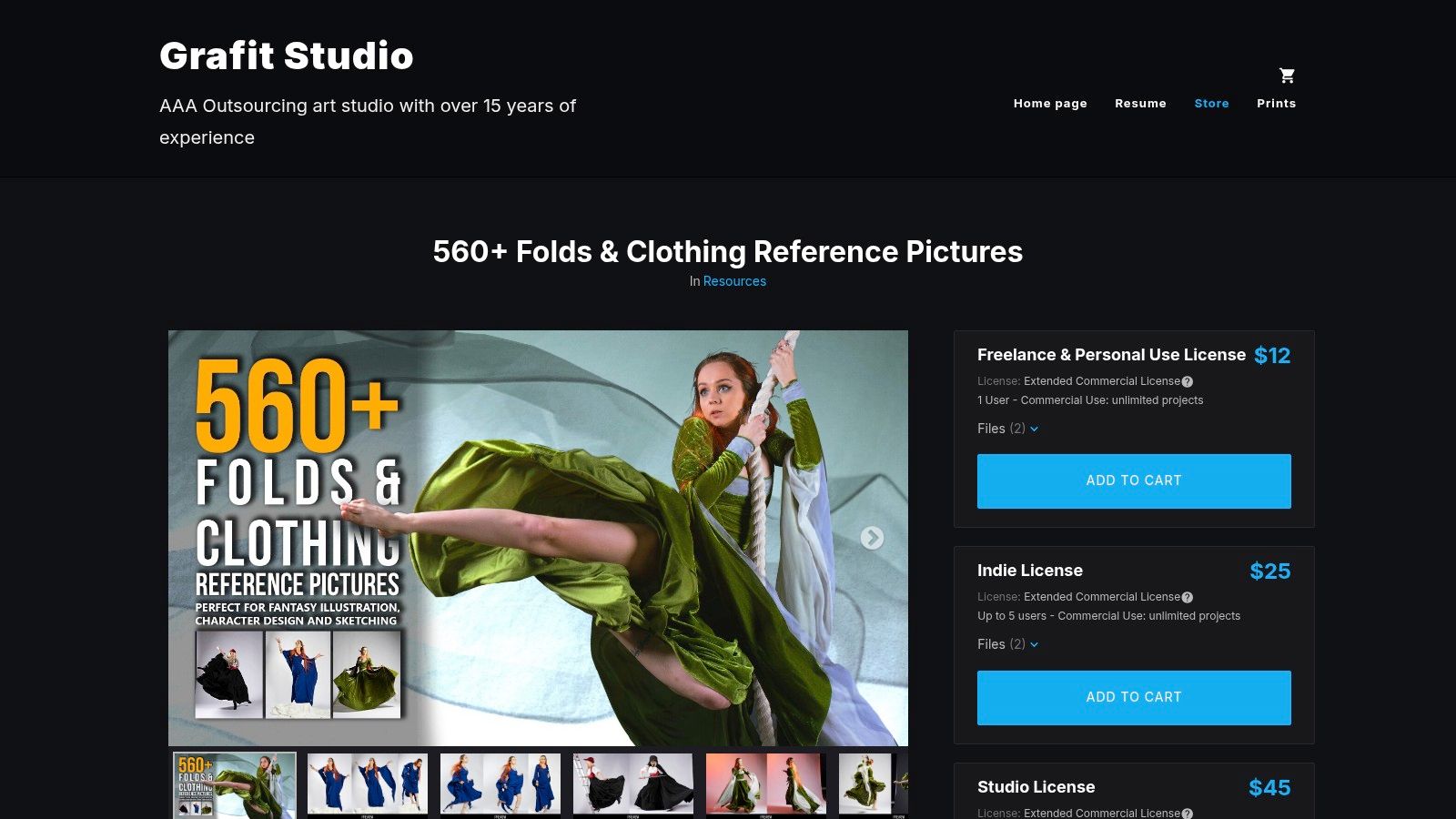
The primary strength of Grafit Studio is its meticulous organization and purpose-driven content. You can find packs dedicated to specific materials like leather or denim, different types of folds (like spiral or diaper folds), or entire fashion aesthetics from historical to modern streetwear. This thematic approach saves you from sifting through irrelevant images and allows you to build a focused reference library tailored to your needs.
Key Features & Usage Tips
- Artist-Centric Posing: Models are posed to showcase tension, compression, and gravity's effect on fabric, providing clear examples for dynamic figure drawing.
- High-Resolution Detail: The ultra-high-resolution images (often 4000-6000px+) allow you to zoom in and study minute details like stitching, weave patterns, and subtle wrinkles.
- Clear Licensing: The platform offers straightforward commercial license tiers for individuals, small teams, and large studios, making it a reliable choice for professional projects.
- Practical Application: When using these packs, focus on one element at a time. Use a "flowy dress" pack to study how wind creates large, soft folds, then use a "leather jacket" pack to understand sharp, crisp highlights and stiff creases.
Website: Grafit Studio on ArtStation
2. Grafit School on Gumroad
Grafit School's Gumroad storefront offers a more budget-friendly entry point for artists seeking a high-quality clothes drawing reference. While sharing the same commitment to artist-focused content as its ArtStation counterpart, the Gumroad platform provides direct, simplified access to specialized photo packs. This is the place to find detailed drapery studies, packs focusing on specific clothing textures in motion, and other foundational resources perfect for artists building their visual library from the ground up. The simple checkout and perpetual access through the Gumroad library make it incredibly convenient.
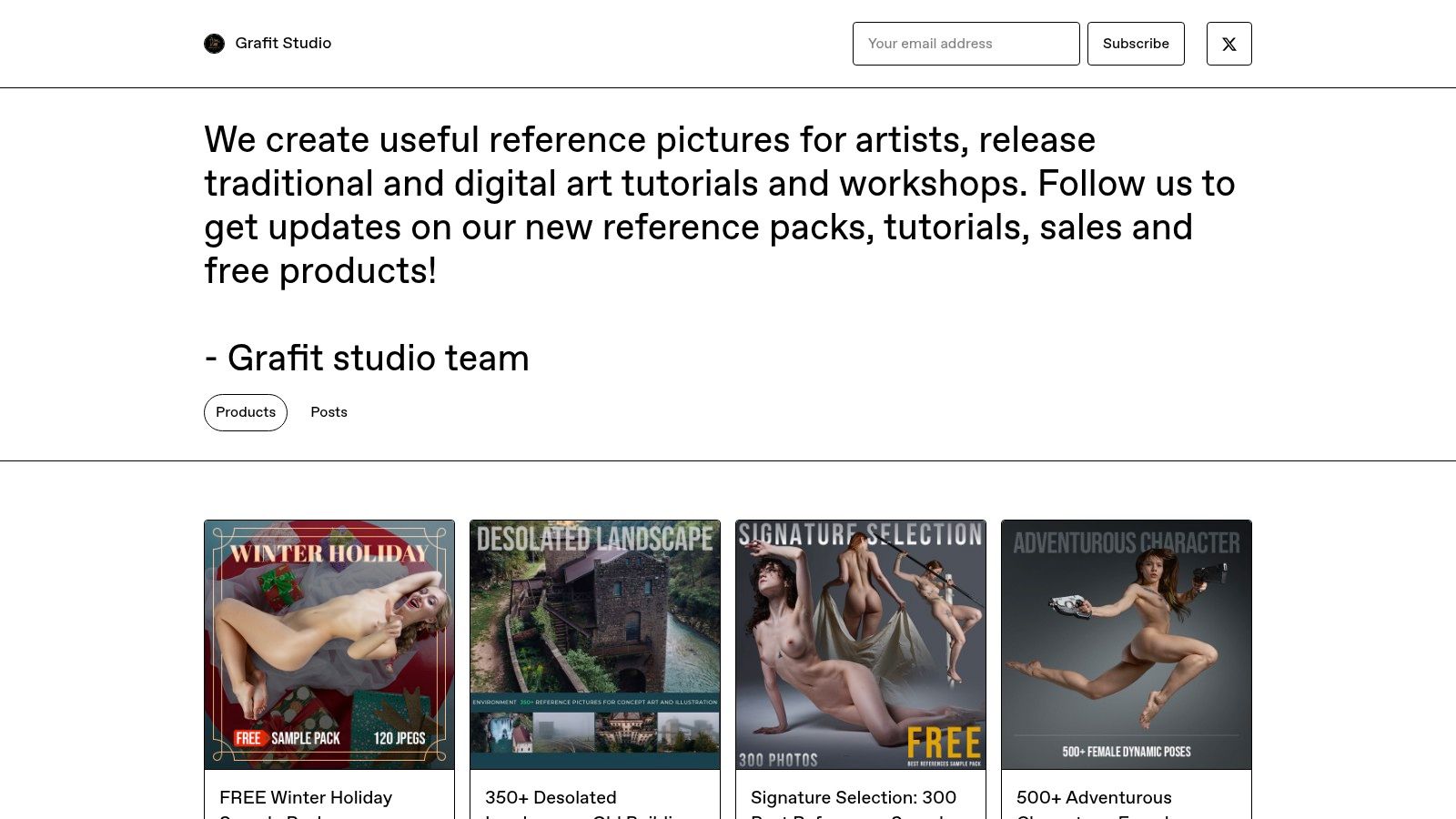
The key advantage of the Gumroad store is its accessibility and transparent pricing. Artists can often find packs at a lower price point, making it easier to acquire multiple sets without a significant investment. Furthermore, the platform offers a free sample pack, allowing you to test the image resolution and content quality before committing to a purchase, which is a significant benefit for students and independent creators.
Key Features & Usage Tips
- High-Resolution Drapery Studies: Many packs focus specifically on the physics of fabric, offering excellent references for understanding how different materials hang, stretch, and fold over unseen forms.
- Free Sample Pack: Download the free "Female Anatomy" reference pack to evaluate image quality, lighting, and posing style before you buy anything. This is a no-risk way to see if their content fits your needs.
- Transparent Licensing: The store clearly outlines its personal, indie, and studio licensing tiers on product pages, removing any guesswork for commercial projects.
- Perpetual Access: Once purchased, your reference packs are permanently available in your Gumroad library, allowing for easy redownloading on any device at any time.
Website: Grafit School on Gumroad
3. Proko Marketplace (Grafit Reference Packs)
Proko’s marketplace offers a curated selection of Grafit Studio’s photo packs, making it an excellent source for a high-quality clothes drawing reference integrated within a trusted art education ecosystem. While Grafit offers a larger library on its own stores, the packs available on Proko are handpicked to align with foundational art skills, focusing on common materials, poses, and lighting scenarios that students frequently encounter. This makes it an ideal starting point for those already engaged with Proko's courses.
The key advantage here is the seamless integration and convenience. If you are a Proko student, you can manage your courses and reference library all in one place. The platform provides lifetime access to purchased packs through your account, eliminating the need to manage large file downloads on your local drives. The packs are presented with clear image counts and context, helping learners connect the reference material directly to their artistic studies.
Key Features & Usage Tips
- Educational Context: The selection is curated to complement art education, focusing on fundamental clothing types like hoodies, dresses, and jackets.
- Lifetime Account Access: Purchased packs are permanently stored in your Proko account, allowing for easy access from any device without re-downloading.
- Occasional Bundles: Proko sometimes offers bundles or sales, allowing you to acquire multiple high-value reference packs at a reduced cost.
- Skill-Level Guidance: The platform often provides context on how a specific pack can help with learning, making it easier for students to choose relevant materials. Use these packs in tandem with Proko's figure drawing lessons to see how fabric drapes over the anatomy you are studying.
Website: Proko Marketplace Clothing & Textures Packs
4. AdorkaStock
AdorkaStock is a fantastic and highly accessible resource, especially for artists looking for a practical clothes drawing reference without a significant financial investment. The site offers a massive gallery of free, safe-for-work poses featuring everyday clothing, from t-shirts and jeans to dresses and light jackets. Its strength lies in providing clear, real-world examples of how common garments sit, stretch, and fold on diverse body types in a wide variety of dynamic and casual poses.
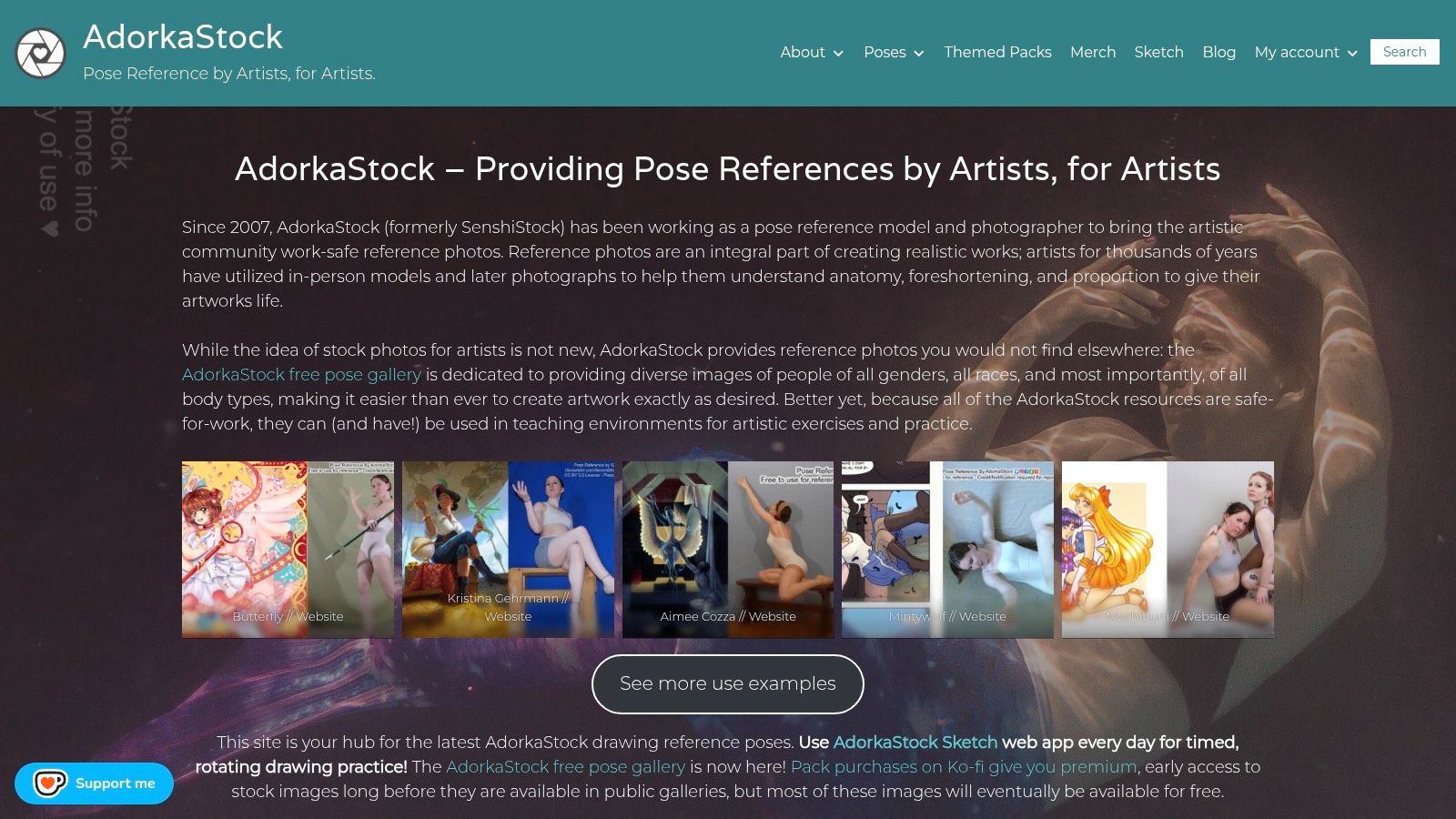
What makes AdorkaStock stand out is its commitment to the art community and its generous Creative Commons license. The majority of the gallery is free to use with proper attribution, making it perfect for students, hobbyists, and professionals on a budget. For those wanting more, premium themed packs (featuring capes, sheer fabrics, and specific concepts) and 360-degree video turnarounds are available through platforms like Ko-fi and Patreon, offering early access and exclusive content.
Key Features & Usage Tips
- Generous Free Gallery: Thousands of high-quality poses are available for free under a Creative Commons license, perfect for practice and non-commercial projects.
- Inclusive Representation: The poses feature a variety of body types, providing a more realistic and inclusive library for character design.
- 360° Video Reference: Select premium packs include video turnarounds, which are invaluable for understanding how fabric drapes and shifts from every angle.
- Practical Application: Use the free gallery for daily warm-ups and gesture drawing practice. When you need to study a specific fabric, like a flowing cape, consider supporting their Patreon or Ko-fi to access specialized reference packs.
Website: AdorkaStock
5. PoseSpace
PoseSpace is a long-standing institution in the digital art world, known for its massive library of high-quality figure photos shot in the round. While primarily known for anatomy, it's also an exceptional source for a specific type of clothes drawing reference: understanding how everyday garments conform to the body in a vast range of poses. Its key strength is the 360-degree view, offering up to 24 angles for a single pose. This allows artists to see exactly how a t-shirt wrinkles on the back or how jeans bunch up at the knee from any conceivable viewpoint.
The platform's meticulous, production-grade approach ensures consistent lighting and professional quality across its entire library. You can browse free low-resolution previews and then purchase individual high-resolution poses or entire sessions using a credit system. The advanced search filters are particularly useful, allowing you to narrow down results by clothing type, pose, and even lighting setup, saving you time when searching for a specific scenario. This makes it an invaluable tool for character designers and illustrators who need reliable, multi-angle views of basic apparel.
Key Features & Usage Tips
- 24-View Turnarounds: Every pose is shot from multiple angles, providing a complete 3D understanding of how fabric wraps, stretches, and compresses around the form.
- Advanced Search Filters: Quickly find what you need by filtering for clothed models, specific actions (sitting, standing, kneeling), and lighting conditions.
- Flexible Purchasing: Buy single high-resolution images for a few credits or purchase entire photo sessions for a bulk discount, catering to different budgets and project scales.
- Practical Application: Use the turnaround views to maintain consistency when drawing a character from different angles in a comic or storyboard. The variety of poses in western dress styles also provides a solid foundation for character ideation.
Website: PoseSpace
6. Croquis Cafe
While primarily known as a figure drawing resource, Croquis Cafe offers an invaluable and often overlooked library of clothes drawing reference material. Their approach focuses on the interaction between fabric and the human form during movement, providing timed video sessions and photo sets that capture dynamic poses. Instead of static, fashion-plate images, you get to see how a simple tunic, dress, or pair of trousers stretches, bunches, and folds as a person twists, bends, and balances. This makes it an excellent tool for understanding the underlying anatomy beneath the clothes.
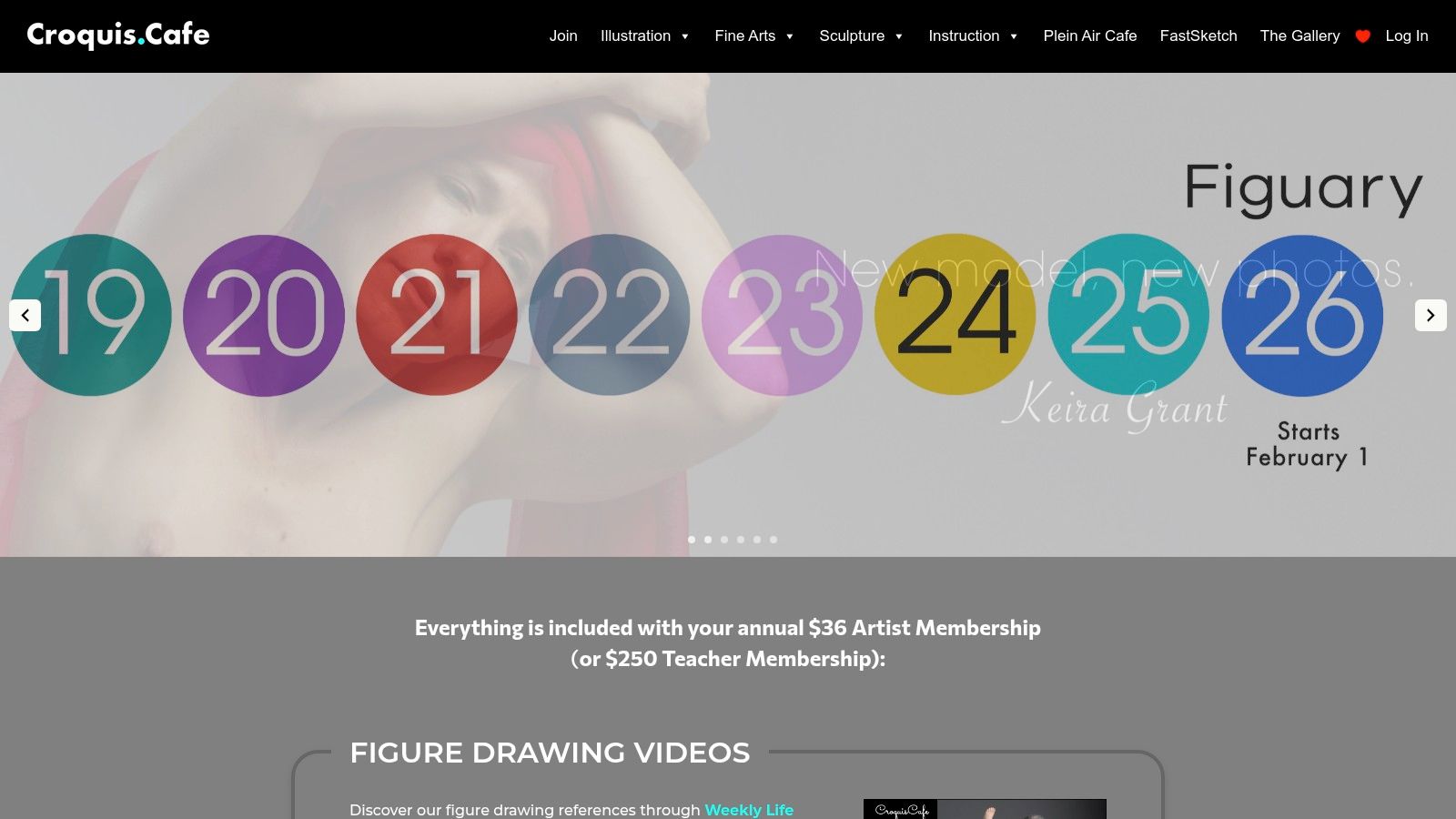
The platform’s strength lies in its volume and motion-based content. Full membership unlocks thousands of photos and videos, including 360-degree turntables that allow you to study how a garment hangs from every angle. It’s less about high-fashion detail and more about the fundamental principles of drapery in action, making it a perfect resource for students, animators, and character designers who need to draw clothing convincingly on figures that look alive.
Key Features & Usage Tips
- Timed Video Sessions: Use the timed drawing videos (from 30 seconds to 10 minutes) to practice capturing the gesture and major folds of clothing quickly, improving your visual shorthand.
- 360° Turntables: Pause the 360-degree videos at any angle to get a complete understanding of how fabric wraps around the form, especially in complex areas like the back of the knee or the shoulder.
- Searchable Library: The library is searchable by pose type, clothing, and model. Filter for "clothed" sessions to find specific garment examples for your studies.
- Structured Practice: Participate in their annual "Figuary" challenge to build a consistent drawing habit. The structured prompts are excellent for pushing you to tackle different types of clothed figures.
Website: Croquis Cafe
7. FashionCroquis.com
FashionCroquis.com serves a different but equally vital purpose as a clothes drawing reference by focusing on the foundation of fashion illustration: the figure itself. Instead of providing photographic references of existing clothing, this platform offers downloadable, printable PDF templates of fashion croquis. These are stylized human figures, typically in 9-head or 12-head proportions, designed specifically for sketching garment ideas directly onto them. This approach shifts the focus from studying existing folds to pure design ideation.
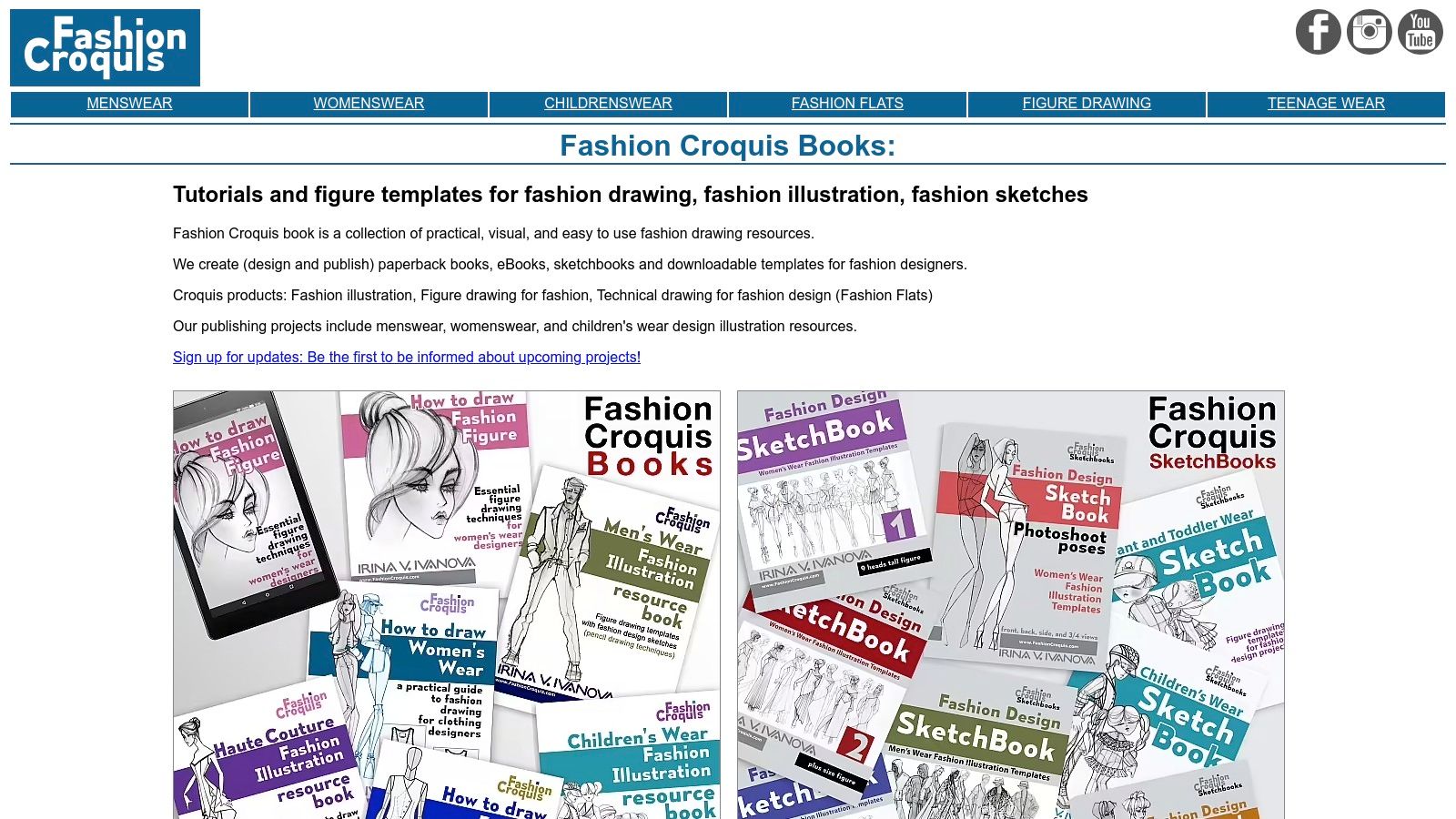
The primary strength of this resource lies in its professional, industry-standard templates that provide a consistent and proportional base for your designs. By eliminating the need to draw a new figure for every sketch, you can accelerate your workflow and concentrate entirely on the clothing's silhouette, details, and flow. The site offers sets for womenswear, menswear, children's clothing, and even "flats," which are technical drawings of garments laid flat.
Key Features & Usage Tips
- Industry-Standard Proportions: Using 9-head or 12-head croquis helps you practice drawing for the elongated figures common in professional fashion illustration.
- Printable and Digital Use: The high-resolution PDF files can be printed for traditional sketching or imported as a bottom layer in digital art software like Procreate or Photoshop.
- Streamlined Design Process: Keep a stack of printed croquis on your desk or a digital template file ready. This allows you to quickly capture design ideas as they come without worrying about anatomy.
- Focus on Flats: Utilize the "flats" templates to practice creating technical drawings, an essential skill for communicating designs to pattern makers and manufacturers.
Website: FashionCroquis.com
8. University of Fashion – Croquis Templates
The University of Fashion offers a unique entry point for artists looking for a clothes drawing reference rooted in industry-standard design practices. While not a photo library, its collection of croquis templates provides the foundational figure poses used by professional fashion designers. This resource is perfect for artists who want to move beyond simple figure drawing and start designing clothing with proper proportions and presentation in mind. The platform provides downloadable figures for female, male, plus-size, and child models.
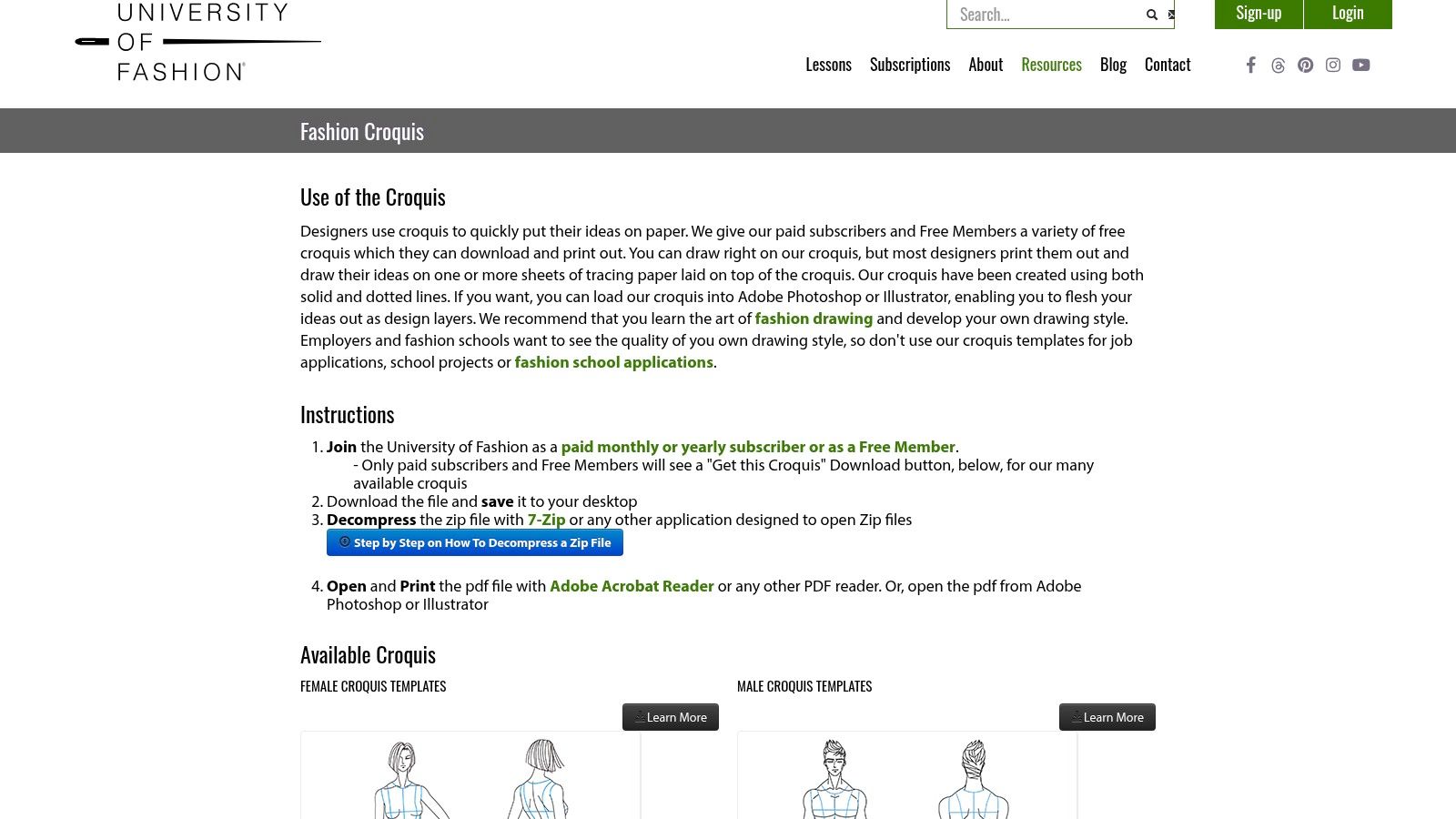
What sets this resource apart is its direct integration with a broader educational curriculum. The croquis are not just static images; they are tools intended to be used alongside the site's extensive video library on fashion design and illustration. This makes it an ideal platform for students or self-taught artists who want to learn the "why" behind their designs, rather than just copying a pose. The templates are available as printable PDFs and digital files compatible with Adobe Illustrator and Photoshop.
Key Features & Usage Tips
- Industry-Standard Proportions: The croquis are based on the elongated "9 heads" fashion figure proportion, helping you create stylized, professional-looking designs.
- Diverse Body Types: Access to a variety of templates, including plus-size and children, encourages inclusive design practices.
- Educational Context: Use the templates in conjunction with their free lessons to learn how to properly render fabric on a figure and present a design concept.
- Digital Workflow Integration: Download the Illustrator files and use them as a base layer for digital paintings, ensuring consistent figure proportions across a collection of designs.
Website: University of Fashion – Croquis Templates
9. DAZ 3D Store (DAZ Studio)
For artists who need a truly custom clothes drawing reference, DAZ 3D offers an unparalleled solution. Instead of relying on static photos, DAZ Studio is a free 3D software that lets you build your own reference scenes. You can purchase digital garments, figures, and pose packs from its extensive marketplace, then arrange, light, and render your own unique compositions from any conceivable angle. This approach transforms reference gathering from a passive search into an active creative process.
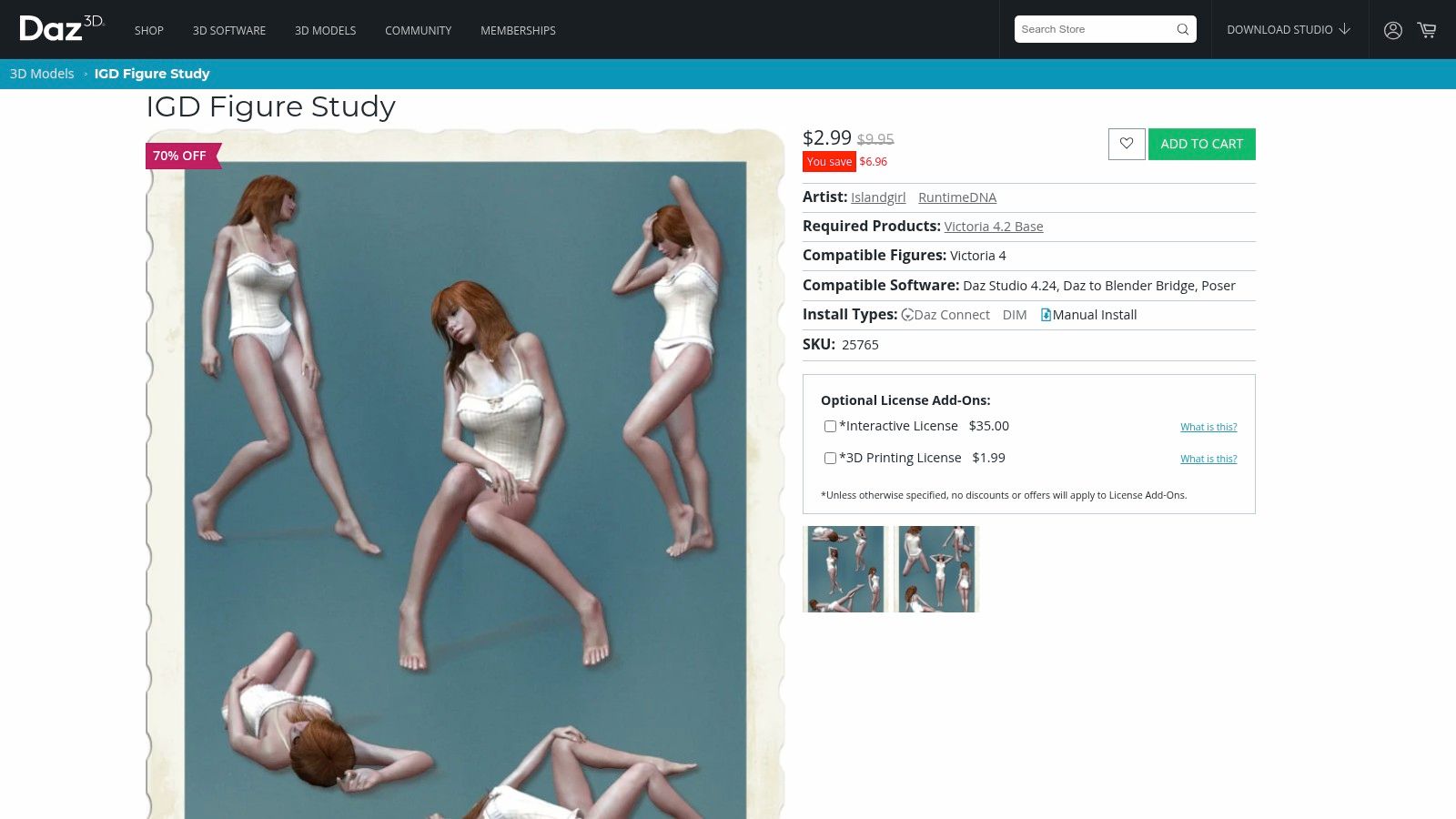
The primary advantage of DAZ is the ability to generate specific, dynamic references that static photos can't provide. You can mix and match clothing items, pose figures in complex actions, and experiment with virtual lighting to see how shadows and highlights define fabric folds. While there is a learning curve, mastering the basics allows you to create reference material perfectly tailored to your project's needs, eliminating the hunt for that "one perfect photo."
Key Features & Usage Tips
- Total Camera Freedom: Pose a clothed figure once and render it from multiple angles (top-down, low-angle, close-up) to fully understand how the fabric drapes and bunches.
- Extensive Asset Marketplace: The store offers a massive library of clothing, from historical armor to modern fashion, along with different body types and pose packs.
- Dynamic Cloth Simulation: More advanced users can simulate how fabric reacts to gravity and movement, providing incredibly realistic references for flowing skirts or bunched-up sleeves.
- Practical Application: Start with a simple setup. Use a basic T-shirt and jeans asset on a default figure. Apply a pre-made pose and adjust the main light source to observe how the shadows shift across the wrinkles.
Website: DAZ 3D Store
10. Reference.Pictures (Gumroad) – Drapery Pack
For artists who need to master the fundamentals of fabric, the Drapery Pack from Reference.Pictures is an invaluable and highly accessible clothes drawing reference. This resource strips away the complexities of fashion and posing to focus solely on the core physics of cloth. It offers a pay-what-you-want photo set capturing the pure behavior of draped fabric under neutral lighting, making it an ideal tool for foundational studies. The images are shot specifically for artists to understand the logic behind tension, compression, and gravity.
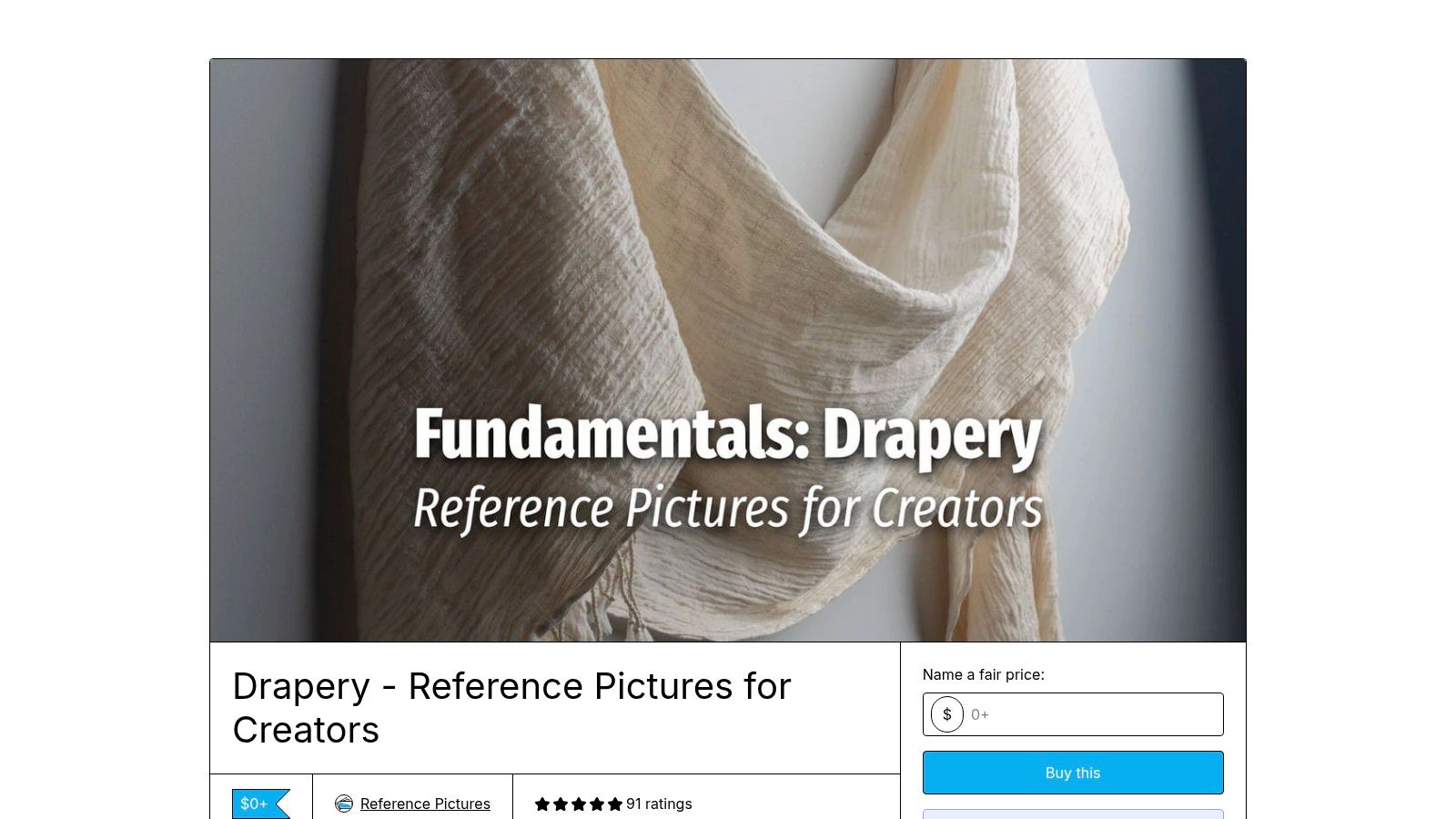
What makes this pack stand out is its affordability and straightforward utility. Instead of entire outfits, you get clean, high-resolution shots of cloth hanging, twisting, and folding. This specialized focus helps you build an intuitive understanding of how different types of folds are formed, which you can then apply to any garment you draw. The generous commercial-use license, which requires no attribution, makes it perfect for both personal study and professional concept work, such as developing patterns for a new t-shirt line with an AI shirt design generator.
Key Features & Usage Tips
- Focus on Fold Logic: The images are composed to clearly illustrate the "why" behind folds, making it easier to construct them convincingly from imagination.
- Pay-What-You-Want Model: This pricing makes the pack accessible to artists at any budget, removing financial barriers to quality reference material.
- Unrestricted Commercial Use: The pack includes a simple commercial license with no attribution required, allowing for complete creative and professional freedom.
- Practical Application: Use these images for warm-up exercises. Spend 10-15 minutes sketching different sections to train your hand and eye to see the primary shapes and flow of fabric before tackling more complex clothing.
Website: Reference.Pictures Drapery Pack on Gumroad
11. Vogue Runway – Fashion Shows Image Archive
For artists seeking a cutting-edge clothes drawing reference, Vogue Runway is an unparalleled resource. It offers a massive, free-to-browse archive of high-fashion collections straight from the world's most prestigious catwalks. Unlike studio-shot reference packs, this platform provides real-world context, showcasing how experimental fabrics, complex tailoring, and avant-garde silhouettes are worn and styled. It’s the perfect place to study garment construction, unique material combinations, and the latest trends in fashion design.
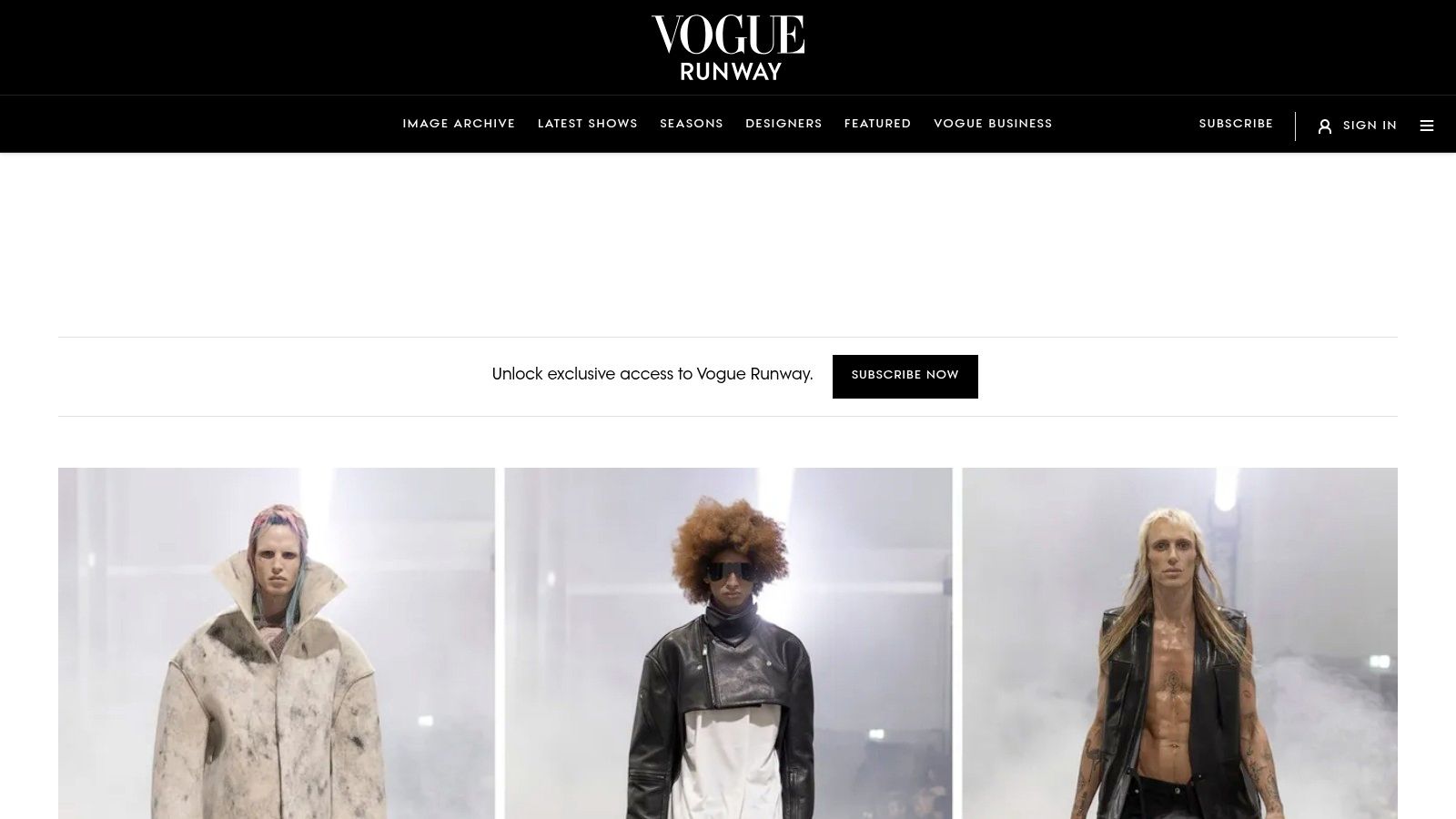
The key advantage of Vogue Runway is its detail-oriented photography. Galleries often include close-up shots of seams, accessories, fabric textures, and embellishments that are invaluable for character design and illustration. You can browse extensive archives by season, designer, or city, making it easy to research specific aesthetics or trace the evolution of a particular style. The platform is less about studying isolated fabric folds and more about understanding the "language" of clothing and design.
Key Features & Usage Tips
- Detailed & Backstage Views: Look for galleries that include detail shots to get a closer look at stitching, buttons, and material quality, providing crucial information for realistic rendering.
- Search by Designer & Season: Use the powerful search filters to find specific aesthetics, from historical-inspired couture to modern minimalist looks, to perfectly match your character's story.
- Study Construction: The runway shots clearly show how garments are constructed and how they drape on a moving body, offering a different perspective than static poses.
- Inspiration Source: Instead of copying outfits, use the platform for inspiration. Combine the silhouette from one look with the fabric from another to create unique and believable costume designs.
Website: Vogue Runway Fashion Shows
12. I Draw Fashion – Croquis Templates
I Draw Fashion offers a different kind of clothes drawing reference focused on the ideation and design phase. Instead of photographic references, it provides downloadable fashion croquis, which are stylized figure templates used as a base for sketching clothing designs. This resource is invaluable for fashion illustrators and character designers who need to quickly concept outfits without worrying about drawing a perfectly proportioned figure from scratch every time. The templates are clean, professional, and designed to make the clothing the star of the show.
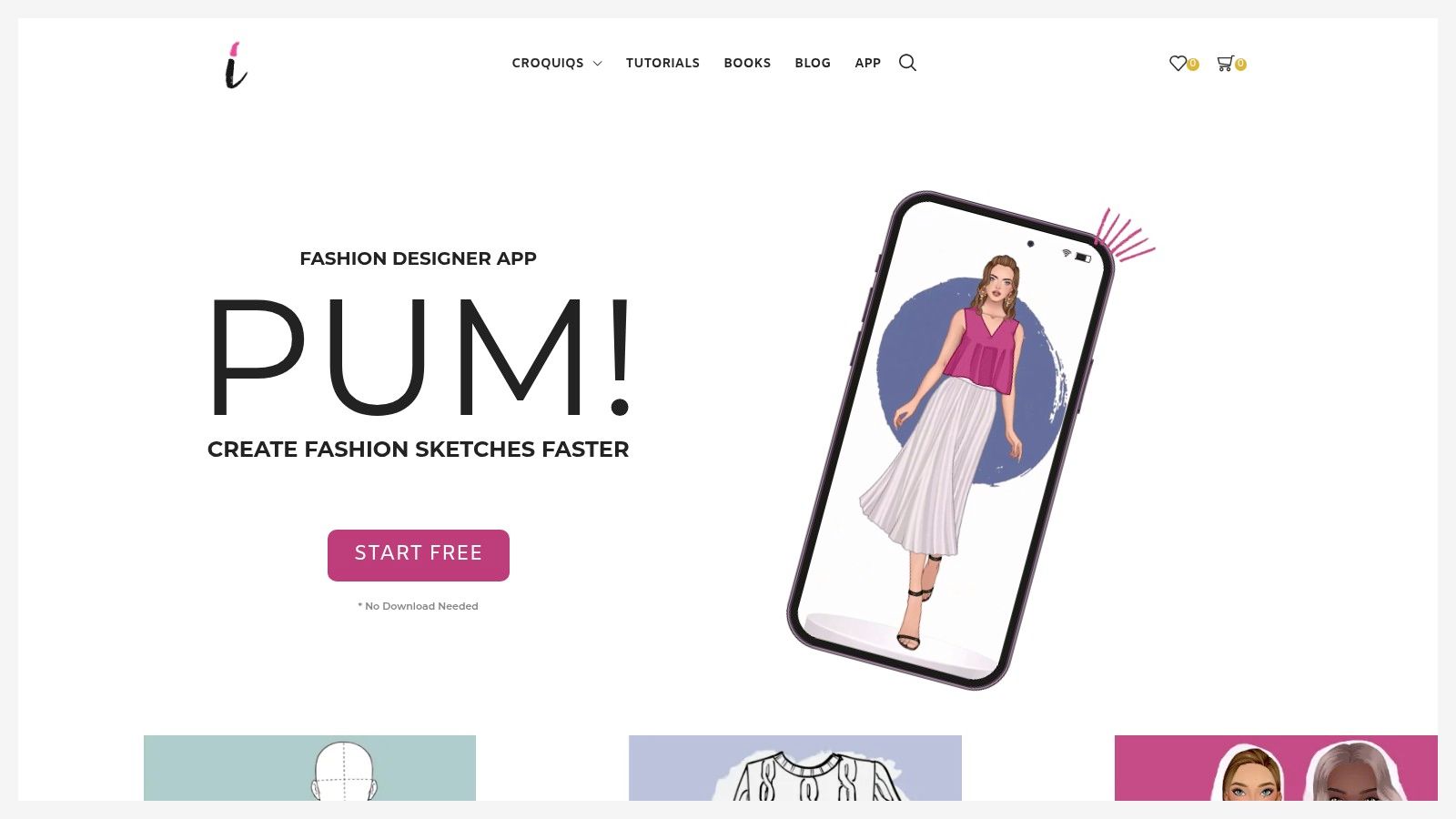
The platform’s strength is its accessibility and focus on practical application for designers. With an extensive library of poses, including plus-size figures and crucial back/side views, it supports a wide range of garment types from flowing gowns to structured suits. These templates streamline the process, allowing artists to focus entirely on silhouette, texture, and detail. They serve as a foundational tool that, when combined with photographic references for fabric folds, becomes a powerful part of the design workflow. This approach is fundamental when you design your own dress online for free, as it helps establish the core silhouette first.
Key Features & Usage Tips
- High-Resolution Files: Templates come as 300 DPI JPG, PNG, and PDF files, making them perfect for printing and tracing or for direct use in digital software like Procreate or Photoshop.
- Diverse Poses & Figures: The inclusion of plus-size options and various views (front, back, side) makes it a more inclusive and versatile tool than many competitors.
- Purpose-Driven Organization: Templates are categorized by pose and intended garment use, such as "mermaid gowns" or "walking poses," which helps you quickly find the right base for your idea.
- Workflow Integration: Use a croquis to establish your design's silhouette and overall look. Then, pull in a photographic reference from another source to accurately render the fabric folds, lighting, and texture on your established design.
Website: I Draw Fashion
12 Clothes-Drawing Reference Resources — Quick Comparison
Choosing the Right Reference for Your Artistic Goals
Throughout this guide, we've explored a comprehensive arsenal of resources designed to elevate your art, from dynamic photo packs to foundational croquis templates. We've journeyed through the high-energy, narrative-driven libraries of Grafit Studio and AdorkaStock, examined the anatomical precision of PoseSpace and Proko, and delved into the specialized worlds of fashion design with Vogue Runway and I Draw Fashion. The central takeaway is clear: there is no single, perfect clothes drawing reference. The ideal tool is the one that directly serves your immediate artistic objective.
Your goal is not to amass every resource mentioned but to build a curated, personal library that aligns with your workflow and creative vision. By strategically selecting a few key resources from different categories, you create a powerful toolkit for tackling any challenge.
Building Your Personalized Reference Toolkit
To make the most of this list, consider your specific needs. Are you a concept artist developing characters for a video game, or a fashion illustrator pitching a new clothing line? The answer will guide your choices.
Here’s a simple framework for selecting the right tools:
- For Dynamic Character Art & Illustration: Your primary focus should be on high-quality, contextual photo references. Combine a subscription or several packs from Grafit Studio for storytelling and lighting with sets from AdorkaStock or PoseSpace for more specific, isolated pose studies. This gives you both narrative inspiration and technical accuracy.
- For Foundational Drapery & Fabric Studies: To truly understand how cloth behaves, you need to isolate it from the human form. A dedicated resource like the Reference.Pictures Drapery Pack is invaluable for this. Use it for focused practice sessions on tension, compression, and weight to build a strong mental library of fabric physics.
- For Fashion Design & Ideation: Your workflow requires a blend of real-world inspiration and a standardized canvas. Use Vogue Runway as your primary source for trend research and garment construction ideas. Then, translate those ideas onto professional templates from FashionCroquis.com or the University of Fashion to ensure proper proportion and a consistent presentation.
- For Maximum Customization & Control: If your projects demand unique camera angles, lighting, and garment simulations that photo packs can't provide, investing time in a tool like DAZ 3D is the answer. While it has a steeper learning curve, it offers unparalleled control over every element of your scene, making it the ultimate custom clothes drawing reference generator.
Beyond Copying: The Path to Mastery
The most critical principle to remember is that a reference is a tool for understanding, not just a picture to be copied. Your objective should always be to analyze why the fabric looks the way it does. Identify the points of tension pulling the cloth taut. Observe where gravity causes it to hang and compress. See how the stiffness or softness of the material dictates the sharpness or gentleness of the folds. This analytical process is what separates a novice from an expert.
By internalizing these principles, you'll eventually be able to draw convincing clothing from imagination, using references only to check for accuracy or to find inspiration. This journey from imitation to innovation is the true goal. For artists looking to take their skills into the commercial realm, understanding how to apply these designs to actual products is the next logical step. Exploring topics like How To Design For Print On Demand can provide a practical roadmap for turning your artistic creations into tangible, marketable goods.
Ultimately, the vast world of clothing reference is yours to explore. Experiment with different resources, combine them in unique ways, and never stop observing the world around you. Every person you see is a walking, living reference. By cultivating your observational skills and leveraging the powerful tools we've discussed, you will equip yourself to bring your creative visions to life with confidence and authenticity.
Ready to streamline your entire creative workflow, from reference gathering to final presentation? Aeon provides a unified digital workspace to organize your reference libraries, manage project tasks, and collaborate with your team, ensuring your best ideas are always within reach. Discover a smarter way to create with Aeon.