In the fast-paced world of digital fashion, a great western dress is only half the battle. The right pose can transform a simple product shot into a compelling narrative, driving engagement and ultimately, sales. This comprehensive guide breaks down essential modeling poses in western dress, offering a strategic blueprint for photographers, models, and e-commerce teams aiming to elevate their visual content. We move beyond generic stances to explore actionable techniques that effectively showcase garment fit, intricate details, and unique brand identity.
You will learn the specific body mechanics, optimal camera angles, and subtle styling nuances required to master each pose. For designers aiming to perfect the drape and fit for dynamic Western wear poses, an adjustable sewing mannequin is an indispensable tool for pre-shoot preparations, ensuring the garment moves and falls correctly on the model.
Furthermore, we provide expert tips on adapting these static poses for high-impact video content. This is a crucial element for creating dynamic, scroll-stopping visuals that capture attention on social feeds and e-commerce platforms. Consider this your go-to resource for creating powerful, story-driven imagery that truly sells your western wear.
1. The Classic Stand with Shoulder Turn
The Classic Stand with Shoulder Turn is a cornerstone of professional modeling, especially for western dress. This foundational pose involves the model standing with their body slightly angled away from the camera, turning one shoulder forward. This simple action creates dynamic lines, highlights the garment's tailoring, and adds a sense of depth and dimension that a flat, forward-facing pose lacks. It is an essential technique for anyone looking to master modeling poses in western dress.
This pose is incredibly versatile, working well for everything from rugged denim jackets to structured blazers and classic button-up shirts. By presenting the clothing at a slight angle, it prevents the silhouette from appearing boxy and instead flatters the model's form while showcasing the clothing's fit and drape.
Strategic Breakdown
The power of this pose lies in its ability to create flattering angles and a sense of effortless confidence. It’s a go-to for major retailers like J.Crew and Ralph Lauren because it strikes the perfect balance between being aspirational and relatable.
- Elongation: Angling the body naturally lengthens the torso and legs.
- Dimension: The turn adds depth, preventing the image from looking flat and one-dimensional.
- Focus: It subtly directs the viewer's eye across the garment, highlighting details like lapels, buttons, or shoulder construction.
Actionable Takeaways
To execute this pose effectively, focus on subtle, natural movements. It should feel relaxed, not forced or rigid.
- Body Placement: Have the model stand with feet slightly apart, then shift their weight to the back leg. This creates a natural curve in the hips and a more relaxed posture.
- Shoulder and Chest: Instruct the model to turn their front shoulder towards the camera while keeping their chest open and facing slightly forward. Emphasize keeping the shoulders down and away from the ears to avoid tension.
- Camera & Framing: A camera positioned at the model's eye level or just slightly above is ideal. This angle is universally flattering and maintains a powerful, direct connection with the viewer. For a full-body shot, ensure there is enough space around the model to convey the complete look.
2. The Confident Hand-in-Pocket
The Confident Hand-in-Pocket is a quintessential pose in modeling western dress, effortlessly blending casual coolness with sophisticated control. This pose involves the model placing one hand casually into a pants or jacket pocket, instantly conveying an air of relaxed self-assurance. Popularized by icons like James Dean and consistently used by brands like Wrangler and Banana Republic, it’s a go-to for creating relatable yet aspirational imagery that feels authentic and unstaged.
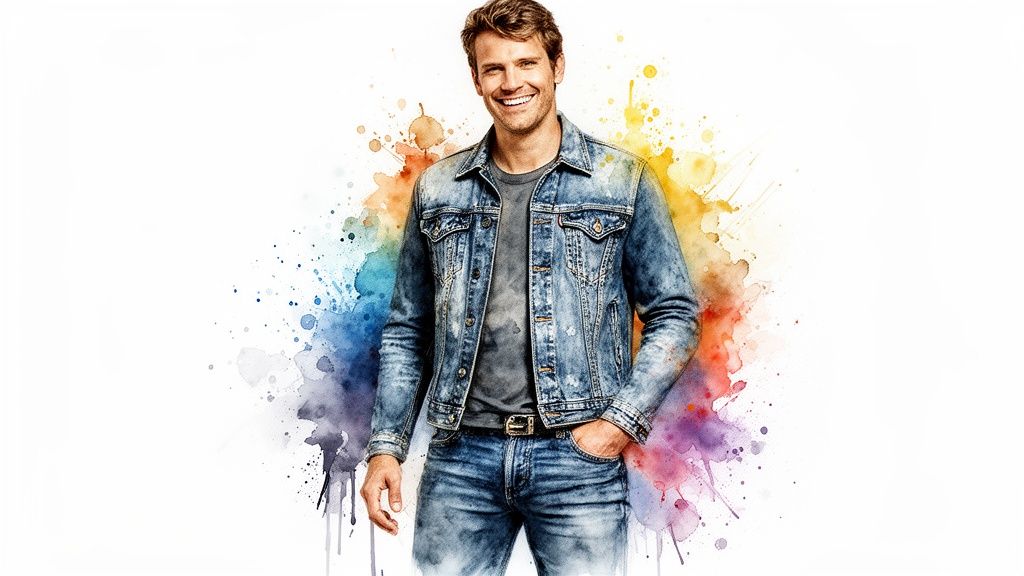
This pose is incredibly effective for lifestyle content, workwear promotions, and any campaign aiming for an approachable vibe. By interacting with the garment, the model not only looks more natural but also subtly highlights the practical features of the clothing, such as pocket design and depth, making it a powerful tool for both e-commerce and editorial shoots.
Strategic Breakdown
The strength of this pose is its ability to break the fourth wall with the viewer, suggesting a moment caught in time rather than a staged photograph. It’s a favorite for brands like Carhartt and Fossil because it humanizes the model and makes the product feel more accessible and functional.
- Authenticity: Placing a hand in a pocket is a natural, everyday gesture that makes the pose feel genuine and unforced.
- Confidence: This simple action projects a sense of ease and confidence, which transfers to the perception of the brand.
- Functionality: It draws attention to the garment’s practical details, demonstrating its utility in a subtle, organic way.
Actionable Takeaways
Executing the hand-in-pocket pose requires attention to small details to ensure it looks effortless rather than awkward. The goal is relaxed confidence, not rigid posing.
- Hand Placement: Instruct the model to slide their hand into the pocket naturally, leaving the thumb out. This creates a stronger line, adds visual interest, and prevents the hand from looking like it has disappeared.
- Body and Posture: The model should shift their weight slightly to one leg, creating a gentle S-curve in their body. This asymmetry makes the pose more dynamic and visually appealing than standing straight-on.
- Camera & Framing: For lifestyle shots, a medium or full-body frame works best to capture the overall relaxed posture. Positioning the camera at a slightly lower angle can enhance the sense of confidence and make the model appear more commanding.
3. The Cross-Armed Power Pose
The Cross-Armed Power Pose is a commanding and confident stance that instantly communicates authority and self-assurance. This pose involves the model crossing their arms across their chest or abdomen, often asymmetrically, to create a strong, grounded silhouette. It is an indispensable technique in the vocabulary of modeling poses in western dress, especially for conveying a sense of empowerment and sophistication.
This pose is particularly effective for structured garments like blazers, tailored coats, and premium knitwear. By drawing attention to the upper body, it frames the garment and highlights the construction of the shoulders and chest, making it a favorite for brands like Burberry and Hugo Boss that emphasize sharp tailoring and powerful aesthetics.
Strategic Breakdown
The strength of the Cross-Armed Power Pose lies in its psychological impact. It projects a feeling of control, stability, and high status, which makes it ideal for luxury and corporate fashion campaigns. The pose is direct, unapologetic, and frames the clothing as a component of the model's inherent confidence.
- Authority: Crossing the arms is a classic non-verbal cue for power and assertiveness.
- Framing: The arms create a visual frame around the torso, drawing the eye to the fabric, cut, and details of the garment.
- Silhouette Definition: This pose accentuates the shoulders and waist, creating a strong V-shape for men and an hourglass figure for women.
Actionable Takeaways
Executing this pose requires balancing strength with approachability to avoid appearing defensive or closed off. The goal is confident composure, not rigidity.
- Arm Placement: Have the model cross their arms loosely, allowing the hands to rest gently on the biceps rather than gripping them tightly. One arm should be slightly higher than the other to create visual interest.
- Posture and Expression: The model should stand tall with their shoulders pulled back and down. Pair this strong posture with a relaxed facial expression or a soft, direct gaze to soften the overall look.
- Camera & Framing: A medium shot from the waist up is perfect for capturing the essence of this pose. Position the camera at chest level to enhance the sense of power and presence. For more dynamic styling, you can explore options with an ai outfit generator free to experiment with different looks.
4. The Dynamic Walking Stride
The Dynamic Walking Stride is an action-oriented pose that captures the model in motion, typically walking toward or across the camera's frame. This technique injects a powerful sense of narrative, energy, and authenticity into fashion photography and videography, moving beyond static displays. It is a vital pose for showcasing how western dress moves and functions in a real-world context, making the clothing feel both aspirational and wearable.
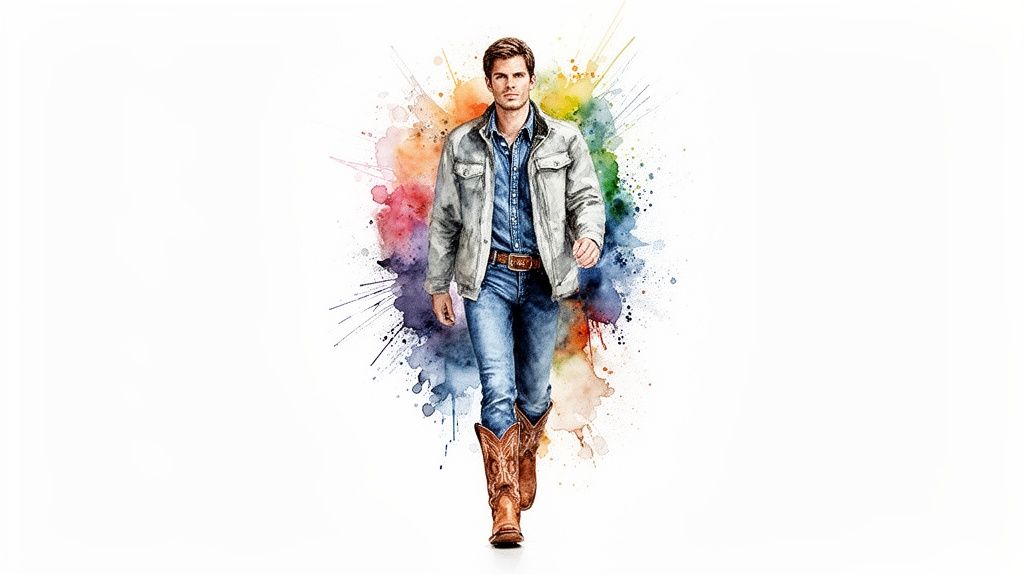
This pose is particularly effective for video content, as it transforms a simple product showcase into an engaging story. Brands like Coach and Nike use this walking motion to create lifestyle content that feels cinematic and relatable. For western wear, it highlights the natural sway of a fringe jacket or the sturdy functionality of denim and cowboy boots, grounding the style in its rugged, action-oriented heritage.
Strategic Breakdown
The strength of the walking stride is its ability to create a story and showcase garments in a natural, fluid state. It’s a favorite for documentary-style fashion campaigns and luxury brands because it conveys a sense of purpose and effortless style, making it a key element in modern modeling poses in western dress.
- Authenticity: Capturing natural movement makes the clothing and model appear more genuine and less staged.
- Narrative: A walking pose implies a journey or destination, adding a layer of storytelling that static poses lack.
- Engagement: Motion naturally draws and holds the viewer’s eye, which is crucial for video content and social media platforms.
Actionable Takeaways
To master the dynamic walking stride, the focus should be on creating a natural, confident gait rather than a theatrical one. The movement should look purposeful and relaxed.
- Movement & Pace: Instruct the model to walk at a natural, steady pace. Have them take deliberate, slightly longer strides than usual to create a more powerful visual line. Ensure their arm swing is coordinated with their leg movement for a balanced look.
- Facial Expression: The model’s expression should match the mood of the shoot. A slight, confident smile or a focused, forward gaze can convey determination and ease. Encourage them to look slightly past the camera, not directly into it, to enhance the candid feel.
- Camera & Framing: For video, shoot at a higher frame rate (60fps or more) to allow for smooth slow-motion effects in post-production. Use a shallow depth of field to keep the model in sharp focus while softly blurring the background, which adds a professional, cinematic quality.
5. The Seated Elegance Pose
The Seated Elegance Pose offers a sophisticated alternative to standing shots, providing a different perspective ideal for showcasing structured garments and refined western wear. This pose involves the model sitting on a stool, chair, or ledge while maintaining an engaged and poised posture. It’s an effective technique for adding variety to a photoshoot or video, conveying a sense of relaxed confidence and control, making it a staple for premium brands. This is a key pose to master for anyone modeling poses in western dress.
This pose is exceptionally versatile, working perfectly for tailored suits, premium denim, and detailed blazers. By seating the model, the focus shifts to the upper half of the garment, highlighting fit, fabric, and details without the distortion that can occur when a model leans or bends while standing. It's often seen in campaigns by luxury brands like Tom Ford and Burberry.
Strategic Breakdown
The power of this pose is its ability to create a narrative of composed sophistication and understated power. It breaks the monotony of standing poses, allowing for a moment of quiet contemplation that draws the viewer in and highlights the quality of the apparel.
- Garment Focus: It naturally draws attention to the tailoring of a jacket or the fit of trousers without bunching or stretching the fabric.
- Narrative Depth: A seated pose can tell a story, suggesting a moment of pause, business, or leisure, adding a layer of context to the image.
- Controlled Silhouette: It allows for precise control over the body’s lines, creating elegant angles with the legs and arms to frame the outfit.
Actionable Takeaways
Executing the Seated Elegance Pose requires attention to posture and limb placement to avoid looking slumped or casual. The goal is active, engaged relaxation.
- Body Placement: Have the model sit on the front edge of the seat, not leaning back. This keeps the spine straight and the posture active. The seat height should ideally allow for a 90-degree angle at the knees for a clean, strong line.
- Legs and Hands: Instruct the model to angle their legs to one side or cross one ankle over the other, which creates a more dynamic and elegant silhouette than placing them straight forward. Hands can rest gently on the lap, one on the armrest, or be used for a subtle gesture to add dynamism.
- Camera & Framing: A slightly low camera angle can add a sense of authority and power. For e-commerce, a straight-on shot at torso level keeps the focus on the product, while a wider shot is better for editorial or lifestyle content to establish the scene.
6. The Over-the-Shoulder Look
The Over-the-Shoulder Look is a classic and evocative pose that adds a layer of intrigue and dynamism to any fashion shoot. It involves the model standing mostly with their back to the camera, looking back over their shoulder to make eye contact with the lens. This creates a sense of candid movement and mystery, drawing the viewer in while masterfully showcasing the back details of western wear, from intricate yokes on a denim jacket to the clean lines of a structured shirt.
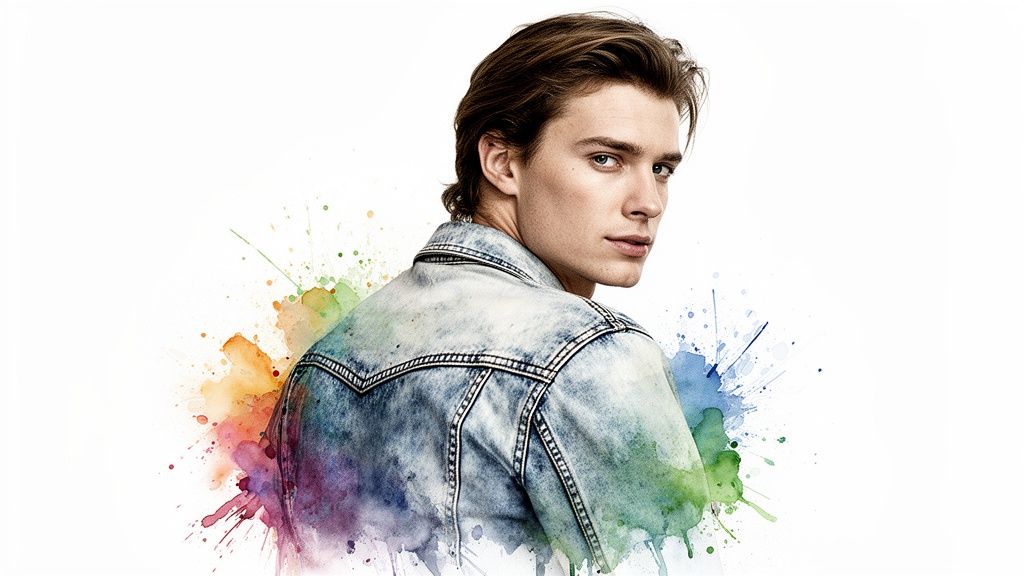
This pose is incredibly photogenic and a staple in high-fashion editorials and luxury campaigns from brands like Chanel and Valentino. Its narrative quality makes it perfect for conveying a story, making it one of the most compelling modeling poses in western dress. It translates exceptionally well to video, where a slow turn can create a captivating moment.
Strategic Breakdown
The power of this pose is its ability to be both revealing and mysterious. It highlights the garment's construction from a different perspective while creating an intimate connection with the viewer through direct eye contact. Photographers like Peter Lindbergh famously used this technique to create iconic, story-driven images.
- Intrigue: The turn suggests a captured moment, as if the viewer just called the model's name.
- Back Detail Focus: It is the best way to showcase unique back designs, logos, or tailoring without losing the model's presence.
- Dynamic Lines: The twist of the torso and neck creates elegant, sweeping lines that flatter the model and the garment.
Actionable Takeaways
Executing the Over-the-Shoulder Look requires a focus on subtlety and natural movement to avoid looking stiff or overly posed. For deeper insights into creating dynamic fashion photography, you can explore more about the over-the-shoulder look and similar techniques on project-aeon.com.
- Body Placement: Ask the model to stand with their back mostly to the camera, feet slightly apart. Their weight can be on either foot, but a slight hip shift away from the camera adds a nice curve.
- Head Turn: Instruct the model to turn their head slowly towards the camera, just enough to look over their shoulder. The chin should be slightly down to create a flattering jawline. Avoid a full 90-degree turn, which can look strained.
- Camera & Framing: A medium or close-up shot works exceptionally well to capture the expression and shoulder detail. Ensure lighting is set to softly illuminate the side of the face and neck to avoid harsh shadows. For video, a slight sway or a slow, continuous turn can add a cinematic feel.
7. The Leaning Casual Stance
The Leaning Casual Stance is a highly effective pose that injects a sense of authenticity and relaxation into fashion photography. It involves the model leaning against a surface like a wall, fence, or doorway, creating a natural, lifestyle-oriented aesthetic that is perfect for contextualizing western wear. This pose moves beyond the studio, telling a story and making the clothing feel more approachable and part of a lived-in world, making it one of the most relatable modeling poses in western dress.
This pose is exceptionally well-suited for brands that want to convey a laid-back, contemporary vibe, such as Urban Outfitters or Free People. It works beautifully with everything from flowing dresses to rugged denim by placing the garments in a realistic setting, helping the audience envision themselves wearing the clothes in their own lives.
Strategic Breakdown
The power of the lean is its ability to break the stiffness of traditional modeling, creating an image that feels candid and genuine. It’s a favorite for lifestyle campaigns and social media content because it feels unstaged and authentic, instantly connecting with the viewer.
- Authenticity: Leaning is a natural human posture, which makes the pose instantly relatable and less "salesy."
- Contextualization: Using a surface places the model and garment within a specific environment, adding narrative depth.
- Asymmetry: The lean creates interesting diagonal lines and asymmetrical shapes, making the composition more dynamic and visually engaging.
Actionable Takeaways
Executing this pose requires focusing on creating a look that is both relaxed and intentional. The key is to make the interaction with the environment feel completely natural.
- Body Placement: Instruct the model to lean against the surface with their shoulder, back, or hip. Have them cross one leg over the other or bend one knee to create a more dynamic shape and avoid a static, flat-against-the-wall look.
- Hand and Arm Positioning: Hands can be placed in pockets, rest on a hip, or gently touch the support surface. For video, encourage subtle shifts in arm placement between takes to provide varied options for editing.
- Camera & Framing: A slightly upward camera angle can be flattering, elongating the model's figure. For full-body shots, frame the image to include elements of the environment that complement the western aesthetic, such as rustic wood or brick textures.
8. The Three-Quarter Forward Pose
The Three-Quarter Forward Pose is a highly effective and versatile stance in the world of modeling poses in western dress. It strikes a perfect balance between a full-frontal and a profile view, with the model positioning their body at a three-quarter angle to the camera while keeping their face largely forward. This creates a compelling sense of depth and dimension while ensuring the model remains connected with the audience, making it a staple for commercial and e-commerce photography.
This pose is exceptionally well-suited for showcasing western garments like A-line skirts, tailored trousers, and structured jackets. By angling the body, it highlights the garment's silhouette, drape, and side details without sacrificing the engaging, direct appeal of a forward-facing shot. It offers a comprehensive view of the product in a single, flattering frame.
Strategic Breakdown
The strength of the Three-Quarter Forward Pose is its ability to communicate information and engage the viewer simultaneously. It's a workhorse for retailers like Nordstrom and Banana Republic because it efficiently showcases the product's fit from multiple perspectives while maintaining a personal connection.
- Comprehensive View: It reveals the side profile of the garment, offering details on fit, seams, and silhouette that are lost in a direct-on shot.
- Dimensionality: The angle prevents a flat, two-dimensional appearance, adding depth to both the model and the clothing.
- Engagement: By keeping the face and shoulders turned slightly forward, the pose maintains a direct and inviting connection with the viewer.
Actionable Takeaways
To master this pose, the focus should be on creating a relaxed yet defined angle. It needs to look natural and intentional, not like an accidental turn.
- Body Placement: Ask the model to stand with their feet slightly apart and turn their body about 45 degrees away from the camera. Their weight should be on the back foot to create a natural, relaxed hip line.
- Shoulders and Head: Instruct the model to turn their head back towards the camera, keeping the front shoulder relaxed and slightly down to elongate the neck. A gentle head tilt can add personality and softness.
- Camera & Framing: Position the camera at the model's eye level for the most flattering facial angle and a direct connection. For video, this pose is a foundational starting point for sequences that pan around the garment, providing a comprehensive view for the customer. Modern production workflows, like those discussed in articles on AI's role in fashion, often use this as a primary pose for creating multi-angle video showcases.
Western Dress Modeling — 8-Pose Comparison
Turning Poses into Performance: Your Key Takeaways
Mastering the art of modeling poses in western dress is about transforming static positions into dynamic storytelling. As we've explored through examples like the Classic Stand and the Dynamic Walking Stride, a successful pose is a blend of precise technique, authentic expression, and strategic intent. It's the difference between merely showing a garment and truly selling a vision.
The poses detailed in this guide are not rigid rules but foundational frameworks. The true skill lies in understanding the core principle behind each one. The Hand-in-Pocket conveys effortless confidence, the Over-the-Shoulder Look creates intrigue, and the Seated Elegance Pose highlights sophistication. By internalizing these concepts, you empower your creative teams to direct with clarity and purpose, ensuring every shot serves its intended goal, whether for a clean e-commerce product page or an immersive editorial campaign.
Core Principles for Effective Posing
To elevate your visual content, consistently apply these key takeaways:
- Story First, Pose Second: Before choosing a stance, define the narrative. Is the goal to communicate power, grace, or playful energy? Let the story guide the model's body language and expression.
- Embrace Asymmetry and Angles: Perfect symmetry can appear stiff. Encourage subtle shifts in weight, angled limbs, and head tilts to create more visually interesting and natural-looking compositions. The Three-Quarter Forward Pose is a perfect example of how angles create depth.
- Motion is a Mindset: Even in still photography, thinking in terms of movement creates more authentic results. Directing a model to walk into a pose, lean naturally, or turn fluidly will capture a sense of life that a static "hold this" direction cannot.
From Stills to Story: The Next Step
The ultimate goal is to create a seamless visual language that resonates with your audience. Think of each pose as a single word in a sentence. When strung together, they can form compelling narratives that capture attention and drive engagement. For additional inspiration on fashion presentation and how different stances can convey a message, consider exploring various runway looks to see how high-fashion uses posture to tell a story.
By mastering these foundational modeling poses in western dress, you are building an essential toolkit for creating high-impact visual assets. Move beyond simply documenting apparel and start crafting experiences that connect, convert, and build your brand's identity one powerful pose at a time.
Ready to turn your static product photoshoots into captivating video content? Aeon uses AI to transform your existing images into dynamic, on-model videos, bringing these powerful poses to life without the need for a full video production. Discover how to create high-performing visual assets at scale by visiting Aeon.