Imagine having a personal stylist who also moonlights as a logistics wizard, working around the clock to refresh your wardrobe without you ever having to buy new. That’s the magic behind clothes swap AI, an intelligent system built to make trading pre-loved clothes not just easy, but genuinely exciting. It’s the tech that’s finally making circular fashion the most obvious choice.
What Is Clothes Swap AI and Why It Matters
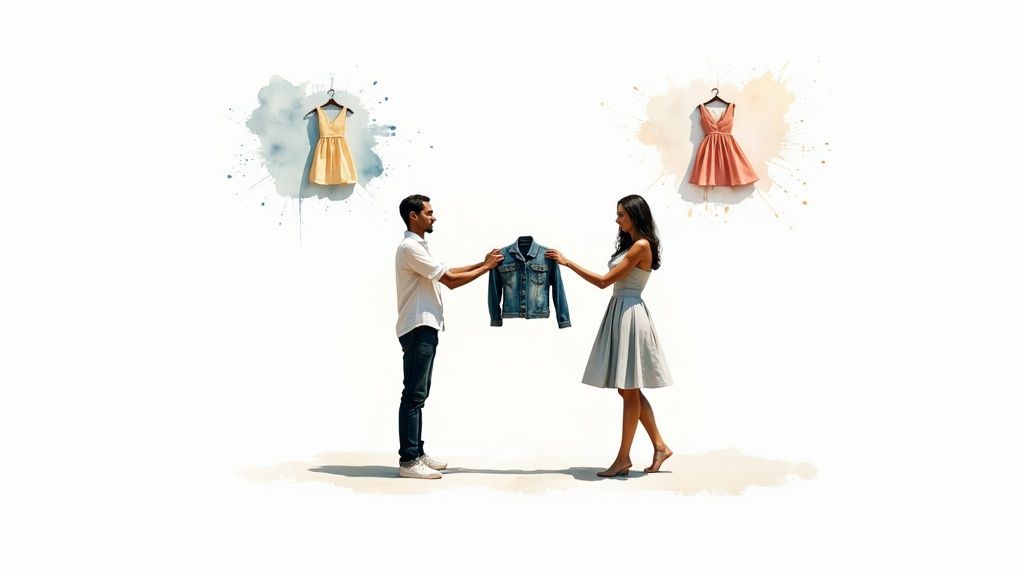
Think of it as a matchmaking service for your closet. Instead of spending hours scrolling through listings, trying to find someone who wants your old jeans and just so happens to have a shirt you’d love, the AI does all the legwork for you. It intelligently connects your unwanted items with people who will actually cherish them, and in return, finds gems you’ll be thrilled to wear.
This technology hits directly at the biggest pain points of swapping clothes. For years, trading has been a clunky, time-sucking process bogged down by endless searching, guesswork on sizing, and a general lack of trust. AI completely flips that script.
Solving Fashion's Oldest Frustrations
By automating the whole discovery and matching game, clothes swap AI tackles these all-too-common headaches:
- The Endless Scroll: It cuts through the noise by curating personalized swap suggestions based on your actual style, not just what’s available.
- The Sizing Gamble: With features like virtual try-on, you can see how a garment might fit your body type before you commit, dramatically reducing the risk of a bad trade.
- The Trust Gap: Smart systems can analyze photos to verify an item's condition and even help spot fakes, building confidence between swappers.
This intelligent approach is tapping into a market that’s hungry for better, more sustainable options. The global cloth swapping app market is on a tear, jumping from USD 3.5 billion in 2023 to a projected USD 15.2 billion by 2032. That’s not just growth; it’s a clear signal that people are moving away from the fast fashion treadmill. You can dive deeper into the growth of the cloth swapping market to see what’s driving this shift.
At its core, clothes swap AI isn’t just another cool tool—it’s the engine that can power the entire circular economy. It brings the scale and smarts needed to turn a niche hobby into a mainstream habit, making sustainable style incredibly simple.
The Smart Tech Behind Your Perfect Swap

To really get what makes a great clothes swap app tick, you have to peek under the hood. It’s not just one single piece of software doing all the work. Think of it more like a team of specialized systems, each with a crucial job, working together to turn a potentially chaotic process into something smart and personal.
At the very heart of the operation is the matching algorithm. This is the brains of the platform—a sophisticated matchmaker for your closet. It learns your style by analyzing your preferences, past swaps, and the items you’ve favorited. Then, it dives into thousands of other users’ closets to unearth those perfect, complementary trades, serving them up in a feed that feels like it was made just for you.
Of course, this core system doesn't work in a vacuum. It needs help from other clever components to gather the right info, making sure every suggestion actually hits the mark.
The AI’s Expert Eyes and Ears
For the matching algorithm to do its job, it needs good, clean data. That's where a couple of other key technologies jump in, acting as the system’s senses to make sense of all the photos and text descriptions.
-
Computer Vision The Digital Stylist: The moment you upload a photo, computer vision gets to work. It’s like a digital stylist that instantly identifies an item's key features—its color, pattern, style (like a "bohemian maxi dress"), and even the texture of the material. This automated tagging means every item gets categorized correctly, which is vital for making it searchable and easy for the algorithm to match.
-
Natural Language Processing (NLP) The Text Interpreter: Beyond the visuals, NLP scans the words you use in your descriptions and reviews. It’s smart enough to understand nuances in phrases like "lightly worn" or "perfect for summer," adding another layer of rich detail that helps the AI grasp the full story behind each garment.
These two systems work in concert, building a detailed profile for every single piece of clothing on the platform and feeding that intelligence straight back to the matching algorithm.
Removing the Guesswork with Virtual Try-On
One of the biggest headaches in online fashion has always been figuring out the size and fit. This is where Virtual Try-On (VTO) completely changes the game by creating a digital fitting room. The virtual try-on technology that powers these experiences allows you to see how clothes might actually look on you. By using a photo or a personalized avatar, VTO can give you a realistic preview of how a dress will drape or a jacket will sit on your shoulders.
This isn't just a fun feature; it's a powerful tool for building confidence and cutting down on the risk of a bad swap. The AI in fashion market is absolutely exploding, projected to hit an incredible USD 85.53 billion by 2035. This growth is fueled by tools like VTO, which can slash return rates by 25-40%. That’s a massive deal when you realize that global online apparel returns hit 24.4% in 2023.
By blending intelligent matching with visual confirmation, clothes swap AI ensures that the items you discover aren't just ones you'll love stylistically, but also ones that are far more likely to fit perfectly. We dive much deeper into how this all works in our guide on creating a personalized AI fitroom.
Where Clothes Swap AI Is Making a Real-World Impact
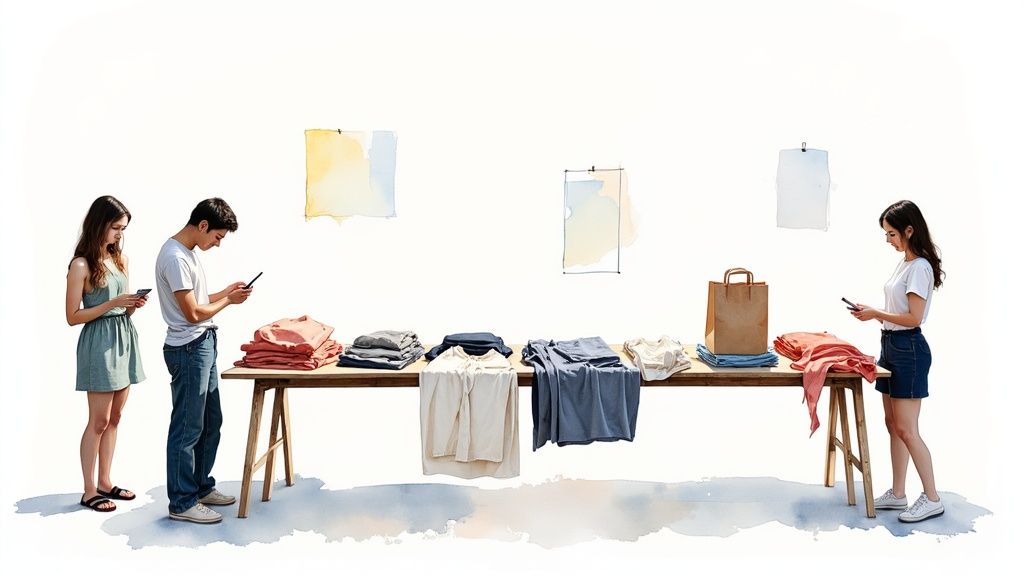
This kind of intelligent swapping tech isn't just a cool idea for the future; it's already delivering real value across the fashion world. Whether on bustling digital platforms or at local community meetups, clothes swap AI is turning the circular economy into something more accessible, more efficient, and way more fun for everyone.
Think of these applications as the proof. They show how AI can add the scale and smarts needed to take clothes swapping from a niche hobby into a mainstream, viable practice. It's the essential bridge between a great concept and a smooth, real-world experience.
Digital Resale Marketplaces
For any online resale or swapping platform, AI is the secret weapon for keeping users hooked. It takes the pain out of listing items by using computer vision to instantly pull a garment's key details from a single photo. That means less work for the user and cleaner, more accurate listings for the platform.
But the real magic is in the discovery process. AI curates hyper-personalized shopping feeds that feel like they were hand-picked for each person. Instead of wading through a sea of random clothes, the system surfaces irresistible swaps based on their style profile, past activity, and what's already in their closet. This is how you turn a one-off trade into a long-term habit.
If you're curious about how AI can build these kinds of compelling visual suggestions, you should check out our guide on the tech behind an AI outfit generator.
By predicting which swaps have the highest chance of success, AI dramatically boosts a platform's overall "swap success rate." This creates a far more rewarding experience, motivating users to list more items and jump back in more often.
Community Swap Events
We've all been to local clothes swaps. They’re fantastic for building community but can quickly dissolve into a chaotic, disorganized rummage. A simple mobile app powered by clothes swap AI can completely flip the script, turning that free-for-all into a targeted and successful exchange.
Before anyone even walks through the door, attendees can snap and upload photos of the items they’re bringing. The AI then gets to work behind the scenes, pre-matching items between attendees based on their wish lists and style preferences.
- Pre-Event Matching: Participants get alerts about potential swaps, so they can connect with others and arrange trades beforehand.
- Organized Discovery: No more digging through mountains of clothes. People arrive with a game plan, knowing who has items they might actually want.
- Higher Success Rates: This focused approach means more people walk away with items they genuinely love, cutting down on leftover clothes and disappointment.
In-Store Retail Activations
The smartest brands are now using AI-powered swap events as a creative way to build community and strengthen their brand. By hosting these activations right in their physical stores, retailers are hitting several key goals at once.
First, it drives a ton of foot traffic, bringing both loyal customers and new faces into the store. Second, it authentically positions the brand as a champion of sustainability, showing they’re serious about circular fashion.
Finally, it builds a powerful sense of community around the brand, making customers feel like active partners in a shared mission. It’s an innovative use of technology that builds loyalty in a way that traditional marketing just can't match.
Designing a Trustworthy Swapping Experience
For any clothes swap AI to really catch on, it has to nail two things. First, it needs to be dead simple to use. Second, people have to trust it with their data. Get these right, and you’ve got a platform people will not only try but keep coming back to.
The whole thing lives or dies on the User Experience (UX). Think about the journey: snapping and uploading photos, picking your style preferences, browsing matches, and then actually making a swap. If any part of that feels clunky or confusing, people will just bail. An effortless interface isn’t a nice-to-have; it’s the price of entry.
A great UX feels less like using an app and more like chatting with a super-helpful personal stylist. The goal is to make the sustainable choice the easiest choice.
Building Trust Through Transparency
When someone uses a clothes swap AI, they’re handing over personal info. It could be their style preferences and favorite brands, or even more sensitive data like body measurements for a virtual try-on feature. This is the fuel that makes the AI magic happen—finding those perfect, can’t-believe-I-found-this matches.
But collecting that data is a huge responsibility. Any platform worth its salt has to be completely upfront about how it’s being used.
- Transparent Policies: A clear, easy-to-read privacy policy is non-negotiable. It needs to spell out exactly what data is collected, why it's needed, and how it’s kept safe. No legalese, just straight talk.
- Data Anonymization: Whenever possible, data should be anonymized. That means stripping out any details that could trace it back to a specific person. The AI gets the info it needs to learn, and the user’s identity stays private.
- User Control: Users should always be in the driver’s seat. They need simple tools to manage their data, update their preferences, or even delete their account and all their information if they decide to leave.
A trustworthy clothes swap AI works on a simple promise: the tech should empower you without ever compromising your privacy. This isn't just about ticking compliance boxes; it's about building a real community where people feel safe and respected.
At the end of the day, the best platforms understand that user trust is their most valuable asset. By focusing on a seamless experience and a transparent, ethical approach to data, they create a space where the circular fashion economy can really take off.
Figuring out if a clothes swap AI is actually working means looking way beyond simple vanity metrics like user sign-ups. The real test is whether the tech is building a healthy, efficient circular fashion ecosystem. We need to measure the things that show the AI is a genuine engine for change, not just a neat gimmick.
The most straightforward gut-check on the AI's intelligence is the Swap Success Rate. This is just the percentage of proposed trades that actually go through to completion. If that number is high, it tells you the matchmaking algorithm is on point—it’s connecting people with clothes they truly want, creating that little spark of joy that keeps them coming back.
Is Anyone Actually Using This Thing?
Beyond just successful swaps, we need to know how deep the participation goes. Are people just window shopping, or are they really invested in the platform's little economy?
- User Engagement: This isn't just about daily logins. The real measures are how many items a person catalogs in their digital closet and how often they're starting or responding to swap offers. That's the pulse of an active, vibrant community.
- Inventory Velocity: This is a fantastic metric. It tracks how fast an item finds a new home after it’s been listed. High velocity is a great sign; it means the AI is doing its job showing the right items to the right people, and the platform isn’t just turning into a digital graveyard for unwanted clothes.
"Success in the swap economy isn't just about the number of transactions. It’s about the speed and satisfaction of those exchanges. When inventory moves quickly and swap success rates are high, you know the AI is effectively cutting through the noise and building real trust among users."
The Real Bottom Line: Environmental Impact
Let’s be honest, the whole point of a clothes swap AI is to do some good for the planet. So, the most important metric has to be its Environmental Impact. You can actually put a number on this by estimating the volume and weight of textiles that your platform keeps out of landfills.
When you can directly tie platform activity to real-world ecological benefits, you prove the model’s true value. It's this promise that's fueling the growth of the wardrobe app market, which is on track to jump from USD 242 million in 2025 to USD 399 million by 2032. The best of these platforms use AI to suggest trades with up to 90% compatibility, making a direct dent in the staggering 92 million tons of textiles we waste every year. By tracking these numbers, a platform can tell a powerful story about its role in building a more sustainable future. You can dig into more of this data on how wardrobe apps are reshaping fashion consumption.
The Future of Fashion Is Circular and Intelligent
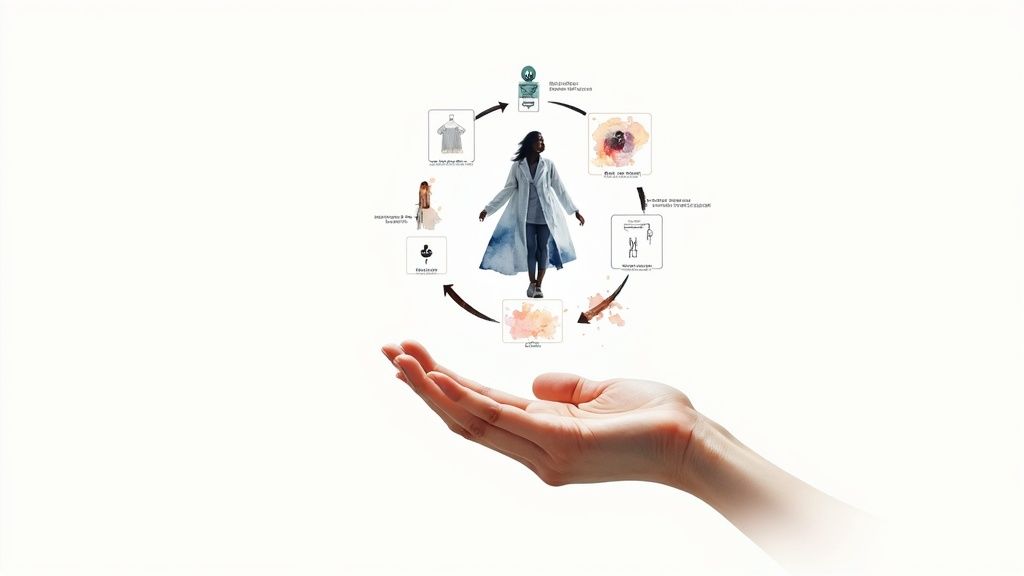 This is way more than just a passing trend—it represents a deep, fundamental shift in how we think about the clothes we wear. At its core, clothes swap AI is the engine that will finally unlock a truly circular fashion economy on a global scale. It gets right to the heart of the problems that once made swapping feel like too much work: personalization, discovery, and logistics.
By using smart algorithms, AI doesn't just make swapping a sustainable choice; it makes it the easiest and most exciting one. The tech brings the kind of efficiency needed to transform a niche activity into a mainstream habit, paving the way for a smarter, more connected, and sustainable future for all our wardrobes.
The Next Wave of Innovation
The evolution of clothes swap AI is only just getting started. There are some seriously exciting developments on the horizon that will make the entire experience feel even more intuitive and trustworthy.
- Digital Product Passports: Picture an AI that syncs up with a garment's digital passport, tracing its entire life story. This would give you complete transparency on an item's history, the materials used, and its authenticity before you even think about making a swap.
- Hyper-Realistic Avatars: Virtual try-on tech is set to leap forward, creating flawless, hyper-realistic digital versions of ourselves. This will completely remove the guesswork around sizing, guaranteeing every swapped piece is a perfect match.
Technology is no longer just a tool for buying new things. It has become a powerful ally in building a circular system where value is preserved, waste is eliminated, and style is shared.
Of course, to get these sustainable fashion initiatives in front of the right audience and drive real change, a solid grasp of SEO strategies for fashion brands is crucial for visibility. As these platforms continue to grow, they're going to have a massive impact on the key fashion industry trends to watch in 2025 and beyond. The future of fashion is intelligent, collaborative, and circular.
Frequently Asked Questions
Jumping into the world of AI-powered fashion can bring up a few questions. Let's tackle some of the most common ones about how clothes swap AI really works, so you can see the tech and its benefits in the real world.
How Does a Clothes Swap AI Actually Learn My Style?
It’s a mix of you telling it what you like and it learning from what you do. When you first join, you'll give it the basics—your go-to brands, your sizes, and the general vibe you're after. That gives the system a solid foundation to start with.
From that point on, it’s all about observation. The AI uses computer vision to break down the details of every piece you upload to your digital closet. It also keeps a close eye on the items you click on, what you "like," and, most importantly, what you end up swapping for. Over time, all this information comes together to build an incredibly sharp style profile, letting the AI serve up potential swaps that feel like they were picked just for you.
Is My Personal Data Safe on These Platforms?
Any platform worth its salt puts data privacy first. They use your info—like photos of your clothes and your sizing—for one reason only: to make the matching and virtual try-on features work. It's all about creating a smooth, personalized experience.
Good platforms will never sell your personal data to other companies. That information should always be encrypted and anonymized wherever possible to keep your identity safe. It's always a smart move to read the privacy policy before you sign up to see exactly what's collected and how it's used.
Can I Swap More Than Just Clothes?
Absolutely. While clothes are usually the main event, the AI behind these platforms is incredibly flexible. Most modern clothes swap systems are built to handle all kinds of accessories, too.
You can typically swap things like:
- Handbags and purses
- Shoes and boots
- Belts and scarves
- Jewelry and watches
The computer vision algorithms are trained to recognize and sort these items just as well as they do a t-shirt or a pair of jeans. It means you can bring your entire wardrobe into the circular economy, not just your clothes.
What Is the Biggest Benefit of Using AI for Swapping?
If you had to boil it down to one thing, it's efficiency at scale. Before this kind of tech came along, swapping was limited by who you knew and how much time you were willing to sink into manually digging for trades. It was slow and, honestly, pretty frustrating.
AI completely changes the game. It can scan thousands of digital closets in a split second to find your perfect match, handle the back-and-forth of suggesting trades, and even show you how something might look on you before you commit. It basically makes swapping as easy and fun as regular online shopping, which is what's finally allowing sustainable fashion to work on a global scale.
Ready to bring your content to life with compelling video? Aeon transforms articles, audio, and existing footage into engaging, shareable videos with minimal effort. Discover how Aeon can scale your video strategy today.