A modern fashion photo is so much more than a pretty picture of an outfit. It’s a snapshot of a story, a single frame designed to sell an entire lifestyle and brand identity. It works by capturing a mood, an aspiration, and a feeling—turning a simple product into something you have to have.
What Makes a Modern Fashion Photo Powerful
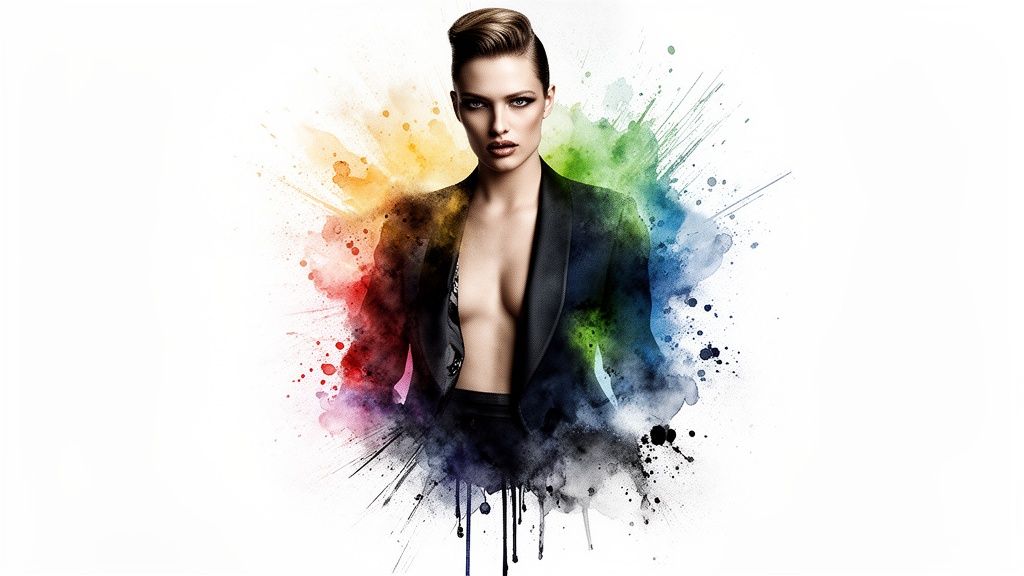
Think of a truly great fashion photo as a movie poster for a brand. It doesn't just show you the actors (the clothes); it sells the emotion, the tension, and the whole vibe of the story. The goal is simple: make you feel something and want to be part of that world.
This is the emotional hook that separates real fashion photography from a standard product shot on a white background. While both have their place—one builds a brand, the other closes a sale—a powerful fashion photo works its magic by blending several key elements just right.
The Core Elements of Storytelling
At its core, every memorable fashion photo tells a story. That narrative isn't an accident; it's built from a series of deliberate creative and technical choices. It’s not just about what the model is wearing, but how they’re wearing it, where they are, and the overall atmosphere of the shot.
These building blocks of the story usually include:
- Mood and Atmosphere: This is the overall feeling you get from the image. Is it dark and edgy, or light and romantic? It's all crafted with lighting, color, and location.
- Styling and Concept: This is the creative glue holding it all together. The clothes, accessories, hair, and makeup all need to work in concert to support one central idea.
- Model Direction and Posing: The model’s expression and body language are everything. Their pose can scream power, vulnerability, or playfulness, and it’s a critical part of conveying emotion.
- Composition and Framing: The way the shot is framed is your guide. It tells your eyes where to look, placing emphasis on either the product or the bigger picture.
A powerful fashion photo doesn’t just ask you to look at a piece of clothing. Instead, it invites you into a carefully crafted world and whispers, "This is who you could be."
Beyond the Image Itself
The strategic thinking that happens before anyone even picks up a camera is just as crucial as the final shot. You have to know the why. Is this image for an inspiring editorial spread in a magazine, or is it for a social media campaign meant to get people clicking and commenting?
Knowing the platform and the audience dictates the entire creative direction. An image destined for a glossy luxury magazine will have a totally different feel from one made for a fast-scrolling Instagram feed. Ultimately, a successful fashion photo isn't just art—it's a strategic asset that communicates a brand's unique point of view, builds desire, and helps hit business goals in a very crowded market.
Editorial vs E-commerce Photography
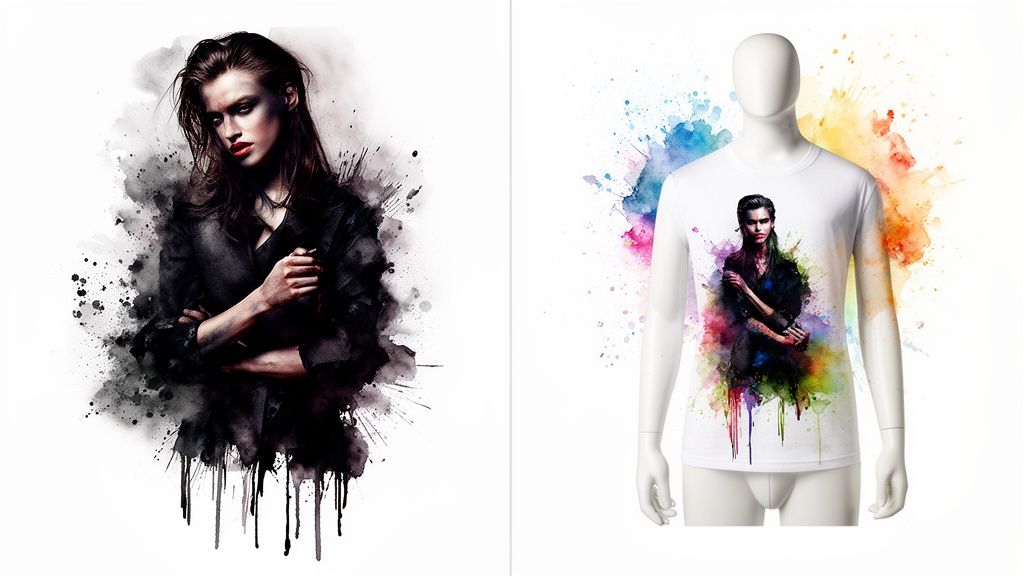
In fashion photography, not all images serve the same purpose. Far from it. The biggest split in the road—the one every brand and photographer has to navigate—is the divide between editorial and e-commerce work.
The core question is simple: are you trying to tell a story or make a sale?
Your answer to that single question changes everything. It dictates the lighting, the model's expression, the styling, the location, and every choice made in post-production. Getting this right is how you create a fashion photo that hits its mark, whether that’s building brand desire or driving an immediate add-to-cart.
The Art of Storytelling: Editorial Photography
Editorial fashion photography is pure inspiration. This is the stuff of glossy magazine spreads, aspirational lookbooks, and high-concept social media campaigns. The goal here isn't to sell you a specific sweater; it's to sell you a dream, a mood, a whole entire lifestyle.
Think of it as a movie trailer. It’s not meant to show you the whole plot. Instead, it offers a tantalizing glimpse into a world the brand has built, making you desperately want to see more. In this style, artistry and narrative trump clear product details every time. The clothes are just one part of a much bigger story.
A great editorial fashion photo usually has:
- A strong narrative: There's a clear theme or concept holding it all together.
- Creative freedom: This is where photographers and stylists get to play—dramatic lighting, weird poses, and artistic compositions are all welcome.
- Atmospheric locations: The backdrop is a character in itself, whether it’s a windswept beach or a gritty city alley.
The success of an editorial shoot isn’t measured by clicks or conversions. It’s measured in brand perception and the gut-level emotional connection it builds with its audience.
The Science of Conversion: E-commerce Photography
Then you have the other side of the coin: e-commerce photography. This work has one job and one job only—to drive conversions. These are the crisp, clean, no-nonsense images you see on product pages. Their entire purpose is to show the product accurately and attractively, answering a customer’s questions before they even have to ask.
If editorial is the movie trailer, e-commerce is the detailed spec sheet. The images need to be direct, consistent, and above all, trustworthy. The creativity isn't about telling a story; it's about presenting the product in its best, most honest light. It's about giving a shopper the confidence to hit "buy now."
For an e-commerce fashion photo, the priorities are totally different:
- Product accuracy: Color, texture, and fit have to be spot-on to manage expectations and, crucially, reduce returns.
- Clarity and detail: Images must be sharp and perfectly lit, usually against a neutral background like white or gray, so nothing distracts from the product.
- Consistency: Every product photo on a site should look and feel the same. This builds a sense of professionalism and trust.
A Side-by-Side Comparison
While both styles are absolutely essential for a modern fashion brand, their playbooks couldn't be more different. Knowing when and where to use each type of fashion photo is key to commissioning the right work and measuring its impact correctly.
To make it crystal clear, here’s a quick breakdown of how they stack up.
Editorial vs E-commerce Fashion Photo Characteristics
At the end of the day, a healthy brand needs a smart mix of both. Editorial content is what pulls people in and builds a loyal community. But it’s the effective e-commerce photography that turns that interest into actual revenue.
Mastering the Creative and Technical Elements
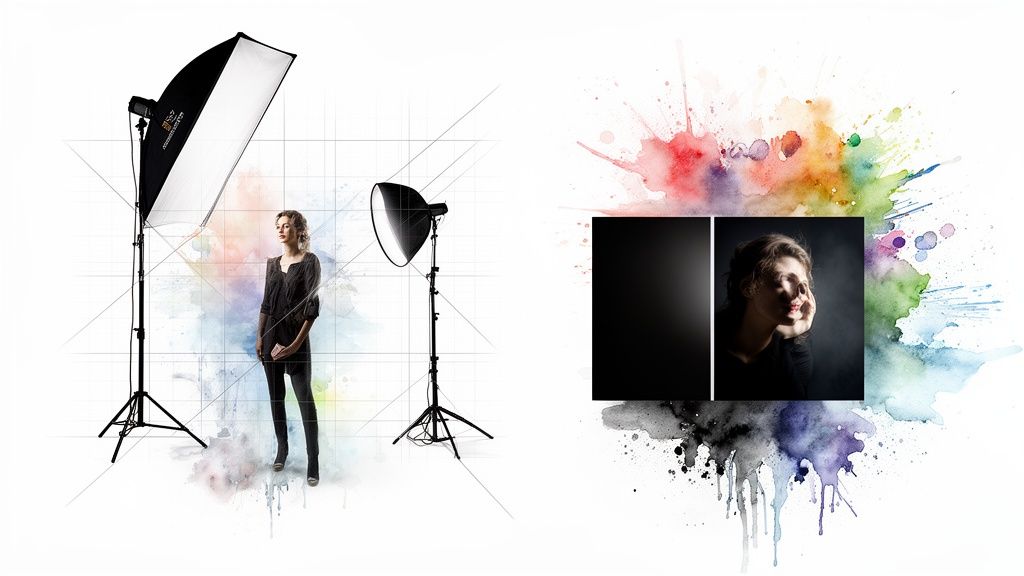
Pulling off an unforgettable fashion photo is a delicate dance between art and science. It’s part raw, unbridled creativity and part cold, hard technical precision. One side can’t exist without the other if you want to bring a vision to life.
Think of the technical side as the canvas and the brushes—the non-negotiable tools you need to even start. The creative side? That’s the paint, the subject, the story you’re dying to tell. A true masterpiece only happens when both are in perfect sync.
This blend is exactly what turns a simple picture into a powerful visual asset. Let's break down how these two sides of the coin work together to create that magic.
The Technical Foundation of a Fashion Photo
Technical skill isn't just for the person behind the camera. It's a shared language the entire creative team needs to speak fluently. When everyone from the art director to the stylist is on the same page about the technical goals, the final shots are stronger and more cohesive.
Everything starts with a rock-solid plan, which is why a well-written creative brief is your best friend. For a deep dive, check out our guide on how to write a creative brief that actually gets results.
Here are the core technical elements to get right:
- Lighting: This is your most powerful tool for shaping mood. High-key lighting—think bright and airy—creates a clean, optimistic feel that’s perfect for e-commerce. On the flip side, low-key lighting uses deep shadows and sharp contrast to build drama and mystery, a staple in editorial work.
- Composition: This is all about arranging everything in the frame to guide the viewer’s eye exactly where you want it. Classic principles like the Rule of Thirds (placing your subject slightly off-center) and using leading lines are fundamental for creating a balanced and captivating fashion photo.
- Camera Settings: You don't need to be a gearhead, but knowing the basics helps enormously in art direction. A wide aperture (a low f-stop number) blurs the background, making the subject pop. A fast shutter speed freezes every bit of action, capturing the crisp detail of flowing fabric or a dynamic pose.
A technically perfect photo that lacks a soul is just a sharp, well-lit image. A creatively brilliant concept with poor execution is a missed opportunity. The magic happens where precision meets passion.
The Creative Spark That Ignites the Story
Once the technical framework is locked in, the creative elements can really take center stage. This is where you inject personality, narrative, and emotion into the frame, turning a picture of clothes into a snapshot of a lifestyle.
Creative direction is all about making deliberate, unified choices. It's the storytelling engine that drives the entire shoot.
Key Creative Components
- Styling and Art Direction: This is so much more than just picking an outfit. It’s about how the clothes, accessories, hair, and makeup all come together to build a character and reinforce a mood. From a strategically wrinkled shirt to a specific shade of lipstick, every single detail is a conscious choice.
- Model Direction and Posing: The model is your emotional conduit to the audience. Directing them isn’t about barking out poses; it's about coaxing out a genuine feeling. An arched back can scream power, while a soft, distant gaze can convey vulnerability. The right direction ensures the model’s expression and body language tell the brand's story.
- Location and Set Design: The environment is a character in its own right. A gritty urban alley tells a completely different story than a sun-drenched beach. Your location should never be an afterthought—it has to amplify the narrative and give context to the fashion.
Ultimately, mastering these elements is an ongoing process of learning, experimenting, and collaborating. When you understand how the technical and creative pieces fit together, you can communicate your vision more clearly, solve problems on set, and consistently produce a high-quality fashion photo that stops the scroll and tells a compelling story.
Optimizing Your E-commerce Photo Strategy
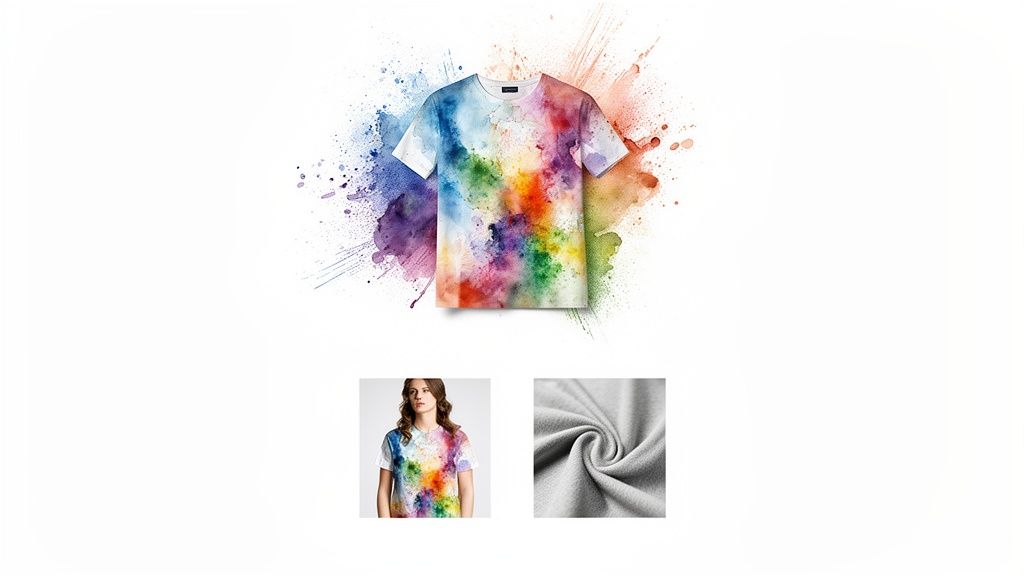
While your editorial shots are all about creating a vibe and building desire, the product detail page (PDP) is where the magic really happens. This is where that desire converts into a sale, and your e-commerce photos are what seal the deal. Think of it as building a digital fitting room experience for every single shopper.
Every fashion photo on your product page has a job to do: answer a customer's questions before they even think to ask them. What's the fabric really like up close? How does that dress move when you walk? What kind of shoes would look good with it? A killer gallery of images is hands-down the best way to build trust and give shoppers the confidence to finally hit "add to cart."
Building the Perfect Product Gallery
Your product gallery's main goal is to mimic the in-store experience as much as possible. Just think about what you do in a physical store—you pick up an item, feel the material, check the seams, and hold it up to see how it hangs. Your image gallery has to do all that heavy lifting, just visually.
In today's market, a single photo just won't cut it. A complete set of images isn't a luxury; it's a necessity. It’s a numbers game, really. Leading brands are now using an average of 8 images per product to give shoppers the full picture. Digging into the data, you’ll find that 76.1% of top fashion sites mix up their photography styles, with more than half doing it consistently across their entire catalog.
This isn't just about looking good. A varied image set reduces a shopper's uncertainty, which directly helps lower those dreaded return rates—a massive win for any online store.
Your Essential E-commerce Shot List
To build a product page that actually converts, you need a strategic mix of different photo types. Each one plays a unique role in guiding the customer toward making a purchase. Here’s a checklist of the essential shots every product page should have.
-
The Hero Shot: This is your main product image. It’s typically a clean, full-length shot of the item on a model or a ghost mannequin against a simple background. It needs to be crisp, perfectly lit, and show the product exactly as it is.
-
Multiple Angles: You have to show the front, back, and side views of the garment. This is non-negotiable for things like jackets or detailed tops because it gives the customer a full 360-degree understanding of the fit and design.
-
Detailed Close-Ups: Get right up close to the fabric to show off its texture, weave, and quality. Capture the important details—buttons, zippers, embroidery, or unique stitching. This is where you showcase craftsmanship and justify your price point.
A great product gallery doesn't just display a product; it anticipates and answers every shopper's silent question. It replaces the physical touch of a retail store with visual clarity and trust.
-
In-Context or Lifestyle Shots: Put the product in a real-world setting. A lifestyle fashion photo helps customers see themselves wearing the item. It can show off styling ideas, suggest the right occasion, and connect the product to a specific vibe or aspiration.
-
Fit and Scale Shots: Always include a photo that clearly shows how the product fits on a real body. A shot of a model wearing the item gives a crucial sense of scale and proportion that a flat lay or mannequin shot just can't deliver.
Of course, the technical side matters, too. It’s critical that your images load quickly and look perfect on any device. Getting this right means mastering Shopify image sizes for perfect product presentation. Properly formatted images create a smooth, professional experience that keeps customers browsing instead of waiting for a slow page to load.
How AI Is Reshaping Fashion Photo Production
The world of fashion content is in the middle of a massive shake-up, and it’s all thanks to artificial intelligence. This isn’t some sci-fi story about robots replacing photographers. It’s about how AI gives brands entirely new, shockingly efficient ways to create a stunning fashion photo.
Instead of seeing AI as a threat, the smartest creative teams are treating it as a powerful new tool in their kit. The idea is simple: let AI handle the repetitive, expensive parts of production. That frees up human teams to focus on high-level creative strategy, letting brands generate visuals at a scale and speed that was completely out of reach just a few years ago.
The New AI-Powered Workflow
So, what does this actually look like day-to-day? AI is being woven into nearly every stage of the production pipeline, from the first spark of an idea to the final image delivery. The technology can now generate synthetic elements so realistic they’re often impossible to tell apart from a traditional photograph.
Here’s a glimpse into how brands are using AI to reimagine their process:
- Virtual Models and Digital Garments: AI can dream up photorealistic virtual models, which means no more casting calls, scheduling headaches, or model fees. Brands are also digitizing their clothing, letting them showcase entire collections on an endless variety of models without needing a single physical sample. You can dive deeper into this emerging field of artificial intelligence clothing.
- Synthetic Backgrounds and Environments: Forget about expensive location scouting and travel. AI can generate any backdrop you can imagine. A winter coat can be "shot" on a snowy mountaintop in the morning, and a leather jacket can appear in a gritty urban alley in the afternoon—all from the same computer.
- Automated Post-Production: Mind-numbing tasks like color correction, retouching, and background removal can now be handled by AI in seconds. This puts the editing process on hyperdrive, allowing teams to finalize images almost instantly.
AI in fashion photography isn't about getting rid of human creativity. It's about tearing down the logistical and financial walls that block it, empowering brands to bring more ambitious ideas to life, more often.
This isn't some far-off concept; it’s happening right now. A staggering 73% of fashion brands are already experimenting with AI-powered visual content, a clear signal of the shift away from traditional shoots. The early adopters are seeing incredible results, with some reporting production cost savings of up to 90% and a creative output boost of around 500%.
From Single Shoots to Mass Personalization
Maybe the most powerful advantage of AI is its ability to create personalized content for the masses. Imagine creating a unique fashion photo for every single customer segment—showing a product on a model who reflects their demographic, in a setting that speaks directly to their interests.
This kind of one-to-one marketing was a logistical and financial nightmare with traditional photoshoots. Now, a brand can generate thousands of unique visuals from a single digital design. They can tailor marketing for different regions, platforms, and audiences without ever stepping into a studio. As the tools get better, it’s worth looking into specialized AI Content Creation services that can help manage this new workflow.
Suddenly, AI isn’t just a production tool. It’s a core strategic asset for marketing teams who need more content, faster than ever before.
Turning a Static Photo Into a Dynamic Video
Your best fashion photos are incredible assets, but their story doesn't have to stop there. In a world saturated with content, motion is what grabs our attention. Video is the undisputed king of engagement.
But what if you could multiply the value of your best shots without the massive cost and headache of a full-blown video production?
The good news is, you can. It's now possible to take a high-quality static fashion photo and transform it into a dynamic, scroll-stopping video perfect for social media, digital ads, or your website. This isn't about wrestling with complicated animation software; it's about smart, efficient content repurposing that gives your existing visuals a second life.
From Still Image to Motion Story
The core idea is refreshingly simple: you take a stunning photo and add layers of motion, text, and sound to tell a more complete story. A single image becomes the foundation for a short, compelling video clip that can drive traffic and boost engagement far more effectively than its static version ever could.
This strategy is an absolute game-changer for marketing and e-commerce teams who are under constant pressure to produce a steady stream of fresh content. Instead of commissioning entirely new video shoots, you can just dip back into your archive of approved photography and generate new assets in minutes.
Platforms like Aeon are built for this exact job. They can automatically introduce subtle motion, overlay text, and add music, turning your best photos into professional-looking videos with almost no effort. This workflow bridges the gap between high-impact photography and the relentless demands of video-first platforms.
Why Repurpose Photos Into Videos?
The benefits here go way beyond just saving time and money. It's a strategic move that helps you get more mileage out of every single creative asset you produce. By adapting your best work for different formats, you keep your visual messaging consistent while reaching a much wider audience.
- Boosted Engagement: Video content consistently crushes static images on social media feeds. Motion is a natural eye-catcher and holds attention for longer.
- Cost Efficiency: Creating video from existing photos completely sidesteps the huge expenses of traditional video production—think location scouting, model fees, and crew costs.
- Speed to Market: When a new trend hits or a quick promotional opportunity pops up, you can create and launch video ads in hours, not weeks.
- Content Volume: This method allows you to scale your content production in a huge way, filling your social calendar and ad campaigns with a ton of engaging visuals.
By transforming a static fashion photo into video, you're not just adding movement; you're amplifying its narrative power and extending its commercial lifespan across multiple digital channels.
For teams looking to master this workflow, understanding the nuances of how a single fashion photo can be adapted is crucial. To dig deeper into this, check out our guide on the intersection of image and fashion. This approach isn’t just a clever trick; it’s a practical, high-impact strategy for any brand looking to maximize its creative investment and stay ahead of the curve.
That stunning fashion photo you just signed off on? Its journey is far from over. Once the final edits are done, one of the most critical—and frankly, most overlooked—steps begins: figuring out who actually owns the image and how it can be used.
Getting this part wrong is more than just a simple mistake; it can spiral into costly legal battles that completely undermine all the hard work your brand has put in.
Ownership vs. Usage Rights
Think of it like this: when you commission a photoshoot, you’re not buying the photos outright. You're licensing them. In nearly every case, the photographer who presses the shutter button automatically owns the copyright to that image. What your brand is paying for is a specific set of permissions to use that photo.
It's a small distinction with massive implications. The commercial value wrapped up in a single fashion photo is huge. The global photography services market hit $55.6 billion in 2023 and is on track to reach an eye-watering $81.83 billion by 2032. With that much money on the line, leaving things to chance with a handshake deal is a recipe for disaster. You can dig deeper into these photography industry statistics to see the full picture.
This is where your contract, or licensing agreement, becomes your best friend. It needs to spell out, in no uncertain terms, exactly how you can use the images. Anything less is just asking for trouble.
Your agreement should clearly define:
- Duration: How long do you have the rights for? Is it just for a single season, a full year, or forever (in perpetuity)?
- Media: Where can the photo show up? Get specific. We're talking web, social media, print ads, billboards, in-store displays—the works.
- Territory: Are the rights global, or are they locked to certain countries or regions, like North America or the EU?
- Exclusivity: Does your brand have the exclusive right to use the image, or can the photographer turn around and license it to someone else?
A strong contract is your brand’s best defense. It transforms ambiguity into clarity, ensuring that every dollar you invest in a fashion photo is protected and can be used to its full potential without legal risk.
Ready to multiply the value of your best photos? With Aeon, you can instantly transform your high-quality fashion images into dynamic, engaging videos for social media and ads. See how easy it is to create more content from your existing assets at https://www.project-aeon.com.