When you picture a fashion model, what comes to mind? For a long time, it was a silent, almost anonymous figure gliding down a runway. That image is officially outdated.
What Is a Modern Fashion Model
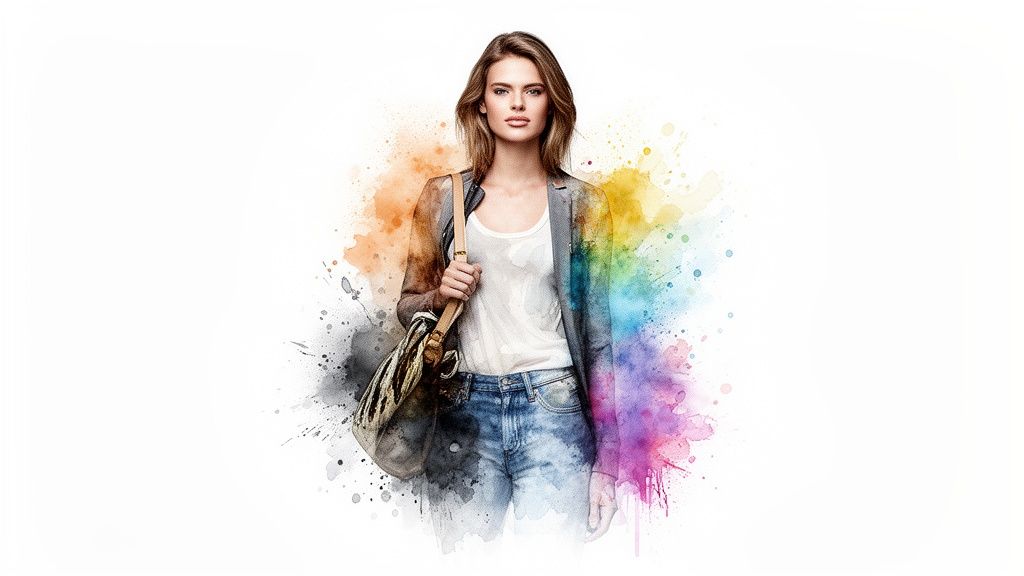
Today, a fashion model is one of a brand's most powerful storytellers. They've evolved from a purely aesthetic role into a multifaceted professional who needs serious personal branding skills, social media savvy, and the ability to be a genuine ambassador. The job isn't just about wearing clothes anymore; it’s about embodying a brand’s entire ethos.
This shift is a huge deal for marketing and e-commerce teams. A model is now a key strategic partner in any campaign, someone who can single-handedly drive engagement and shape how customers feel about a brand. Their influence stretches far beyond the photoshoot, often reaching thousands—or even millions—of followers through their own digital channels.
From Canvas to Creator
The role has fundamentally changed. In the past, a model was essentially a blank canvas, picked to fit a very narrow and rigid set of physical standards. Their main purpose was to show off a garment's design without distracting from it.
Now, the industry is hungry for personality and authenticity. A modern fashion model often doubles as a content creator, an influencer, and a brand advocate. They bring their unique point of view and their own audience to a project, adding a layer of storytelling that connects with people on a much more personal level.
The role has shifted from being a passive participant to an active collaborator. A model’s personal brand can amplify a campaign's message, making it feel more authentic and reaching niche audiences that traditional advertising might miss.
To see this evolution in action, let’s compare the old with the new.
The Evolving Role of the Fashion Model
The table below breaks down the key differences between a model's responsibilities before the digital boom and their role today. For any marketing or content team, understanding these changes is key to effective casting and collaboration.
This shift highlights that a model is no longer just a "look"—they are a media channel in their own right, capable of bringing immense value beyond the traditional photo shoot.
Building a Digital-First Career
Thriving in this new environment demands more than just a great look. To get anywhere, a modern fashion model has to know how to create an impactful portfolio website that shows off their range and grabs the attention of clients. In many ways, their digital presence is their new business card.
For marketing teams, this is an incredible opportunity. Casting isn't just about finding a face anymore; it's about finding a voice that resonates with your brand. Whether you’re working with human talent or exploring the world of AI-generated models, the objective is the same: create visuals that connect. You can dive deeper into our guide on the latest trends shaping the fashion world to get more context on where the industry is heading.
Understanding the Different Types of Fashion Models
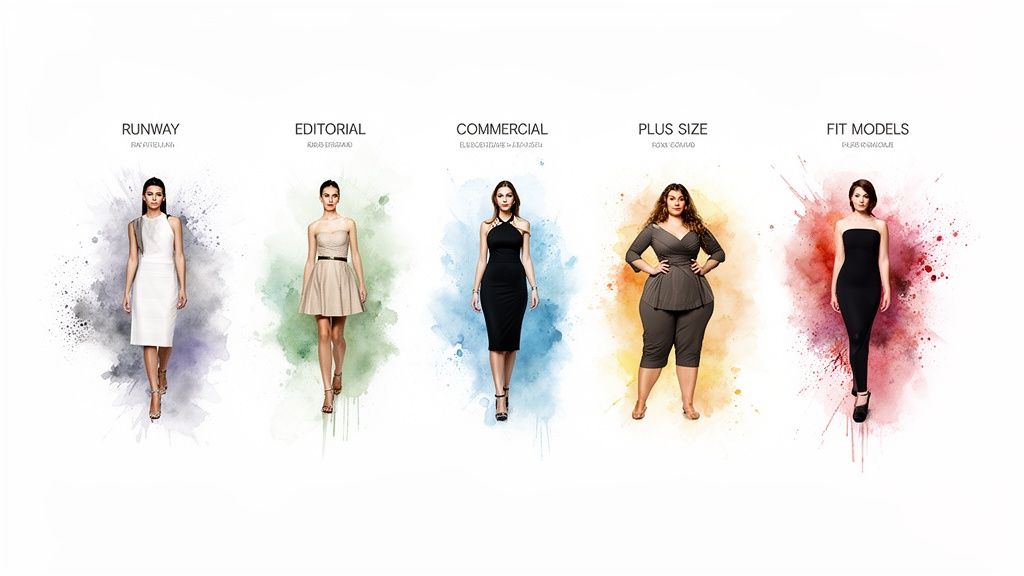
Choosing the right fashion model feels a lot like casting the lead in a movie—the entire success of your campaign hinges on that single decision. But here’s the thing: not all models do the same job. Each specialization has a very specific role to play, and understanding these differences is a non-negotiable for any marketing or content team trying to create visuals that actually connect.
It’s best to think of the modeling world as a collection of specialists. Just as you wouldn't ask a heart surgeon to set a broken bone, you wouldn't book a high-fashion runway model for a warm, family-focused TV commercial. Each type of model brings a completely distinct skill set and look to the table.
Runway and Editorial Models
First up, you have runway models. These are the architects of the fashion world. Their one and only job is to bring a designer’s collection to life on the catwalk, acting as a living, breathing blueprint for the clothes. They need a powerful, distinctive walk and must meet razor-sharp height and measurement standards so the clothing hangs exactly as the designer dreamed it would.
Then you have editorial models. They are the storytellers, the faces you see in high-fashion magazines like Vogue or Harper's Bazaar. They don't just wear clothes; they work with photographers and stylists to create artistic, aspirational images that sell a mood or a narrative, not necessarily the product itself. Their look is often more unique and striking than conventionally "pretty."
Key Takeaway: Both runway and editorial models sell a vision or a dream. They aren't there for relatable appeal. They are there to embody the purest, most artistic form of a designer's creative concept.
Commercial and Plus-Size Models
On the other side of the spectrum is the commercial model. This is the relatable hero in a brand's story. Their goal is to make a product feel accessible, familiar, and absolutely essential for everyday life. You'll find them everywhere—from e-commerce product pages and print ads to TV spots for mainstream brands.
A great commercial model connects with the audience on a personal level, making them think, "I could see myself using that." Their appeal is broad, friendly, and built on trust.
The rise of the plus-size model (often called curve models) marks a massive—and long overdue—shift toward inclusivity. These models represent a much broader range of real body types, finally allowing brands to connect authentically with a huge portion of their customer base. Considering that over 68% of American women wear a size 14 or above, this category isn't a niche; it’s a market necessity.
Fit Models: The Unseen Experts
Finally, we have the fit model, the true unsung hero of the fashion industry. Fit models work entirely behind the scenes with designers and pattern makers. Their job is to ensure garments have the correct sizing, drape, and comfort long before they ever go into production.
They aren't hired for their look but for having the brand's exact sample-size measurements. Their feedback on how a garment feels and moves is critical for quality control, making them an indispensable part of the design process.
Knowing these specializations gives your team the power to make smart casting choices. A runway model launches a collection with drama, a commercial model drives sales with relatability, and a fit model makes sure the product you’re selling is actually great.
How Modeling Agencies and Contracts Really Work
For a model just starting out, an agency is so much more than a booking service. It’s your career manager, strategist, and business partner all rolled into one. Think of them as the people who scout you, coach you, and then sell your look to the right clients.
Their job covers everything from setting up test shoots to build out your portfolio to chasing down payments and negotiating the fine print on contracts. Agencies are the essential link connecting talent with opportunity. They use their deep industry relationships to get you in the door for castings, whether it’s for a local e-commerce brand or a massive international campaign.
The Anatomy of a Modeling Contract
When a model signs with an agency, it’s a formal, legally binding agreement that lays out the entire relationship. These documents can seem intimidating, but they boil down to a few core elements. Getting a handle on them is critical for models and the brands that hire them.
- Commission Rates: This is how the agency gets paid. They take a percentage of the model’s gross earnings, which typically lands somewhere between 10% and 20%. That’s the industry standard.
- Exclusivity Clauses: Most agency contracts are exclusive. This means you can’t be signed with another agency in the same city or region. It’s the agency's way of making sure their investment in building your career is protected from competitors.
- Contract Length: Agreements usually run for one to three years, often with an option to renew. This gives the agency enough runway to develop a model’s career and start seeing a return on their initial investment.
Understanding Model Pay and Usage Rights
The way models get paid isn't always cut and dried. If you're on a marketing team, understanding the different pay structures is key to budgeting for a campaign without any nasty surprises. A model's rate is never just about their time on set; it’s tied directly to how and where their image will live.
A model’s day rate is just the starting point. The real cost often lies in the usage rights, which grant a brand permission to use the images for specific purposes, durations, and territories. This is where budgets can quickly expand.
You’ll see a few common payment models: hourly rates for quick jobs, day rates for full-day shoots, and campaign buyouts for the big stuff. A buyout is a single, flat fee that covers much broader and longer-term use of the images—think a national ad campaign running across print, social media, and TV for a full year. The more places the ad will be seen, the higher the fee. This system ensures models are fairly compensated for the massive commercial value their image brings to a brand. It’s a tough, competitive business, and the pay structure reflects that.
The global fashion workforce is enormous, but models are a tiny, highly visible part of it. While only 1 in 1,000 aspiring models may land agency representation, their impact is immense. You can find more insights about the fashion industry's scale on bizplanr.ai.
Casting for a More Inclusive and Ethical Future
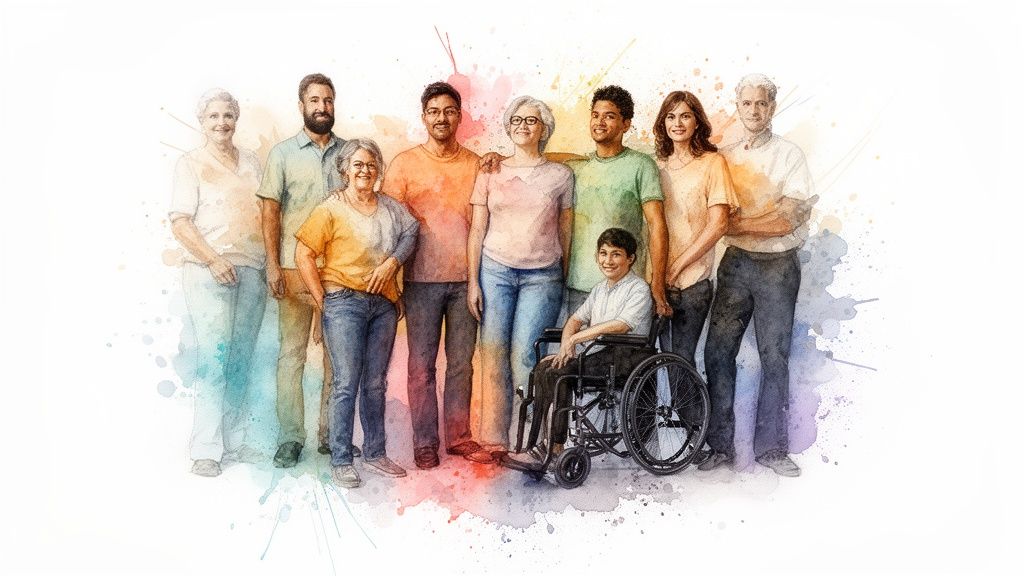
These days, consumers are buying more than just a product; they’re buying into a brand's values. This has triggered a massive shift in how brands think about casting a fashion model, pushing the industry toward a future that’s far more inclusive and ethically grounded. This isn’t just a trend anymore—it’s a fundamental expectation.
Authentic representation has become a powerful engine for brand loyalty. That means moving beyond the old, narrow beauty standards to cast models who actually reflect the true diversity of your audience—across different sizes, ethnicities, ages, and abilities. For younger shoppers, especially Gen Z, seeing themselves in a brand's marketing isn't a nice-to-have; it's a prerequisite for earning their trust.
Why Authentic Representation Matters
Casting inclusively isn't about ticking boxes on a checklist. It's a strategic move that sends a powerful message: your brand sees, respects, and values all of its customers. This is how you build a real, meaningful connection that superficial marketing just can’t touch.
When a potential customer sees a fashion model who looks like them, it creates an instant sense of belonging. That relatability can dramatically boost engagement and influence purchasing decisions, turning casual browsers into devoted brand advocates.
True inclusivity isn't a one-off campaign—it's a sustained commitment woven into the very fabric of a brand's identity. It shows you're listening to your audience and are willing to grow with them.
In the high-stakes world of fashion, diversity is still a critical conversation. White models still make up the majority in major campaigns at 54%. But there's no denying the progress: compared to 2020, non-white representation has surged by 15%, a change driven almost entirely by consumer demand for authenticity. You can dive deeper into the data with these fashion model demographics from bestcolorfulsocks.com.
Building an Ethical Framework
It's not just about what models look like, either. The conversation has rightly expanded to include the ethical treatment of the models themselves. It's about making sure the people who bring your brand's vision to life are treated with fairness and respect. The well-being of every fashion model is fast becoming a cornerstone of brand reputation.
Forward-thinking brands are now building several key ethical pillars into their casting and production workflows.
- Fair Compensation: This means paying models on time and offering rates that truly reflect their experience and the campaign's scope. It also means having crystal-clear terms for usage rights.
- Safe Working Conditions: Brands are responsible for creating a safe, respectful environment on set—one that's completely free from harassment or undue pressure.
- Mental Health Support: The industry is finally starting to acknowledge the immense pressures models face. The best brands are moving toward providing mental health resources and fostering a more supportive culture.
For brands, this isn't a burden; it's an opportunity. Leading with integrity and empathy creates a positive ripple effect. It attracts top-tier talent and helps you connect with a global audience on a much deeper, more human level. It’s how modern brands build real, lasting value.
A Practical Guide to Casting and Briefing Models
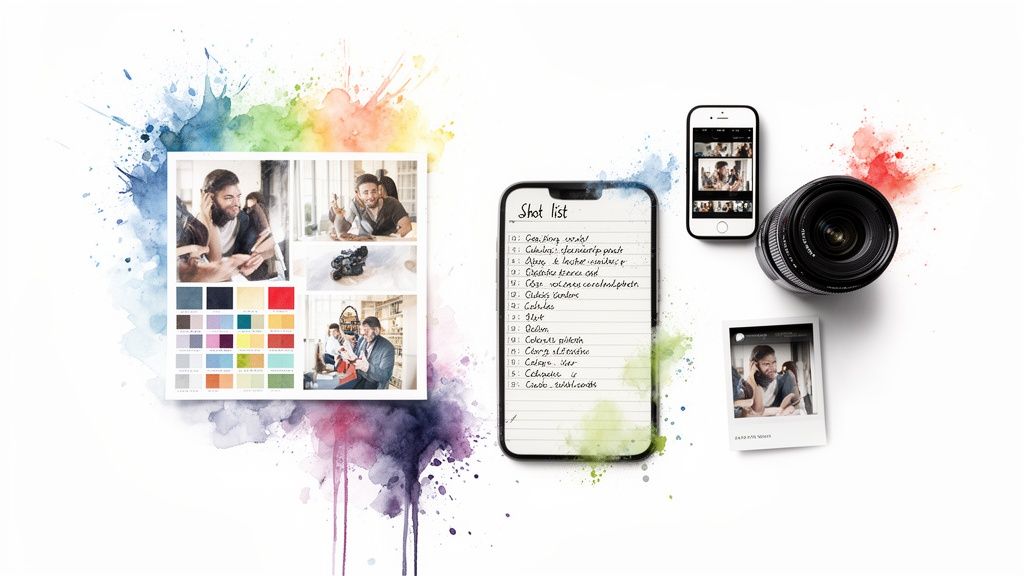
Great campaign visuals don't just happen on set; they’re the result of meticulous planning that starts long before a camera ever comes out of the bag. For any marketing or e-commerce team, mastering the art of casting the right fashion model and delivering a crystal-clear brief is what separates a killer shoot from a costly mistake.
Think of it like building a house. The casting call is your search for the perfect materials, and the creative brief is the detailed architectural plan. If you rush either of these steps, you’re setting yourself up for miscommunication, wasted time, and photos that just don't hit the mark. A solid plan is everything.
Crafting a Compelling Casting Call
To find the right talent, your casting call has to be more than a simple list of measurements. This is your first handshake, your chance to communicate the soul of your brand and the specific vibe of the campaign. The more detail you give, the easier it is for an agency and model to know if they’re a genuine fit.
A strong casting call always includes:
- Brand & Project Overview: A quick intro to who you are and what the campaign is all about.
- The Ideal Model Profile: Describe the look, the energy, the personality you're after. Go beyond the numbers and talk about the feeling you want to create.
- Shoot Details: Get right to the point. Include the date, location, duration, and what kind of shoot it is (e.g., e-commerce, lifestyle, editorial).
- Compensation & Usage: Be transparent about the pay rate and exactly how and where the final images will be used. No surprises.
The Anatomy of a Flawless Creative Brief
Once you've picked your fashion model, the creative brief becomes the most important document for the entire production. This is your playbook. It’s the one thing that gets the model, photographer, stylist, and makeup artist all on the same page. A great brief leaves absolutely no room for guesswork.
A great creative brief doesn’t just tell people what to do; it shows them why. It connects every logistical detail back to the campaign’s strategic objective, empowering the entire team to make smart, on-brand decisions throughout the shoot.
Your brief has to contain a few key elements to guarantee a smooth, successful day on set.
- Detailed Mood Board: This is the visual heart of your brief. Pack it with images that show the exact lighting, mood, color palette, and overall aesthetic you’re chasing.
- Comprehensive Shot List: Make an explicit list of every single shot you need. Get specific about framing (full-length, close-up), poses, and the products being featured. For more inspiration, you can explore different modeling poses in western dress to get the ideas flowing.
- Brand Guidelines: Don't forget the essentials. Include logos, color codes, and any strict do's and don'ts to keep everything consistent.
- Call Sheet: This is all the practical stuff: the final schedule, the address, and contact info for everyone on the key team.
When you nail this process, your photoshoot transforms from a chaotic day of hoping for the best into a focused, efficient machine that delivers exactly the assets you need.
Scaling Your Visual Content with Modern Workflows
In the world of digital marketing, the demand for high-quality visuals never stops. It's a constant race. But the old way of doing things—traditional photoshoots—is starting to show its cracks.
Think about it. Hiring a fashion model, booking a studio, and getting a whole team on set for a single campaign is a massive drain on your budget and your calendar. It's slow, expensive, and frankly, keeping the final shots consistent across different shoots is a huge headache.
This project-by-project approach just doesn't scale. Thankfully, there’s a much smarter way to work. Modern, tech-focused workflows are flipping the script, turning content creation from a series of painful one-offs into a smooth, on-demand system that puts you in control.
From One-Off Shoots to On-Demand Systems
What if you could generate stunning, studio-quality images for your entire product line without scheduling a single new photoshoot? That’s exactly what these modern systems are built for. They give e-commerce and marketing teams the power to churn out a high volume of visuals that all share the same polished, uniform look—the key to building a memorable brand.
This isn't about getting rid of human talent. It’s about being strategic. While a great model makes a garment feel alive, knowing how to use tools like professional mannequins for shops for certain shots is just as vital for a retailer. When you blend these elements with the right technology, you create a visual content engine that’s both flexible and incredibly efficient.
Modern workflows give brands the agility to jump on market trends almost instantly. Instead of being stuck waiting weeks for new photos, you can create and launch fresh visual campaigns in a fraction of the time.
By embracing this shift, you can guarantee that every single asset—from your bread-and-butter e-commerce listings to your big-budget global ads—is perfectly on-brand. If you want to dive deeper into the practical side of this, check out our guide on how to masterfully capture pictures of clothes for your online store.
Ultimately, this lets your team spend less time wrestling with logistics and more time on creative strategy. The payoff isn't just more content; it's better, more cohesive visuals that connect with customers and deliver a real return on your marketing investment.
A Few Common Questions About Working with Fashion Models
When you're bringing a fashion model into the fold, especially for the first time, a few practical questions always pop up for marketing and e-commerce teams. Let's clear up some of the most common ones to help you plan, budget, and get the most out of your shoot.
How Much Does It Cost to Hire a Fashion Model?
This is the big one, and the honest answer is: it varies. A lot. The cost to hire a professional model for a single-day e-commerce shoot is a moving target, depending on their experience, their agency, and where you’re shooting.
As a general ballpark, you can expect an experienced e-commerce model's day rate to land somewhere between $1,000 and $5,000. But that's just the starting point. Don't forget to factor in the agency’s cut (typically 20%), usage rights for the images, and other production costs like travel or a stylist. For a major brand campaign, those numbers can climb much, much higher.
What Is the Difference Between Usage Rights and a Buyout?
Getting this right is absolutely critical for your budget and for staying on the right side of the law. Think of usage rights as a specific lease on the model's images. The contract will spell out exactly where you can use the photos and for how long—for example, "for social media and website use for one year."
A buyout, on the other hand, is a much bigger deal. You pay a higher flat fee upfront for incredibly broad—sometimes even unlimited—use of the images for a set time, or even forever. It's a bigger initial investment, but it gives you total marketing freedom down the line without having to go back to the negotiating table.
It helps to think of it like this: usage rights are like leasing a car for a specific road trip, while a buyout is closer to buying the car outright. It costs more upfront, but you can drive it wherever you want.
Can AI Models Completely Replace Human Models?
It’s a hot topic, for sure. AI models are becoming an incredible tool for getting things done at scale, especially for massive e-commerce catalogs or programmatic ads where you need thousands of consistent, on-brand images yesterday.
But can they replace humans entirely? Not so fast. Human models bring an authentic, emotional connection to the camera that AI just can't mimic yet. That spark is what builds real brand affinity and makes a high-impact campaign truly memorable. The future isn't an either/or; it's a hybrid. Smart brands will likely use AI for volume and efficiency, while relying on human talent to tell their most important stories.
Ready to scale your visual content without the high costs and logistical headaches of traditional photoshoots? Aeon puts a full creative suite in your pocket, from AI-powered ad creation to virtual try-on technology. Start creating stunning, on-brand assets in minutes with our $5 trial.