Your product photography is your digital handshake, your sales pitch, and your storefront display—all rolled into one. High-quality image clothing isn't just about looking good; it's the engine that actually drives sales, builds trust with shoppers, and, crucially, cuts down on costly returns.
The gap between a simple product shot and a truly compelling visual can be the single thing that determines whether a customer clicks "add to cart" or just keeps scrolling.
Why High-Quality Image Clothing Is Critical For Growth
In an absolutely packed online marketplace, your visuals have to do all the heavy lifting. When customers can't physically touch or try on your apparel, it's up to the images to communicate everything—the texture, the fit, the quality. This isn't just some abstract theory; it's a core principle of modern e-commerce, and the data backs it up.
The True Cost of Mediocre Visuals
Let's be blunt: bad photos kill sales. Poorly lit, inconsistent, or low-res images create friction and introduce doubt. A shopper immediately questions the product's quality and your brand's professionalism.
This doubt translates directly to lower conversion rates and, even worse, higher returns. When a product arrives and doesn't match the expectation set by the photo, it comes right back. That costs you shipping, restocking fees, and customer loyalty. Industry data shows this isn't a small problem, with return rates often hitting 20-30% for apparel alone.
On the flip side, investing in professional-grade visuals provides a tangible return. Clean, crisp, and true-to-life images build immediate trust and help shoppers make confident decisions. It's why brands see conversions jump when they finally get serious about their visual strategy.
We can see a clear pattern when we look at how imagery quality affects the numbers that matter most to an online store.
Visual Impact on Key E-Commerce Metrics
Here’s a summary of how different levels of image quality directly affect critical business outcomes for online apparel stores.
The takeaway is simple: better visuals directly lead to better business results across the board.
Navigating the Massive Digital Apparel Market
The scale of the online fashion world is just immense, which makes standing out visually more critical than ever. E-commerce has completely changed how people shop for clothes, with online fashion sales soaring to $509.1 billion in 2021 and projected to hit a staggering $785.66 billion by 2025.
With nearly half of all fashion retail now happening online, top-notch visuals have been shown to boost conversions by up to 30% in key markets. For marketing teams, the stakes couldn't be higher. This is where AI tools like Aeon's Lossless Background Removal become essential for producing the clean, consistent product shots needed to compete. You can explore more data on fashion industry growth and its impact.
In e-commerce, your product image isn’t just part of the sales pitch—it is the sales pitch. It must communicate everything a customer would learn from holding the item in their hands, from the fabric's feel to the quality of the stitching.
Building a Solid Foundation for Your Visual Assets
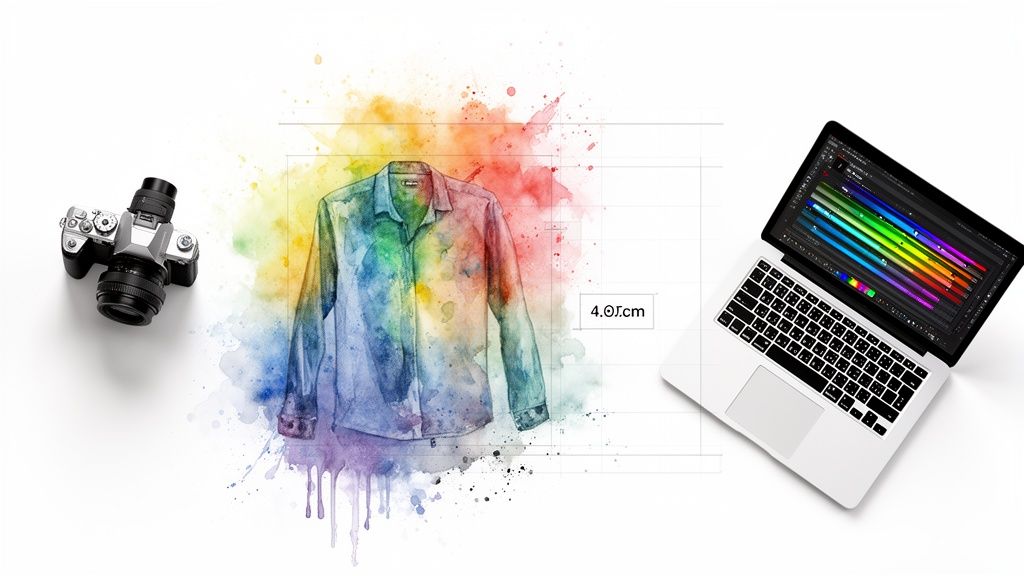
Before you can let any powerful AI tools work their magic, you have to get the basics right. It all starts with a rock-solid foundation of high-quality raw assets. Think of it like cooking: if your core ingredients are bad, the final dish is going to be a letdown, no matter how skilled the chef.
That’s why creating a standardized, repeatable workflow for preparing your image clothing is so critical. This isn't just a "nice-to-have" — it's the only way to scale your production efficiently. Every single image needs to start from a consistent, high-quality base. Otherwise, the AI can’t interpret and enhance it accurately, and you'll end up with a messy, inconsistent catalog that just confuses customers and hurts your brand.
Sizing and Resolution for Every Platform
One of the first things you need to nail down is your image dimensions. There’s no single "perfect" size because every platform, from your own website to social media, has its own ideal specs. A big, beautiful hero image on your e-commerce site needs to be high-resolution, but a social media post has to be a smaller, faster-loading file.
A great rule of thumb is to start with a high-resolution master file, something around 2048 x 2048 pixels. This gives you plenty of flexibility to crop and resize for different channels without the image turning into a pixelated mess.
Here’s a quick breakdown:
- Website Product Pages: Go for square (1:1) or slightly tall (4:5) aspect ratios. These look great on mobile screens and are pretty standard for most e-commerce themes.
- Social Media Feeds (Instagram, Facebook): A 4:5 vertical ratio is your best friend here. It takes up more screen real estate as people scroll, which is exactly what you want.
- Marketplaces (Amazon, Etsy): These guys often have strict guidelines, but a square 1:1 image is almost always a safe bet.
The real goal here is to create one versatile master image that you can adapt for any channel. When you start with a high-res square file, you build a flexible template that saves you from having to reshoot for every different platform. That’s a huge time and money saver.
Consistency in Lighting and Color
I've seen it a million times, and nothing screams "amateur" louder than inconsistent lighting and color. Imagine a customer seeing a bright red t-shirt on your homepage, only to find it looks like a muted burgundy on the product page. It’s frustrating and immediately erodes trust.
Consistency is non-negotiable.
This means your lighting setup has to be identical for every single product in a collection. It doesn't matter if you're using a pro studio or a simple DIY lightbox; the conditions must be repeatable. After the shoot, color correction is your next vital step to make sure the colors on screen are a true-to-life match for the actual garment.
If you need a deeper dive, you can learn more about taking professional clothes pictures to really nail down that strong baseline.
The First AI Step: Background Removal
Okay, so your images are sized, lit, and color-corrected. The next crucial move is to isolate the product. Manually cutting out every single item is an absolute grind and it’s way too easy to make mistakes.
This is where an AI-powered tool like Aeon’s Lossless Background Removal is a game-changer.
In just a few seconds, it gives you a perfectly clean, transparent background, putting all the focus right where it belongs: on your product. This creates a standardized asset that’s ready for anything—from a clean white background on your store to a dynamic, AI-generated lifestyle scene. This flawless isolation is the real jumping-off point for building visual campaigns that are both engaging and scalable.
Scaling Your Catalog with AI Image Generation
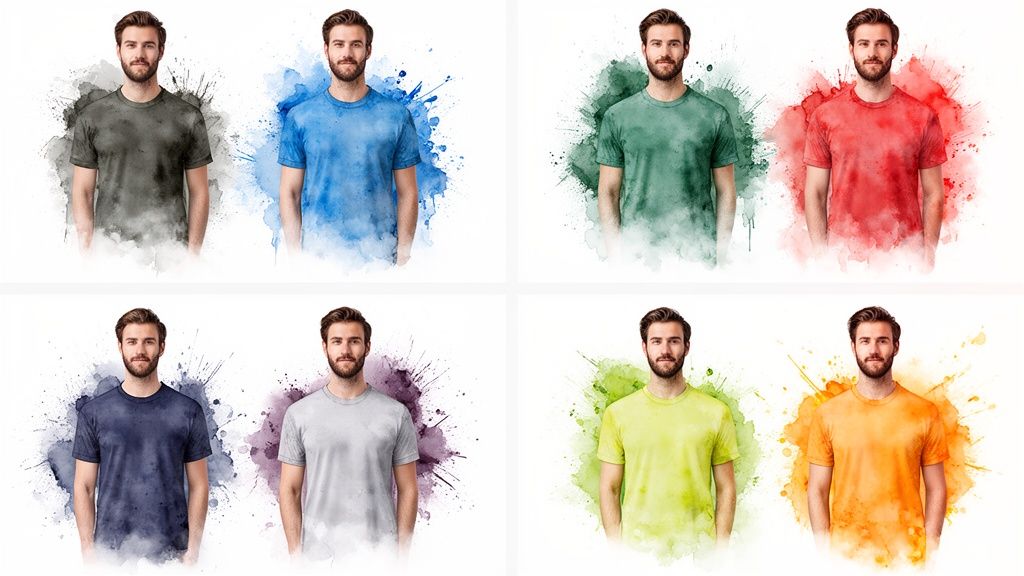
Once you have that clean, isolated product image, the creative floodgates open. This is the moment AI stops being just an editing tool and becomes the engine of your content production, letting you generate photorealistic assets at a scale that traditional photoshoots simply can't touch.
Imagine building out an entire seasonal lookbook without booking a single model or studio.
This isn't about replacing your creative team; it’s about giving them superpowers. Instead of burning weeks on shoot logistics, you can now generate countless variations of lifestyle shots, intricate product compositions, and campaign visuals in minutes. This kind of speed lets you test more ideas, jump on trends instantly, and create far more effective image clothing campaigns that actually connect with your customers.
Generate Compelling Lifestyle Shots On Demand
One of the most powerful things you can do is create authentic lifestyle scenes that fit your brand aesthetic perfectly. You're no longer hemmed in by location, budget, or whether your preferred model is available.
Need to show your new rain jacket in a misty Pacific Northwest forest? Or maybe your summer collection on a sun-drenched beach in Tulum? With AI, you can conjure these scenes with a simple text prompt.
For example, a prompt like "photorealistic shot of a male model wearing a navy blue cotton t-shirt, walking through a vibrant, bustling city street in Tokyo at golden hour" can spit out a stunning, campaign-ready image. You get total creative control to produce visuals that speak directly to specific customer segments.
AI image generation effectively decouples your product visuals from the massive logistical and financial constraints of physical photoshoots. It empowers you to build a diverse and aspirational visual catalog that was previously only accessible to brands with the largest budgets.
This approach is also a godsend for creating multi-product flat lays. You can arrange different items together in a single, cohesive shot without having to physically style and photograph them, making sure every composition is perfectly balanced and on-brand.
Precision and Photorealism at 4K
Modern AI isn't just spitting out fuzzy concepts; we're talking about high-fidelity, commercially viable assets. Engines like Flux 2 Max can render images in stunning 4K photorealism, nailing the intricate details of fabric textures and stitching that convince customers your product is high-quality.
That level of detail is everything in a crowded market. The global apparel market hit a staggering $1.84 trillion valuation in 2025, a figure representing 1.63% of the world's GDP. With e-commerce grabbing 48% of those fashion retail sales, flawless imagery is no longer optional. The smartest marketers are using AI to get an edge, turning their assets and market data into campaigns that convert.
Better yet, platforms like Aeon give you precise control over logo and text placement on the images you generate, ensuring your brand elements are rendered perfectly every time. This is a huge deal for creating customized marketing materials or product mockups on the fly. For a different spin on this, some are even starting to leverage AI to create dynamic real estate videos from photos, turning static assets into engaging tours.
Scale Your Collection with Virtual Try-On
One of the most practical and frankly, game-changing, innovations is Virtual Try-On. This tech lets you take a single set of model photos and use it to showcase an entire collection of clothing.
Here’s the basic workflow:
- You start with a high-quality photo of your model.
- You upload a clean, isolated image of a new garment.
- The AI intelligently "drapes" that new garment onto the model, realistically adapting to their pose, body shape, and the original lighting.
This means you can introduce dozens of new colors or styles without ever needing to call that model back for a reshoot. The savings in both time and money are massive, and it dramatically shrinks your time-to-market for new launches. If this sounds interesting, you should check out our deep dive on the AI dress changer to see exactly how it works.
Turning Static Images into Engaging Video Content
So, you've got a library of gorgeous, high-quality clothing images. What's next? It's time to bring them to life. Video isn't just a "nice-to-have" anymore; it's what your customers expect to see on the platforms where they spend all their time. The good news is, you don't need a massive video production budget or a dedicated videographer to make it happen.
We’re not talking about complicated edits here. It's all about adding simple, purposeful motion that tells a micro-story. A slow, elegant zoom can draw the eye to the rich texture of a fabric. A gentle pan can show off the beautiful silhouette of a dress. The goal is to transform a static product shot into something dynamic that stops the scroll.
Animating Your Reference Images for Cinematic Motion
The whole idea is to start with the amazing photos you already have. By using your perfected product shots as the foundation, you’re guaranteeing that your video content will have the same polished look and feel as the rest of your brand photography.
This is where things get really efficient. Modern AI tools, like the kind powered by Google DeepMind's Veo 3.1 that we've built into Aeon, can analyze your still image and generate smooth, cinematic movement from it. You can actually direct the AI to create specific camera motions—think of it as telling your virtual camera to do a subtle dolly shot, a zoom, or a pan. It adds a layer of sophistication that just wasn't possible before without serious editing skills.
A single product image can suddenly become a whole set of video clips for A/B testing. You could try one with a slow zoom and another with a quick pan to see what your audience responds to best.
Pro Tip: One of the most effective tricks for social media is to make the first and last frames of your video identical. This creates a perfect, seamless loop. It’s a subtle detail, but it can dramatically increase watch time on platforms like Instagram Reels and TikTok because the video just flows endlessly without a jarring cut.
Using Templates for Instant Ad Creation
Once you have a few animated clips, the next step is putting them together into a finished ad. This is where templates are an absolute lifesaver. Instead of building every single video from scratch, you can lean on pre-designed structures that are already optimized for different platforms and campaign goals.
Let's say you need to spin up a quick promo for a flash sale. The process is incredibly simple:
- Pick a Template: Grab a design that matches the vibe of your campaign, like "New Arrival" or "Limited Time Offer."
- Add Your Clip: Drop in the animated video you just generated from your static image clothing shot.
- Tweak the Text: Update the headline and call-to-action with your sale details.
With a tool like Aeon’s Quick Ad Maker, this whole workflow takes just a few minutes. You can go from a single product photo to a fully-produced, ready-to-launch video ad in no time. It gives your team the agility to jump on opportunities as they happen.
For more ideas on how to get the most out of your visuals, check out our guide on creating compelling fashion images.
Synchronizing Audio and Captions for Maximum Impact
A silent video is an incomplete one, especially on mobile where so many people scroll with the sound off. The final touches—your audio and captions—are what really seal the deal.
Adding the right music track helps set the mood, but the non-negotiable part is synchronized, easy-to-read captions. They guarantee your message lands even when the audio is off, and they make a huge difference in how much viewers actually remember. You're aiming to create a complete sensory experience that grabs their attention, shows them the value, and pushes them to take that next step.
Putting Your Visuals to Work: Optimization and Distribution
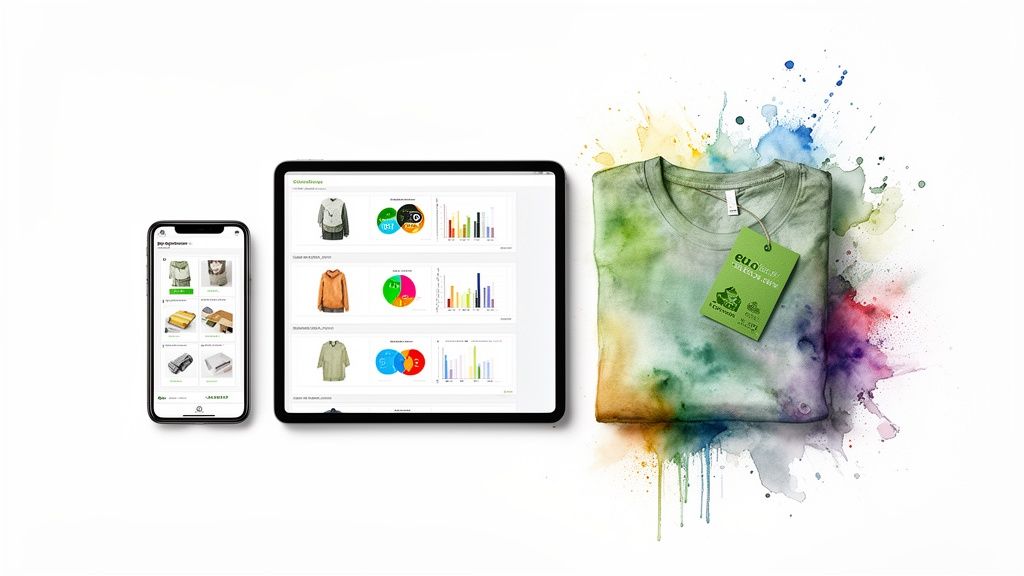
Alright, you've built a library of stunning, dynamic visuals. That’s a huge milestone, but honestly, it’s only half the battle. The real value is unlocked when you get that content in front of the right audience and see it drive real results. It’s time to shift from a pure creation mindset to a strategic distribution one.
A killer way to get this done is with ready-to-run playbooks that guide your team through campaign rollouts. These frameworks take the guesswork out of creative testing, helping you systematically figure out which visuals actually connect with your audience.
Driving Results with Creative Testing
Instead of just launching one version of an ad and crossing your fingers, effective distribution is all about constant experimentation. This is where A/B testing different formats and creative angles becomes absolutely essential. For instance, pit a clean, minimalist studio shot against a vibrant, AI-generated lifestyle scene to see which one gets more clicks.
The same idea applies to your videos. Test out different motion styles, calls-to-action, or audio tracks to pinpoint the combination that delivers the highest return on your ad spend. Once you've found a winner, a playbook can guide the rollout of that successful campaign across all your key channels, locking in a consistent and impactful message.
The goal here isn't just to publish content. It's to learn from every single asset you deploy. Each campaign should feed you data that makes the next one even smarter.
This is especially true for platforms like Amazon, where optimization is everything. Before you go live, it’s worth consulting a practical guide to Amazon listing optimization, including images, which breaks down exactly how to refine product visuals for that specific marketplace.
Aligning Visuals with Market Trends
A huge part of maximizing your impact is making sure your image clothing aligns with major consumer trends. Right now, nothing is bigger than sustainability.
The sustainable fashion market is projected to absolutely explode, surging from $12.46 billion in 2025 to a staggering $53.37 billion by 2032. This is fueled by shoppers turning away from an industry responsible for up to 8% of global greenhouse gas emissions. For a deeper dive, check out this global manufacturing report.
Communicating your eco-friendly initiatives visually is critical, but it doesn't have to mean costly, resource-intensive productions. This is where AI tools offer a much smarter path. With Aeon's GPT Image 1.5, for example, you can generate multi-product eco-shoots without any of the waste. From there, tools like the Quick Ad Maker can turn simple prompts into polished ads that put your green credentials front and center, helping you put your ESG strategies into action—fast.
Common Questions About AI Clothing Image Workflows
Jumping into an AI-first approach for your clothing imagery is a big move, and it's totally normal to have a few questions. Getting straight answers is the best way to clear any hurdles and really make these new workflows sing for your brand.
Let's get into some of the most common questions we hear from teams just like yours.
How Can I Make Sure AI Images Actually Match My Brand’s Vibe?
This is, without a doubt, the number one concern for most brands. And for good reason. Your brand aesthetic is everything.
The thing to remember is that you're still in the driver's seat. Modern AI platforms aren't just a black box where you push a button and cross your fingers. You're the one providing the detailed instructions.
You do this by writing specific prompts, uploading your existing brand style guides, and even feeding the AI your own top-performing campaign images as a reference. With features that let you lock in precise text and logo placement, you can guarantee every single asset feels like it came directly from your creative team.
Think of it less as the AI taking over and more as a hyper-efficient tool that executes your specific vision, just at a massive scale.
What's the Biggest Mistake People Make When Turning Images Into Video?
Easy. Creating motion just for the sake of it. A great video, even a short one, tells a tiny story or spotlights a key feature. Instead of just slapping a generic zoom on a photo, use animation to guide the viewer's eye to the texture of the fabric or a unique bit of stitching.
The goal is purposeful movement, not just movement. Use your tools to create subtle, almost cinematic motion instead of those jarring, cheap-looking effects.
Here’s a pro tip: always make sure your first and last frames are identical. This creates a perfect, seamless loop on platforms like Instagram and can make a huge difference in how polished your content feels.
Is an AI Workflow Actually Cost-Effective for a Small Team?
Absolutely. In fact, it's often a game-changer for smaller brands.
Just think about all the costs that go into a traditional photoshoot: studio time, photographers, models, stylists, and then days of post-production. An AI workflow rolls all of those unpredictable, spiraling costs into a single, predictable subscription. You can generate hundreds of studio-quality shots for less than you'd pay for a single day on set.
Even better, powerful tools like Virtual Try-On slash future costs dramatically. You no longer need to reshoot the same shirt for every new colorway. It's an incredibly scalable and affordable way for smaller brands to punch well above their weight and compete visually with the big players.
Ready to see what this looks like for your brand? With Aeon, you can turn simple ideas into high-performing ads and studio-quality product shots in minutes. Start exploring all the features at https://www.project-aeon.com.